


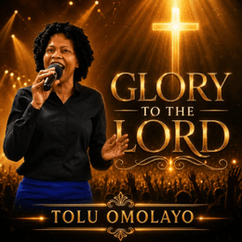
There are songs created simply to be heard, and there are songs created to create a moment. Tolu Omolayo’s “Glory to the Lord” belongs firmly in the second category.
Built around a simple but powerful declaration of praise, the gospel release creates an atmosphere centered on reverence, gratitude and an unwavering recognition of God’s holiness. Rather than relying on complicated messaging, Omolayo allows the central theme to remain clear throughout: all glory belongs to the Lord.
The song gradually develops through repeated declarations of worship, with the refrain “There is none, holy as the LORD” serving as its spiritual anchor. Its repetition gives the track a congregational quality, making it feel less like a performance directed at an audience and more like an invitation for listeners to participate.
Lyrically, “Glory to the Lord” reaches beyond personal testimony to celebrate the majesty of God. References to the Lord riding upon the wings of the wind, making the clouds His chariot and stretching out the heavens like a curtain create vivid biblical imagery, giving the song a sense of scale and wonder.
One of the most distinctive moments arrives as Omolayo incorporates additional traditional expressions of praise, adding another layer of cultural identity to the worship experience. The transition reinforces the idea that praise can transcend language and musical boundaries while remaining rooted in a deeply personal understanding of faith.
At the heart of Tolu Omolayo’s artistry is a mission inspired by Isaiah 61:1–3. Her musical vision extends beyond entertainment, focusing on creating an environment where listeners can find comfort, serenity and renewed strength. That intention is particularly evident in “Glory to the Lord,” where the song continually redirects attention away from earthly distractions and toward the presence of God.
There is an honesty to the release that makes its message accessible. It does not attempt to complicate worship. Instead, it embraces the timeless power of repetition, declaration and surrender, allowing the listener to absorb its message at their own pace.
“Glory to the Lord” ultimately feels like an invitation to pause, reflect and acknowledge something greater than ourselves. Whether experienced during personal devotion, quiet reflection or communal worship, the song carries a message of reverence that remains at its core from beginning to end.
For Tolu Omolayo, music is more than a creative outlet. It is part of a spiritual mission to bring comfort, encourage healing and create space for people to reconnect with God. With “Glory to the Lord,” she offers a sincere expression of that purpose, placing worship at the center and allowing the message to speak for itself.
