


Most musicians pick a lane and stay in it. Chicago’s Sacha Mullin isn’t interested in that. Ever since he was a kid, he has obsessed over the way a soundtrack can flip the emotional weight of a scene in a movie or TV show. That curiosity eventually turned into a sound that mashes pop, jazz, and experimental ideas together, mostly because he wants to capture how messy and contradictory real life actually feels. To him, writing a song works a lot like having a good conversation. You don’t just talk; you leave room to listen and let the mood settle. When the Chicago Reader named him “Chicago’s Best Pop Artist,” it gave him the green light to chase sharper pop hooks without ditching his weirder instincts.
That balance sits right at the center of his new album, Social Touch. Working side-by-side with William Parker Wood, Mullin pulled his experimental side into a brighter, hook-heavy pop frame. You can hear that shift right away on the lead single, “Hypocenter,” where guest vocalist Emily Bindiger brings a heavy emotional edge to the track. One minute the record feels quiet and exposed; the next, it hits with sudden intensity.
We caught up with Mullin to talk about how he built Social Touch, why he refuses to choose between catchy pop and weird sonic experiments, and what it was like recording with Bindiger. He also gets into how teaching music shapes his own writing, and why he still believes songs can make people a little more empathetic.
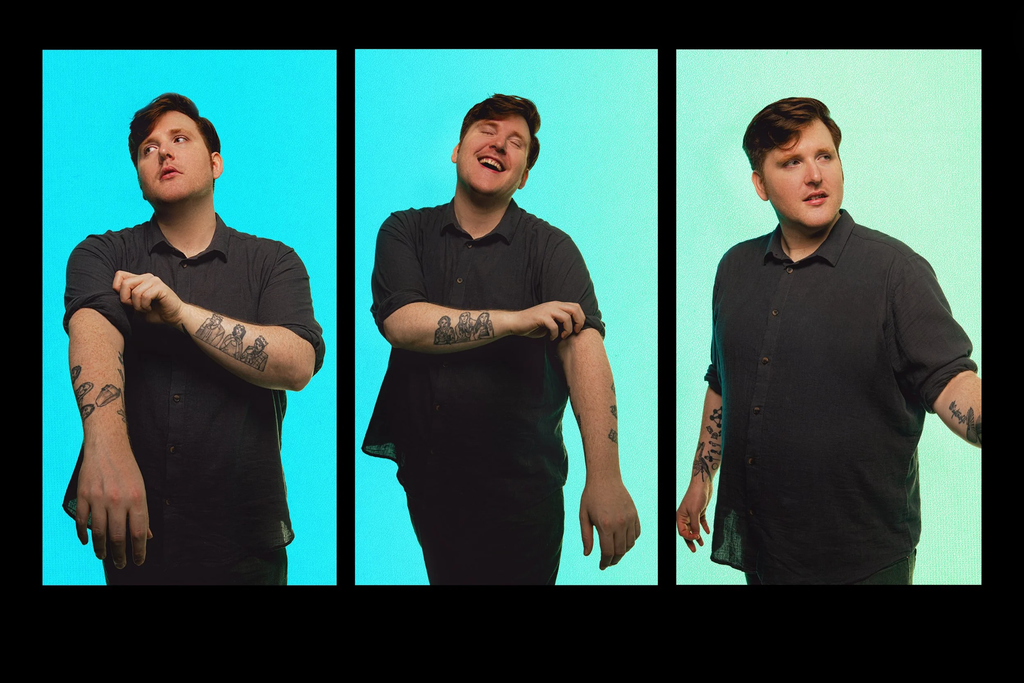
Before we get into Social Touch, how did you first get into music, and what artists, experiences or moments shaped the singer, songwriter and musician you have become?
When I have to really push myself to think about this, it always comes back to a sense of wonder. I wonder about the world, I wonder about others, myself, animals, the universe. I wonder about sounds. I wonder about the past and the future.
As a child, I became super fascinated with music in film and TV, both diegetic and non-diegetic. Maybe even the in-between. And I had public school music classes that would have us try to imagine images to music, such as with Prokofiev’s Peter and the Wolf. I wanted to grow up to make music that tried to capture the feeling of multiple senses. I’m still aiming to get there.
You have built a sound that moves between pop, jazz and experimental music, with your voice often sitting at the centre of it. What have you learned about your own voice and songwriting through the years?
I only get nervous if I’m worried about letting the music down. Music as a concept is full of life for me. If I’m going to pour my skills and emotions into a few minutes at a time, it has to be a conversation, so I have to be just as good a listener as I am at adding information.
I admit my music can come off a bit full, but from a personal place, I’m on a constant crawl towards trying to find time for space and silence. And with my actual physical voice, sometimes things come easier depending on the age, the weather, if the moon is in the seventh house and all that. But you have to maintain yourself with water, sleep, warm-ups, warm-downs, and personal check-ins. It’s easier said than done, but you’re no good to the music if you’re not taking care of yourself.
As a writer, I guess it’s often in tandem with singing. I’m invested in exploration just as much as I am in finding a sense of home. I hope this comes across in my work!
You recently won the Chicago Reader‘s “Chicago’s Best Pop Artist” award. How did that recognition feel, especially at a time when you were deliberately pushing your songwriting into a more genuinely pop-forward direction?
It was and is a huge honor. I have the little MDF award hanging in my room, not as a token to self-aggrandize, but just as a reminder of my responsibility to stay present in my music. Chicago is a huge city with an enormous amount of history, and if, for a small moment, I get to be honored as a highlight of that timeline, well, I can’t even begin to express the feeling.
I actually don’t think the presentation of my music was as pop-centric as the award proclaims, so I decided that there was a part of me that needed to lean in harder on pop as an actual focus. On the other hand, I still think there’s an argument that everything I’ve done has a pop center, but this was a rare moment to deliberately assemble the tools to use more blatant sounds and arrangements to bring my thoughts and melodies into focus.
Social Touch represents a new step for you musically. What made this the right moment to move further toward pop, and what did you want to do differently from your previous albums?
Working with William [Parker Wood] was, and continues to be, hugely instrumental in allowing this part of me to come to light. He’s a champion of pop, but also a champion for seeing possibility in those around him. How lucky am I that we were able to converge when we did?
The right moment, other than the award, was just this spark of excitement that happened between both of us, as friends and then, amazingly, as collaborators. What I wanted to do, and what Will encouraged in me, was to keep my sense of self, but just let more light in. The hooks were already there, but the windows needed to be opened a little.
The lead single “Hypocenter” features Emily Bindiger on backing vocals. What made you want to bring Emily back into your musical world, and what did her voice add to the song that you could not have achieved alone?
Emily has been a cornerstone in my musical development, often just by being her. I grew up listening to her music and to her contributions to several soundtracks and vocal arrangements. She’s highly prolific, but her sense of adventure has never waned.
While I did a majority of the backing vocals on this album, “Hypocenter” needed a particular counterpart, one with passion, and one with a color that didn’t come from my own voice. There’s a weight and a levity to the song, and her voice has a rainbow of possibilities.
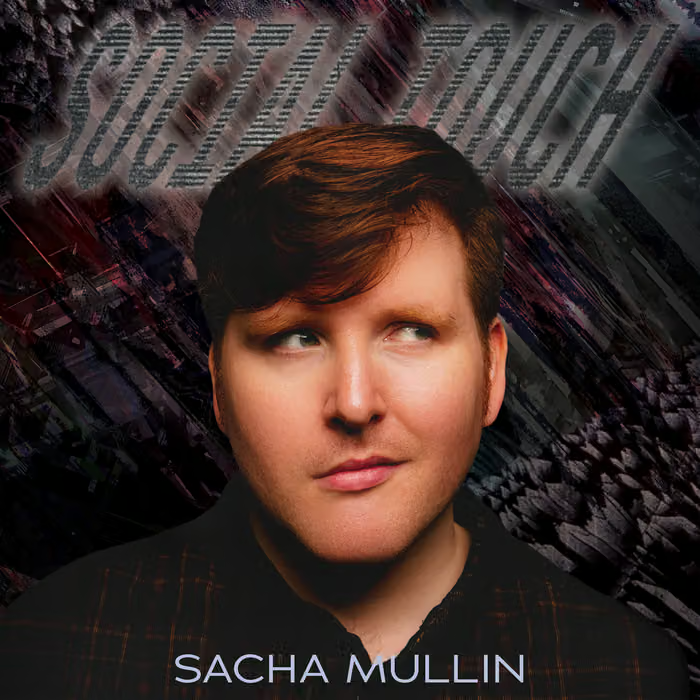
Your music is often described as both vulnerable and intense, with your vocals moving from very restrained moments to sudden soaring performances. How important is that contrast to the emotional storytelling in your songs?
I guess it’s because I live in a perspective of constant contrasts? I like hot soup with a cold sandwich. We live in small social circles, but also a vast unknowing. I easily get bored with one way of thinking, one way of doing something. You have to know when to zoom in and out. Emotions aren’t monotone.
You have cited artists such as Kate Bush, Joni Mitchell and Geike Arnaert as influences, while critics have drawn comparisons to David Sylvian and Jeff Buckley. How do you take inspiration from artists you admire without allowing those comparisons to define your own identity?
Over the years, I certainly have tried singing along, to varying levels of success. I do a mean “Babooshka,” but maybe “Rubberband Girl” isn’t my forte. So I learn about my boundaries, as well as new areas to venture. When I sing material like this, I can hear what they’re doing with their placements and vowels, whether for storytelling purposes or simply to sound cool, and recognize where I might want to summon some of that influence in my own work.
I don’t want to mimic anyone or become a tribute act, but it’s still flattering to know that parts of someone else’s life and art might be heard as a point of comparison in what I’m doing. It means that something about their work has stayed with me, and perhaps carries through to the listener, too.
We’re all composites of influence, and those are all beautiful people you’ve listed. I suppose the biggest influence I’ve taken from anyone is to trust that the sounds you have, and the sounds you are working through, are all a means of traveling towards the next and better you.
Your arrangements are known for being harmonically adventurous and sometimes quite dense. When writing a pop-forward record like Social Touch, how did you decide when to keep things accessible and when to let your more experimental instincts take over?
Again, it’s always driven by what the story and the situation demand of me as an intermediary between the music and the eventual listener. On “Don’t Wanna Hurt U,” for example, I see the verse melody as both pondering and earnest. I can imagine the lyrics sometimes coming off as a little cryptic, so to balance that out, the melody has to kind of Trojan Horse its way through.
In that song, there’s this strut and stumble in the rhythm, and it’s all done with a narrative purpose. I wasn’t going out of my way to have the second track on “the pop album” be in 6/4; it just felt correct. There’s a constant pull in the song’s narrative between knowing what’s going on and feeling uneasy.
Then, by the middle eight, these rock guitars slink in because I had this feeling of intensity and declaration. I guess that could be considered an experimental moment, but it feels very natural to me. And then the guitars leave just as quickly as they came in, as though the narrator has found a brief moment of composure, even if the lyric gets a little snarky on its landing.
I don’t see life and interaction as particularly clean processes all the time, so I often think about my arrangement choices as serving the purpose of tension and release.
You are also an educator alongside your work as a singer-songwriter. Has teaching music changed the way you understand your own creative process, songwriting or approach to performance?
Absolutely. When I teach piano, it’s relatively easy to work through finger placement on scales, explore classical and modern repertoire, talk about performance technique, reading music, and so on. There’s a tactile quality to it that makes musicianship feel relatively easy to convey in concrete terms.
With voice, of course, there’s still a physical component, but with contemporary music in particular, there’s a much bigger task of navigating subjectivity and the abstract. I think teaching both instruments to people of so many different ages and walks of life has made me redefine concepts in ways I wouldn’t otherwise have had to.
All of this sometimes makes me question what I’m doing when I’m in musician mode, as opposed to teacher, coach, or example mode, but not necessarily from a place of doubt. If anything, I’m trying to get closer to finding faster and more rewarding paths to bringing my own expression to light.
As Social Touch opens this new chapter for you, what do you hope listeners discover about Sacha Mullin through this album, and where do you feel your music could go from here?
I struggle with the concept of what people may think of me, because while this work is all very faithful to the truth of my experience, it’s still a series of vignettes. So if I’m forced to think about it, I suppose I’d hope people see someone who wants compassion to win through the heaviness of it all. But I’d be more interested in hearing from people about what they relate to, or what curiosities they might have about a lyric or a musical choice. I want to have the pleasure of knowing that people have taken the time to engage with the music and perhaps see something of themselves in it.
There are very specific things I’d like to explore in my next wave of music, in terms of sound and production: frequencies, perhaps some chamber-like arrangements. How much can I suss out from listening marathons of Coil and Maaya Sakamoto? Wherever I may land, the mission is a question that always remains on task: what stories, and what within myself and of others, can I discover next?
CONNECT
