


Great songs don’t always come from dramatic, life-altering moments. Sometimes, the best material is hiding in plain sight—in passing small-town conversations, familiar faces, and the funny twists of ordinary life. For Canadian independent artist Mogipbob, those everyday details are the whole point.
What started as a way to pass the time on his daily commute has quietly grown into three full albums. Along the way, Mogipbob has built a sound that refuses to sit still, moving easily between country-soul, folk-rock, blues, funk, and retro-soul.
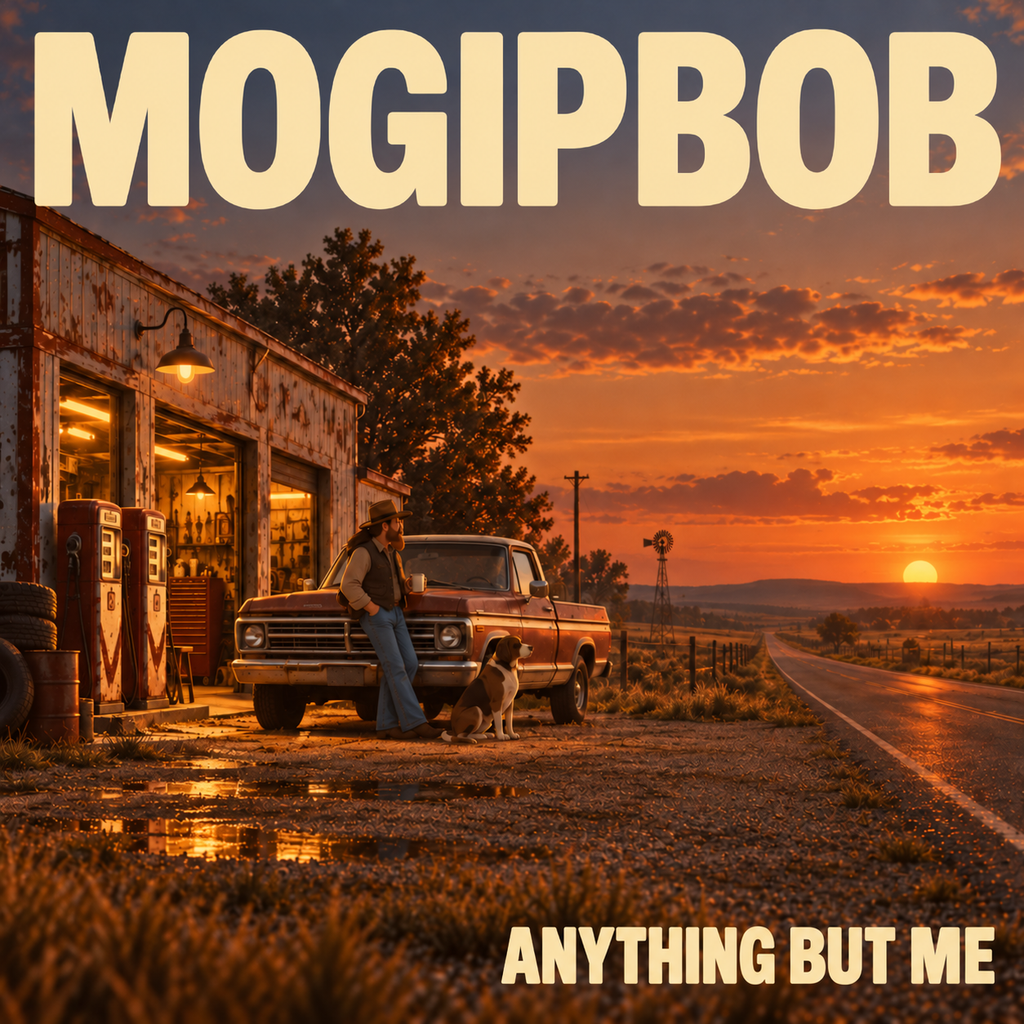
His third record, Anything but Me, brings together 16 original songs packed with dry humour, sharp wordplay, and offbeat characters. Rather than trying to fit into a single genre, Mogipbob lets each track dictate its own direction, leaning heavily on his love for classic records and his appreciation for working-class life.
The way the album was made is just as unconventional. Every concept, lyric, and song structure is written entirely by hand. From there, Mogipbob uses AI tools to help flesh out the arrangements and performances, steering the production closely so the finished tracks match his exact vision.
In a new interview, Mogipbob talks candidly about where his unusual song ideas come from, why he refuses to stick to one musical lane, and how he pairs traditional songwriting with modern production tools. He also dives into the making of Anything but Me and his goal of reaching listeners who want music with real personality, a sense of humour, and a little something to chew on.
Could you tell us about your musical journey and what first inspired you to start writing songs?
I’ve always enjoyed playing with words and finding unusual connections between familiar phrases. Sometimes I’ll take two expressions that share a common word and combine them into something completely different. “Hell’s Bell Bottoms,” for example, came from joining “hell’s bells” and “bell bottoms.” It’s a simple bit of wordplay, but it can open the door to an entire song.
The musical journey itself actually started with my daily commute to work. After years of listening to the radio and cycling through my own music collection, I found myself getting a little bored with what I was hearing. One day I thought, “What if I just made my own songs?”
That question eventually became Mogipbob. What started as a way to entertain myself developed into a creative outlet that continues to surprise me.
Your music often focuses on working people, small-town life and the emotions hidden in everyday experiences. What draws you to these stories, and how do you find inspiration in ordinary moments?
To me, everyday experiences are often the things that matter most, even though they’re easily overlooked. Not every meaningful story has to involve some extraordinary event. Sometimes there’s more than enough material in an ordinary conversation, a minor inconvenience, or something that happens during a typical working day.
Having lived in small towns and worked in blue-collar jobs, I find those experiences easy to relate to. I know the kinds of people and situations I’m writing about.
Sometimes a particular situation will catch my attention, and I’ll start imagining the world around it. Who would be involved? What might happen next? Where could things go wrong, or perhaps unexpectedly right?
Once I have that little world in my head, the lyrics begin to take shape. The challenge is finding something in the story that listeners can recognize from their own lives, even if the circumstances are a little unusual.
Your third album, Anything but Me, brings together 16 original songs across several genres. What inspired the album’s title, and what connects the songs as a complete project?
When I wrote “Anything but Me,” I immediately felt that it belonged at the end of my next album. The subject matter resonated with me personally, and I knew it would make a fitting closing statement. It also felt like the right title for the album itself.
I don’t necessarily approach an album with the intention of making every song fit a single musical theme. I enjoy exploring different subjects, characters and styles, and I like giving each song the freedom to become what it needs to be.
For me, the connection between these sixteen songs is really the songwriting itself. Some are humorous, others are reflective, and several manage to be a little of both.
I’d like to think “Anything but Me” provides a meaningful conclusion to what was, above all, a creatively enjoyable project.
Your songwriting combines unusual characters and dry humour with more reflective moments. How do you balance comedy and sincerity without losing the emotional meaning behind a song?
I generally try to find humour in most situations. Life provides plenty of opportunities for it, particularly when things don’t go according to plan.
At the same time, I enjoy writing songs that encourage a little reflection. I don’t necessarily see humour and sincerity as opposites. Sometimes the funniest situations reveal something rather meaningful about human nature.
There have been songs that started out with a humorous idea but gradually developed into something more reflective. “Solid as Metal” and “Modern Person, Ancient Solutions” are two examples.
I don’t consciously sit down and decide how much comedy or seriousness a song should contain. I follow the idea and see where it leads. If there’s an underlying message, I’d rather let listeners discover it naturally than spell everything out for them.
You draw from country-soul, folk-rock, blues, funk and retro-soul, alongside western storytelling. Which musical influences have shaped your sound the most, and how do you bring these different styles together naturally?
Much of the music I enjoy comes from the 1960s, 1970s and 1980s. I appreciate the melodies, instrumentation and distinctive character of recordings from those decades.
But when I’m writing, I don’t generally begin by deciding that a song needs to be country, rock, soul or funk.
The completed lyrics tend to speak to me. As I read through them, I begin to hear the kind of musical setting that would suit the story. Sometimes that means acoustic guitars and a relaxed folk-rock arrangement. Other times, the song seems to demand a funky bass line, Hammond organ, brass or something completely different.
I enjoy having that freedom. Rather than forcing every song into one recognizable genre, I prefer to let the song tell me what it wants to sound like.
You have explained that the concepts, lyrics, song structures and creative direction are human-written, while AI helps you realize the arrangements and performances. How does this process work in practice, and what do you look for when deciding whether a result matches your original vision?
My creative process begins with the songwriting. I develop the idea, write the lyrics and work out the structure and musical direction before using AI tools to help bring the recording to life.
From there, it becomes a process of experimentation. I specify the musical style, instrumentation, tempo, vocal character and other elements I’m looking for, then generate different versions and listen to how they develop.
It’s rarely a matter of accepting the first result. There can be quite a few revisions and adjustments before a recording comes close to what I originally imagined.
The difficult part is that I’m not always trying to achieve something I can easily describe in technical terms. I’m trying to capture how I feel the song should sound.
Sometimes a version can be technically impressive but still not feel right. Other times, a particular arrangement or vocal delivery captures the character of the song in a way that immediately stands out.
Ultimately, I keep working until the recording feels like a convincing expression of the song I wrote.
Your previous album, Like a Viking, explored resilience, memory and perseverance. How does Anything but Me build on those ideas, and has your approach to songwriting changed between the two albums?
I’d like to think my songwriting has improved considerably since my first two albums.
With each completed song, I learn a little more about what works, what doesn’t, and how to develop an idea into something interesting.
One thing I’ve become increasingly interested in is exploring subjects that don’t often appear in popular songs. There are already countless songs about falling in love, losing love and wanting someone back. Those subjects will always have their place, but I enjoy looking for stories and situations that haven’t been explored quite so often.
“Anything but Me” continues some of the reflective qualities of “Like a Viking,” but I think there’s also a greater willingness to experiment with unusual ideas and musical styles.
I’m still learning, and that’s part of what makes songwriting enjoyable.
You are based in Hythe, Alberta, and your songs often reflect small-town life and working people. How has living in northern Alberta influenced your perspective as a songwriter?
I’ve always appreciated the familiarity that comes with living in smaller communities. There’s a sense of shared values, friendliness and community spirit that reminds me of how things were years ago.
Having lived in small towns and worked in blue-collar environments, those experiences naturally influence how I see the world and the kinds of stories I find interesting.
Life moves quickly these days, particularly in larger cities, and I think it’s easy to get caught up in the constant hustle.
There’s something valuable about living somewhere that still gives you room to breathe, notice the little things and reflect on what’s happening around you.
For somebody who enjoys turning everyday observations into songs, that’s a pretty good environment to be in.
You have said that hearing your own song unexpectedly on the radio would be especially rewarding. What would radio airplay mean to you, and what kind of stations or audiences do you feel would connect most naturally with your music?
One of the most rewarding things about releasing music is knowing that complete strangers, people I’ve never met and probably never will, are listening to something I created.
I enjoy writing songs for the creative satisfaction, but being able to share them with others makes the experience even more meaningful.
Hearing one of my songs unexpectedly on the radio would be a particularly special moment. There’s something wonderful about the idea that a song which began as a little thought in my head could eventually find its way onto somebody else’s radio.
Given the musical styles I explore, I suspect folk, roots and Americana stations would be a natural fit for certain songs, although others might appeal to listeners who enjoy classic rock, soul or older pop music.
I’m not expecting every song to appeal to everyone. I’d simply be happy knowing that some of them find an audience that enjoys them.
After releasing three albums, what would you like to explore next as an artist, and what do you hope listeners take away from Anything but Me?
I intend to keep writing songs for as long as I continue finding ideas that interest me. There’s no shortage of ordinary situations, unusual characters or unexpected combinations of words waiting to become something musical.
If people enjoy what they’re hearing, I’d be very happy to release another album.
As for “Anything but Me,” I hope listeners come away having enjoyed the variety. Perhaps a song makes them laugh, another reminds them of something from their own life, and another gives them a moment to reflect.
I don’t necessarily need everyone to connect with every song. If somebody finds even one that makes an impression, whether through its humour, story or melody, then I’m pleased to have shared it.
CONNECT
