


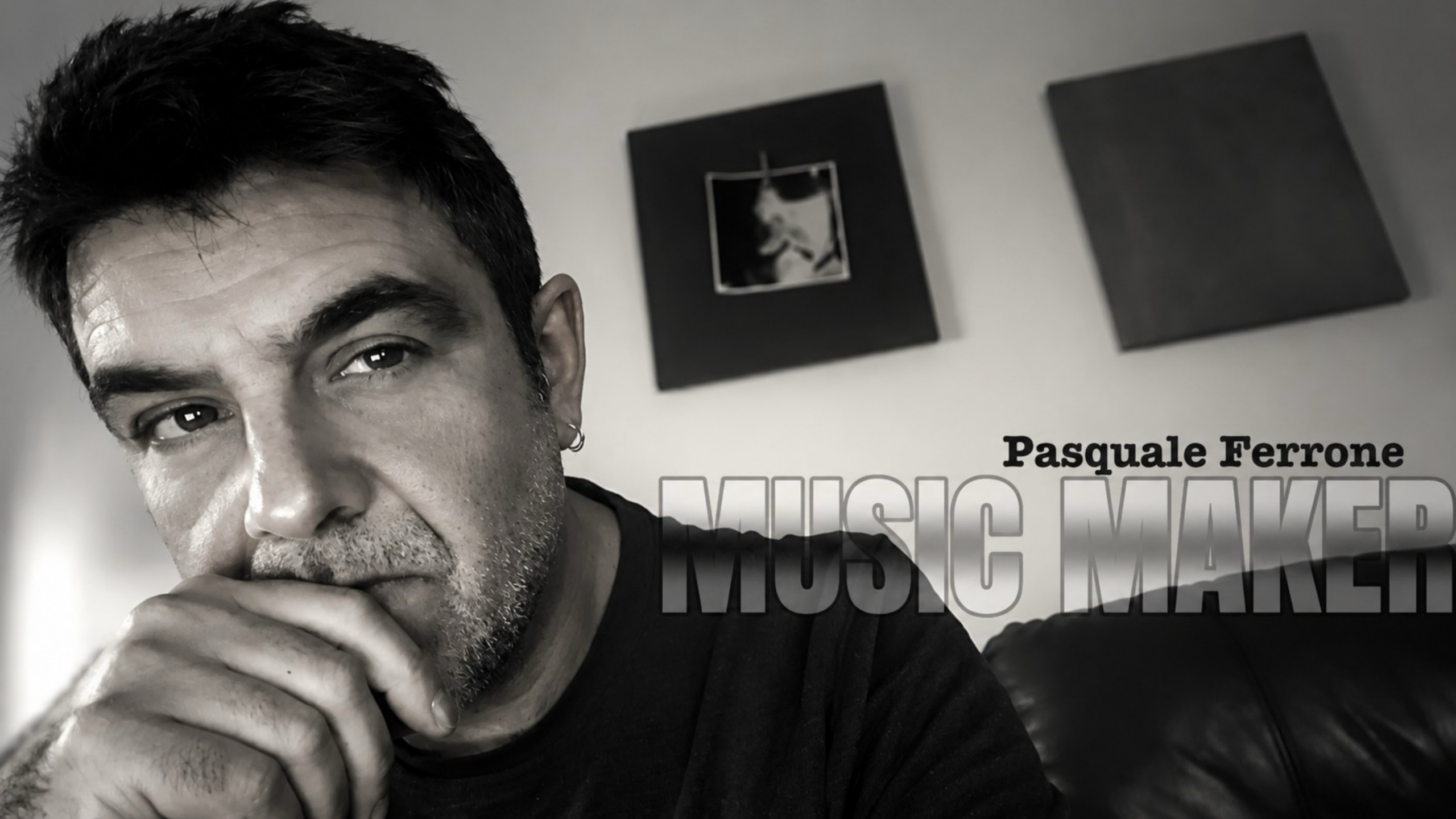
Some songwriters spend a lifetime searching for a signature sound. Others find their creative freedom in refusing to be defined by one. For The Radaman Song, the music has always come first, with each composition allowed to find its own voice, style and identity.
Writing songs since the age of 10, the creative mind behind the project has a musical history that stretches back to the 1990s, when he fronted Radaman, exploring Italian New Wave and Gothic music. His songwriting philosophy, however, has remained remarkably consistent: begin with chords and lyrics, follow the melody wherever it leads, and let the song reveal who should ultimately sing it.
That open-minded approach runs through WOMEN FIRST, an album built around the many expressions of love and brought to life through female vocal perspectives, virtual performers and AI-assisted production. Moving freely between pop, jazz, dance, country and folk, the project places the emphasis firmly on the songs rather than a particular genre or performing persona.
Its third single, “LOVE YOU ANYWAY”, draws on the emotional aftermath of a difficult relationship, transforming personal heartache into a melody that carries both vulnerability and unexpected brightness. Inspired in part by Julian Lennon’s “Saltwater”, the track reflects the influence of another songwriter while maintaining a story and emotional identity entirely its own.
With an approach shaped by the spirit of The Beatles’ White Album, The Radaman Song embraces musical variety, creative independence and the freedom to let every composition become what it needs to be. In this conversation with Spinex Music, he looks back on his musical beginnings, discusses the inspiration behind WOMEN FIRST, opens up about using technology in the creative process and explains why, above everything else, he wants the songs to speak for themselves.
1. Your musical journey began in the 1990s when you fronted Radaman, exploring Italian New Wave and Gothic music. What first drew you to music, and how has your approach to songwriting changed since those early days?
The Radaman Song: Honestly, I can’t remember a time when music wasn’t there. I’ve been writing songs since I was 10. And the way I write has never changed ever since – I write the song first, with chords and a few lyrics sung straight away, and then I find out who is going to sing it. Sometimes it’s not me! lol
2. You have described The Beatles’ White Album as your musical bible. What is it about that record that continues to influence your creative approach, especially your willingness to move between different genres?
The Radaman Song: Because it’s like life – one minute it’s rock and roll, then a music-hall, then a lullaby, then something completely mad. You dance when you have to dance and cry when you have to cry. And when it’s over, someone else will put another record on.
3. Your new single, “LOVE YOU ANYWAY”, was inspired by a painful love affair. What was the experience behind the song, and how did you turn those personal feelings into music?
The Radaman Song: The song’s about a love gone wrong, as it were… That’s what songwriters do: we write about how we feel because we can’t talk about it. Painful experiences make the best songs. And the music follows your mood – You’re sad? You hit minor chords. You’re happy? You hit major chords. Except when you write a song like “Love You Anyway” which is in major key.
4. You have mentioned Julian Lennon’s “Saltwater” as an inspiration for the single. What about that song connected with you, and how did you make sure “LOVE YOU ANYWAY” told your own distinct story?
The Radaman Song: As a joke, I call Julian ‘the Brother Oversea’. You know, I was 15 when his father died, and I mourned, in pain, as if I had lost my own father… I mean, me and a few other million people around the world.
At the beginning, I didn’t think much of him. ‘Another silver-lined kid who get into the showbiz thanks to his parents’, this was the idea, although I liked at least a couple of his songs from “Valotte”. But then, years later, I liked what he became as an ‘adult’ (that is, nearly as old as me) and that “Saltwater” made me shout ‘At last… JULIAN Lennon!’
Long story short, when I wrote “Love You Anyway” I caught myself singing like him. “This can’t be right,” I thought (lol). That’s why I was tempted to send the song to Julian’s label as a demo. But his influence over the song stops there – The story, the mood and the lyrics are my own, and the song ended up with a darker mood than “Saltwater”.
5. WOMEN FIRST presents your original compositions through a female perspective. What inspired you to explore your songwriting in this way, and what new possibilities did it create for the songs?
The Radaman Song: It was sheer chance. There was a song I couldn’t sing anymore, because my voice had got rough over the years, a Tom Waits kind of rough. So I used AI for the first time to try different voices and, surprisingly (for me), the song worked better with a female voice. Then I thought of all the songs I couldn’t, or didn’t want to, sing myself, and that became the album. Since it’s my first album ever, I thought, ‘OK, we let the women go first.’ This is the naked truth, but you can interpret it any way you like.
6. “LOVE YOU ANYWAY” is the third single from WOMEN FIRST. How does it fit into the album’s wider story, and what can listeners expect from the remaining songs?
The Radaman Song: The password for the whole album is LOVE. Any kind of love—brotherly, idyllic, promised, tainted, kinky, straight, or gay. So every song has to have a different mood. You’ll hear pop, jazz, dance, country, and folk, all different from each other but held together by…my pen.
7. The album moves across pop, jazz, dance, country and folk, with each song developing its own musical identity. How do you decide which style best serves a particular song?
The Radaman Song: I don’t, really – not in those terms. I write by playing the chords and singing some lyrics straight away, and then I close my eyes and “hear” the song as if it were already finished. The style is already there; I just follow it most of the time. Occasionally, though, it can take unexpected turns.
8. The Radaman Song combines original songwriting with virtual performers and AI-assisted production. How do you use these tools to bring your ideas to life while keeping the songwriting and emotional meaning at the centre?
The Radaman Song: I compose the song, write the lyrics, and record it myself first. Then I ask the ‘orchestra’, which in this case is non-human, to play it the way I hear it. I try over and over until I’m satisfied, and sometimes I merge two or three vocal tracks to get the result I want. Believe it or not, it takes a lot of time. Nearly as much as the ‘real thing’. I’m always in control, and between you and me, sometimes it’s easier with a machine than with people (think of Paul McCartney telling George Harrison how to play his guitar!).
9. Having started in a band and now working through The Radaman Song, how has your understanding of collaboration and musical identity changed? Do you miss anything about performing as part of a traditional band?
The Radaman Song: I do miss everything— the energy of a band, the noise, the rehearsals, the looks across the stage. As I mentioned before, what I don’t miss is having to compromise on a song I could hear so clearly in my head. Now my collaborators are of …a different kind, but I’m still the one listening for the song.
10. With WOMEN FIRST, you are embracing variety rather than following one established sound. What do you hope listeners will understand about you as a songwriter after hearing the album, and where would you like to take The Radaman Song next?
The Radaman Song: I hope they finally see The Radaman Song for what it really is – a showcase full of songs, not a performing artist. The Radaman Song is selling tunes, not rock stars. In fact, I wish rock stars liked some of those tunes and decided to include them in their repertoire.
As for the future, I’m just taking some rest. During that time, and if the tapes still play, I may think about bringing back the old Radaman from the dead.
(Last brief note: I do perform, just not as The Radaman Song. But we leave that for the next interview.)
CONNECT
WEBSITE | FACEBOOK| SPOTIFY | SOUNDCLOUD | YOUTUBE | INSTAGRAM
