


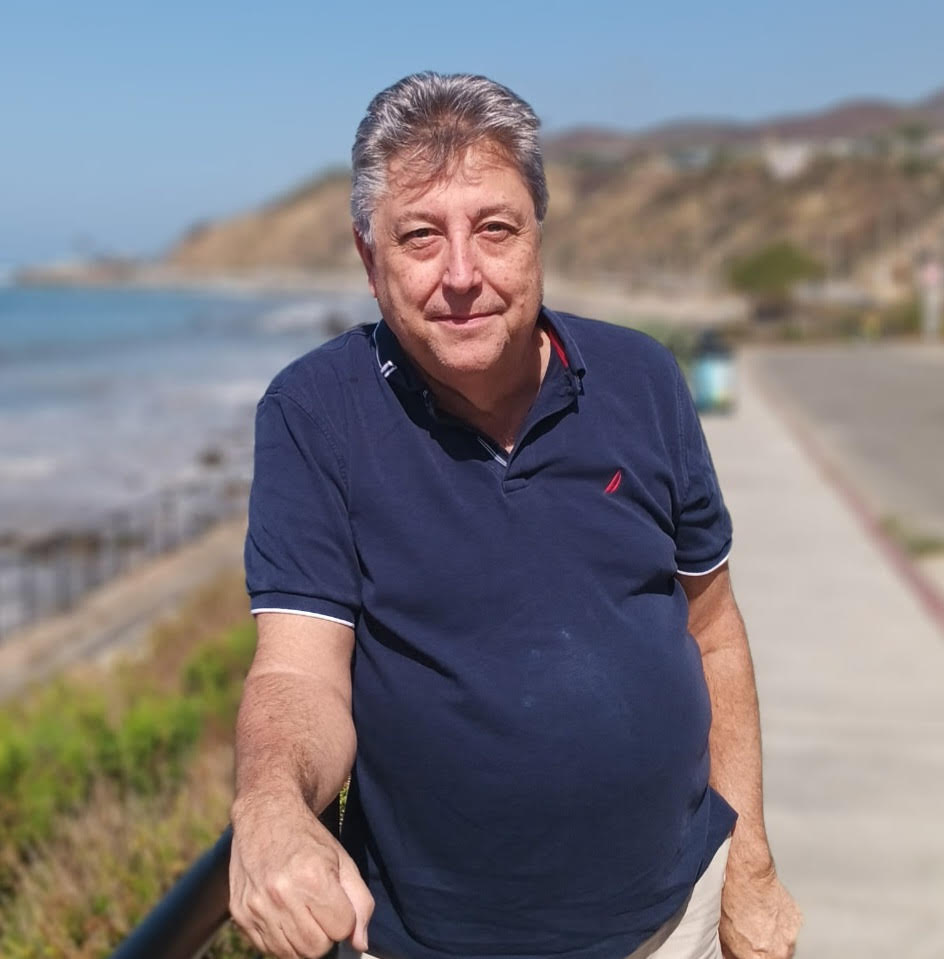
For John Korbel, music was never really something he left behind. Even during the years when he was no longer making music professionally, songwriting remained part of his life, quietly waiting for the right moment to return. That moment came in 2017, after a period of personal change gave him the time and space to reconnect with recording. What followed was not simply a return to an old passion, but the beginning of a different chapter, one shaped by years of experience, a deeper understanding of himself, and a willingness to write without the restrictions he may have felt earlier in life.
Korbel’s music is difficult to place inside a single box, and perhaps that is part of its appeal. His songs can move from playful funk and surreal automotive imagery to mature romance, American history, race, reconciliation and deeply personal reflections. His influences include artists such as Steely Dan, Al Jarreau, Michael Franks and Ben Sidran, but Korbel approaches songwriting primarily as a lyricist. For him, the words often come first, with the music developing around them and opening the door for other musicians to bring their own interpretations.
That collaborative spirit has become an important part of his recent work. His relationship with producer Mark Falchook and his experience working with musicians remotely demonstrate how technology has changed the recording process without taking away the human element. Even from different locations, Korbel trusts experienced players to bring ideas that he could not have imagined on his own.
His songwriting also carries the perspective of someone who has lived through different stages of life. There is humor in “Speed Shop at the Top of the World,” romantic longing in “Paint A Starry Night,” and a broader social reflection in “Great Flowing River.” Elsewhere, he is willing to confront his own imperfections and write more fearlessly about love, regret and experience.
In this conversation, John Korbel reflects on returning to music, the stories behind his songs, the musicians who have shaped his sound, and what it means to keep creating when songwriting has become less of a career choice and more of an essential part of who he is.

Your story is ultimately about returning to something that had always been part of you, even after years away from making music professionally. When you came back to songwriting and recording in 2017, what had changed inside you that made you realize music was something you still needed to pursue?
I had gone through some personal changes, including a divorce in the years just prior to 2017. I had never stopped writing songs, and suddenly found myself with the time and resources to dive back into recording. I made a couple of trips to Nashville to work with producer Art Ward. I had recorded with Art in the early 2000’s, and I relished the chance to work with him again. The result was the EP called Earthlight.
“Speed Shop at the Top of the World” seems to capture a very different side of your songwriting, combining funk, surreal imagery, humor, and the almost spiritual world of automotive “Bodhisattvas.” Where did that unusual universe come from, and what does a song like this allow you to express that a more straightforward narrative might not?
Speedshop was just an exercise for my imagination. I literally woke up one morning with the phrase “speedshop at top of the world” in my head. I don’t remember any dream or anything else that triggered it. It was just there. So I began to just riff on ideas about what that phrase could mean, and the ideas just flowed. It kind of wrote itself, and I was laughing to myself the whole time.
“Paint A Starry Night” uses Vincent van Gogh’s imagery to explore romance later in life. What interested you about placing the realities of mature love alongside the work of an artist whose life and art have become symbols of longing, beauty, struggle, and human vulnerability?
Wow! Great question! I had the idea for the hook “paint a starry night again” for years. Joni Mitchell did a live album called Miles Of Ailes. There is a segment of stage talk they retained with the tracks where the audience was yelling out requests, and Joni makes a comment that nobody ever asked Van Gogh to “paint A Starry Night again”. I thought it was such a witty and insightful thing for her to say. When my co writer, Jeff Rankin gave me a riff that he was working with, I started to contemplate what the phrase could mean in a romantic context. Paint A Starry Night became about recapturing the kind of excitement that you feel when you are young and experiencing romance for the first time. I think that everyone wants that, and it’s something that life’s experiences will prevent you from ever really having again.
“Great Flowing River” began as a personal songwriting challenge to avoid the familiar clichés that often surround river imagery, but eventually developed into a much larger reflection on American history, race, and reconciliation. What happened during the writing process that caused the song to move beyond its original concept, and how did you know when the story had become something larger than the metaphor?
I was alone driving from Florida to Texas. I spent the night in Vicksburg MS, and started driving in the morning across the bridge into Louisiana. I thought about all the songs down through the years about the Mississippi River, especially Old Man River from the Broadway musical Showboat. Just as a mental exercise, I started writing the song in my head while driving. As I started coming up with ideas, I realized that the river could be a metaphor for all of the issues that we still deal with in our country, especially poverty and race. I wanted to make the river a symbol of reconciliation.
Your music has been described as “jazz-adjacent singer-songwriter,” while your influences range from Steely Dan and Al Jarreau to Michael Franks and Ben Sidran. What attracts you to music that sits between categories, and do you think avoiding a strict genre identity gives you more freedom as a songwriter?
I have too much respect for real Jazz musicians to ever claim to be one myself. I am principally a lyricist. More often than not my songs start with lyrics that I later set to music. The real thrill for me comes when I am able to present my songs in a raw form to great players like my producer Mark Falchook. When Mark and the other players find wonderful things in my songs that I would have never imagined myself, that is the magic of collaboration in the studio setting. I am addicted to that process, and players with a background in Jazz are able to deliver that magic.
You started playing guitar at 12, performed in Philadelphia bands, headlined the Main Point, toured with Jelly Rolls, and eventually performed twice at the White House. When you look back at those early experiences from the perspective of the artist you are today, what lessons from that period still show up in the way you perform, write, or connect with an audience?
My early performing, as well as the shows I do now are solo acoustic. That really teaches you to connect with the audience because you are alone on the wire and you can’t depend on a band to help. I do my best to use some eye contact while I am singing, and provide a little humor between songs. My time in bands like Jellyroll was different but the same rules apply. I think audiences respond to musicians that are obviously enjoying the music that they are playing, and have chemistry among themselves that projects onto the crowd.
Returning to music later in life inevitably means returning with decades of experiences that were not available to you when you first began writing songs. How has age changed your relationship with songwriting, particularly your willingness to write about subjects such as love, history, humor, regret, and the strange details of everyday life?
I think I write a bit more fearlessly now. I am not afraid to talk about my faults. I think Courageous Love on the new album is a good example of that.
The recording process behind “Johnny Still Got Game” is particularly interesting because it combines your Orlando home studio, remote musicians, and longtime collaboration with Mark Falchuk. How did working remotely affect the creative relationship between the musicians, and did the limitations of distance unexpectedly create new possibilities for the arrangements?
I have learned so much working with Mark Falchook. He is a brilliant, instinctive arranger, and a fantastic keyboard player. When we made the Falling Feels Like Flying album together, we did it in a traditional studio setting. It was very fulfilling, but also very expensive. Over time, I have become a bit more proficient in my home studio, and developed some relationships with musicians able to work remotely like drummers Tom Cabrera in New York, and Jeff Thal here in Florida, as well as saxophonist Chris West who I had been on my sessions in Nashville. It just felt like all the pieces were in place to take this approach to the project. I won’t say it didn’t pose many challenges and limitations, but I feel like we achieved everything I was hoping for and more. I think you miss out on some of the spontaneous things that come from the traditional studio setting, but I have learned to trust the players to insert their own ideas, even remotely.
There is a noticeable sophistication in the arrangements you gravitate toward, but your songs also depend heavily on personality, wit, and lived experience. How do you decide when an arrangement needs another musical idea and when the song is better served by stepping back and allowing the lyric or vocal to carry the moment?
I have to admit that I have a streak of pre-rock&roll pop in my writing. On this album it shows up on Never Bet Against The Sun, and on songs like New York All To Ourselves, and First Christmas Loving You. I depend on Mark Falchook for a lot of guidance. For example, I have an alternate version of Paint A Starry Night that relies more on the original guitar track that I had for the song. But when Mark came up with the new approach with the horn arrangement, we decided to move ahead with that version. Mark and I also decided to include my solo acoustic track of The Only Thing, because the song benefited from that kind of intimacy.
The title “Johnny Still Got Game” feels almost like a statement about refusing to let age, time, or a long break from music define what an artist is still capable of creating. After everything you have experienced, what does “still got game” mean to you now, and what are you hoping this chapter of your musical life allows you to discover that earlier chapters could not?
First let me be clear, I was always terrible at basketball. As we get older, we can decide for ourselves whether we continue to have the same passion for the things we love to do. Songwriting is something that I don’t know how NOT to do. It’s just a great feeling to finish a new work and for at least a few minutes feel like it’s the best thing you’ve ever done. It is also very fulfilling to have a backlog of songs from earlier years that you can revisit, and take a fresh perspective on by rewriting a lyric or by coming up with a different musical groove. I love the process and I guess I always will!
CONNECT
WEBSITE | FACEBOOK | TWITTER | SPOTIFY | YOUTUBE | INSTAGRAM
