


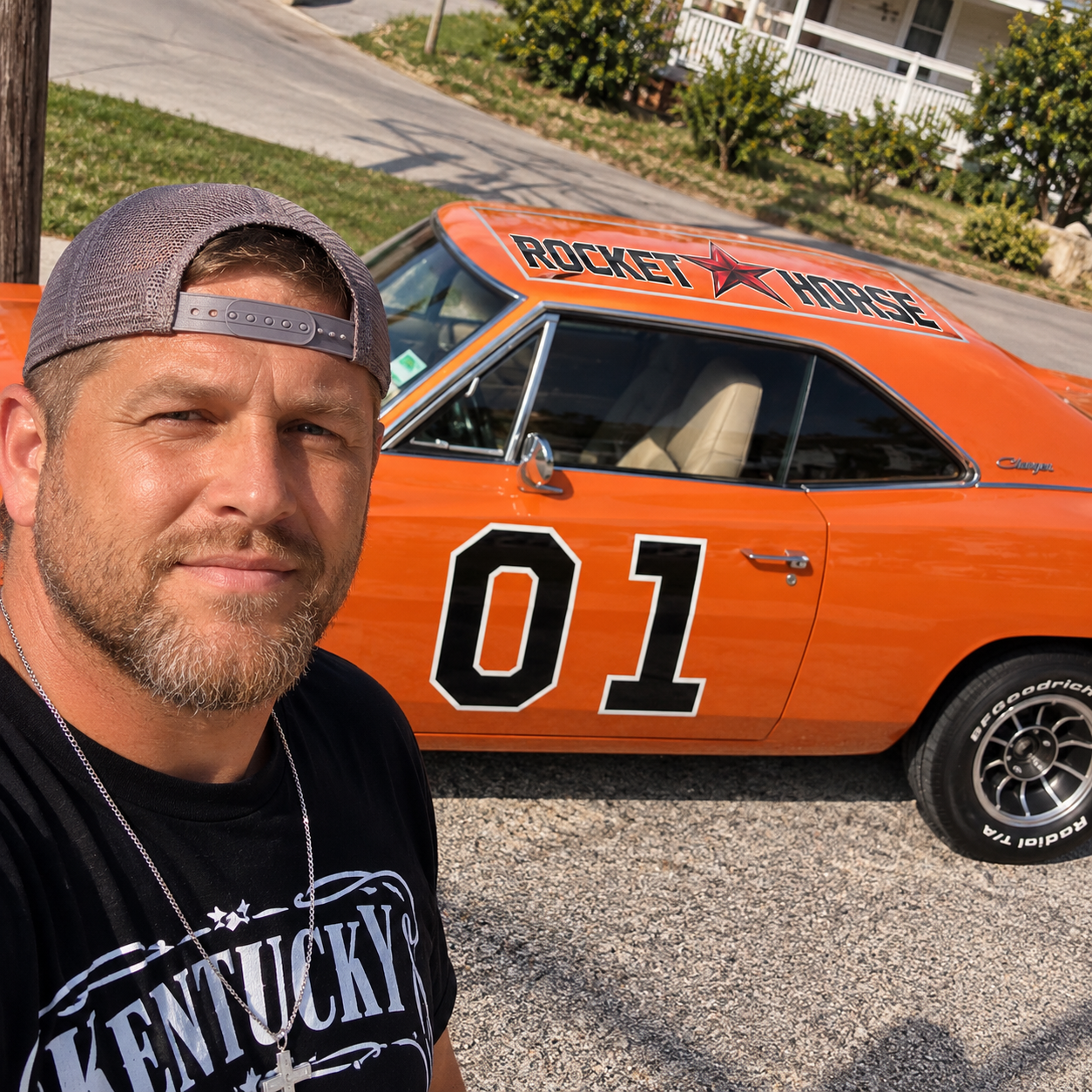
Rocket Horse is building a sound that refuses to stay inside one genre. Moving naturally between rock, country, pop and groove-driven influences, the project is rooted in strong melodies, memorable hooks and songs designed to connect with listeners beyond the moment of release.
Recently, Rocket Horse had an exclusive interview with Boostrin, where the project opened up about the creative philosophy behind the music, the lessons learned through years of songwriting, and the importance of staying true to an authentic artistic voice. The conversation also explored how different places, cultures, history, philosophy and everyday experiences have shaped the way Rocket Horse approaches music.
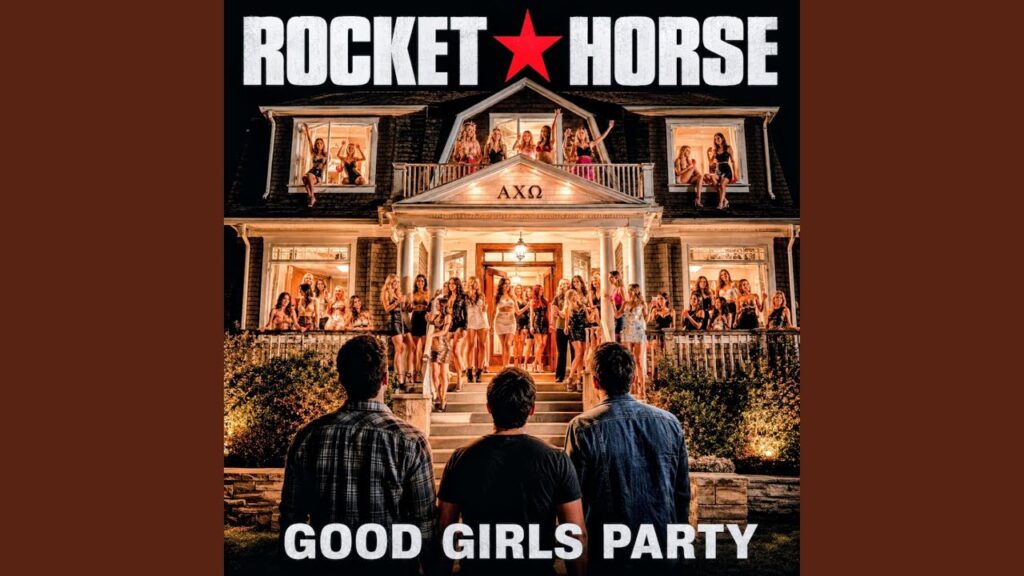
At the centre of the discussion is “Good Girls Party,” an energetic country-rock release with an alternative edge, a big chorus and a playful story built around a clash of personalities at a college party. Rocket Horse explained how the song came together as a duet and why maintaining grit, attitude and character was just as important as making the track catchy and accessible.
The conversation also touches on the growing response to “Good Girls Party,” including attention from independent press, college and community radio, playlist curators, sync opportunities and international listeners. Beyond streaming numbers, Rocket Horse reflects on what it means to hear the music reaching audiences in different parts of the world.
From learning to trust personal instincts while remaining open to new ideas and technology, to developing the ability to recognize when a song has something special, Rocket Horse offers an honest look at the creative process and the journey behind the music.
Read the full Boostrin interview with Rocket Horse below.
Every artist eventually reaches a point where they have to decide what they want their music to say about them beyond simply sounding good. What do you want Rocket Horse to stand for as an artistic project, and what personal values do you hope remain visible in the music as the project develops?
I’m hoping I can write music that sticks around — songs people will still enjoy 20 years from now. With Rocket Horse, I’ve always wanted the music to cross genres naturally. Not every genre in every song, but enough different influences that you might hear a little rock, a little pop, a little country, maybe something a little groovy. It isn’t really calculated — that’s just what comes out because I genuinely like all kinds of music.
I want to stay true to that. I want to keep writing music that different kinds of listeners can connect with: good, cool, feel-good songs, deeper catchy ballads, and music with a lot of melody and hooks. I love hooks. I love melody. If Rocket Horse can keep doing that and make songs that people still want to hear years from now, that means a lot to me.
Music can change significantly as an artist gains more experience. Looking at where you are now compared with when you first started making music, what has changed most about the way you write, perform or judge your own work?
I think it changes a lot, and I’m sure most musicians notice the same thing in their own work. It almost comes in levels. You start out and you’re not necessarily bad — you’re learning. Then you hit another level and think, “This is the best stuff I’ve ever written. The world is going to love it.” Then you keep growing, hit another level, and suddenly some of what you did before doesn’t feel quite as strong anymore.
That’s actually one of the coolest parts of the whole ride. It’s like learning anything else — playing a sport, writing a great novel, becoming a better dancer. You keep improving, and when people start appreciating what you’re creating more and more, that’s the ultimate gift. It means something you created connected with somebody. Somebody loves it, or even just really likes it. That’s a really cool feeling.
What have been some of the biggest lessons you have learned from the creative process that had nothing to do with songwriting itself? Have there been mistakes, failed ideas or unexpected experiences that ultimately changed the way you approach making music?
It’s interesting because some of the mistakes and failed ideas actually came from pushing back too hard against change. One example was resisting newer technology, including AI-assisted tools in music. There were also times within Rocket Horse when I pushed back on an idea from someone else in the group, only to realize later that their way was actually the better way to go.
Another big mistake early on was trying to write what I thought people wanted to hear. I was showing the songs to people, but nobody was really hearing me in them, because they weren’t completely me. Once I
started writing what I wanted to hear, saying what I wanted to say, and writing in the style that felt natural to me, people started responding. Now it’s beginning to catch on in a way that feels like a
dream.
Probably the biggest lesson is simple: trust your instincts, but stay open enough to recognize when somebody else — or a new tool or idea — can help you get somewhere better.
An artist’s influences often go deeper than the musicians they openly name. What other forms of art, culture, experiences or everyday life have shaped the way you think creatively, and how do those influences show up in your music in ways listeners might not immediately recognize?
That’s a great question. I’ve traveled since I was young, and I’ve lived in a lot of different places. I was born in Chicago, basically grew up in South Florida, went to high school in California, and now I live in Georgia. All of those places have shaped how I see things, how I write, and how I’ve grown both as an artist and as a person.
I’m also really into history and have studied it pretty deeply, and I’m drawn to philosophy and deeper thinking. I’m a big fan of art in general, and obviously a huge fan of music. I honestly don’t think there’s a genre where I can’t find something I like.
I think all of that ends up in the songs, even when it isn’t obvious. Different places, different cultures, different ideas, different eras — all of it becomes part of the way you see the world, and eventually part of the way you write.
There is often a difference between the music an artist enjoys privately and the music they feel compelled to create themselves. What is the difference between those two worlds for you, and what usually tells you that an idea is something worth turning into a Rocket Horse song?
If there was ever a question meant for me, this is it. It may sound cliché, and I’m sure a lot of artists say it, but Rocket Horse is my favorite band. It wasn’t always that way. It took a lot of time and a lot of work to become a better songwriter — learning how to write stronger hooks, better melodies, cool lyrics that still have something to say, and putting a little attitude into it.
At the same time, I’ve always liked the idea of stretching across genres so different kinds of listeners can find something in the music. I’m a huge fan of rock, pop, country and plenty of other styles. I’ve written a lot of songs, and while I like them all for different reasons, I can usually tell when one is stronger than the others — when there’s something about it that says, “This is the one. Lean into this.” I think most artists develop that instinct over time.
“Good Girls Party” has a title that immediately creates a sense of curiosity and suggests a story about people stepping outside expectations. What was happening creatively when the idea for this song first came to you, and what did you want the phrase to communicate beyond its obvious surface meaning?
With “Good Girls Party,” I wanted a real feel-good party song — the kind of song I could imagine being blasted obscenely loud at college sorority and fraternity parties everywhere.
The story is basically about three guys who think they’re the men. They show up at this sorority party thinking they’re going to play a show, charm everybody, and practically leave with the whole house. They find out pretty quickly that they seriously misjudged the situation. They’re outnumbered, completely unprepared, and these young women have plenty of fire and attitude of their own.
That’s really what the title is about to me. The “good girls” aren’t just sitting there playing some expected role — they’re running the party, giving it right back, and these guys suddenly realize they may not be nearly as impressive as they thought they were.
The song is described as country/rock with an alternative-rock edge, built around guitars, a strong hook and a big chorus. What were the most important musical decisions you made to give “Good Girls Party” its particular character, and was there anything you deliberately avoided doing because it did not fit the song?
I wrote “Good Girls Party” as a duet because I wanted that back-and-forth attitude — the guys versus the girls, with both sides bringing the same amount of spunk and personality.
Musically, it had to rock, but it also had to feel country. Then I wanted just enough pop in there to tie everything together, plus a little groove on the back end so it really felt like a party song. I didn’t want it to get too polished or too pop-heavy, because I wanted it to keep some grit and attitude.
The goal was that you could hear the song once and recognize that there’s a lot going on from a genre standpoint — country, rock, pop, a little groove — but somehow it all belongs together. That mixture is a big part of what Rocket Horse is.
The track is being presented as a concise, energetic and radio-ready release. How do you approach the challenge of making a song immediately accessible without stripping away the character, attitude or details that make it feel personal to Rocket Horse?
I think the biggest thing is not writing a song just to make it “radio-ready.” I want the song itself to come first. The hook has to be strong, the melody has to stick, and the song has to have some attitude and personality. Then you can tighten it up, cut out anything that doesn’t need to be there, and make sure it moves.
With Rocket Horse, I don’t want everything polished so smooth that you lose the character. I still want a line, a guitar part, a vocal attitude or some little twist in the song that makes you say, “That sounds like Rocket Horse.”
For me, accessible doesn’t have to mean generic. You can make something catchy and immediate and still leave some dirt on it. That’s probably the balance I’m always chasing.
You are taking “Good Girls Party” to independent press, college and community radio, playlist curators and sync outlets, while the song has also begun receiving third-party Spotify playlist attention. How are you thinking about the different audiences and opportunities surrounding the release, and what does meaningful exposure look like to you beyond simply seeing a stream count increase?
It’s been amazing. We’ve been hitting all of those areas — independent press, college and community radio, playlists, sync — and now international play has really started coming in too. “Good Girls Party” is being played in different countries, including Ireland, Great Britain and Mexico, and a lot of that has happened just in the last couple of weeks.
The reception has honestly been unbelievable. I think the international response has probably surprised me the most. You put a song out there and hope people connect with it, but then you start hearing that people in other parts of the world are actually playing it and responding to it — that’s incredible.
For me, meaningful exposure is bigger than just watching a stream count go up. It’s knowing the song is reaching real people in places I never expected, and that they’re choosing to listen, play it and share it. That’s the part that really means something.
This release is part of a wider effort to introduce Rocket Horse to new listeners. What do you want someone who discovers “Good Girls Party” for the first time to do next: explore the rest of your music, understand the wider story behind Rocket Horse, or simply come away with a particular feeling that stays with them?
What I really want is for somebody to hear a song without seeing the name, the artwork or anything else and think, “That’s Rocket Horse.” Whether I’m writing for Rocket Horse or working on another project, I want there to be something recognizable in it — the feel, the hooks, the melody, the attitude, the way the song moves.
If you listen through the catalog, it covers a lot of ground. Some songs lean more rock, some more country, some are ballads, and others land somewhere in between. But I think you can still hear the same songwriter underneath all of it.
To me, that’s what consistency means. It doesn’t mean every song has to sound the same. It means the heart behind the writing is still recognizable. If people can hear that and know it’s Rocket Horse, then I feel like I’ve done what I set out to do.
