


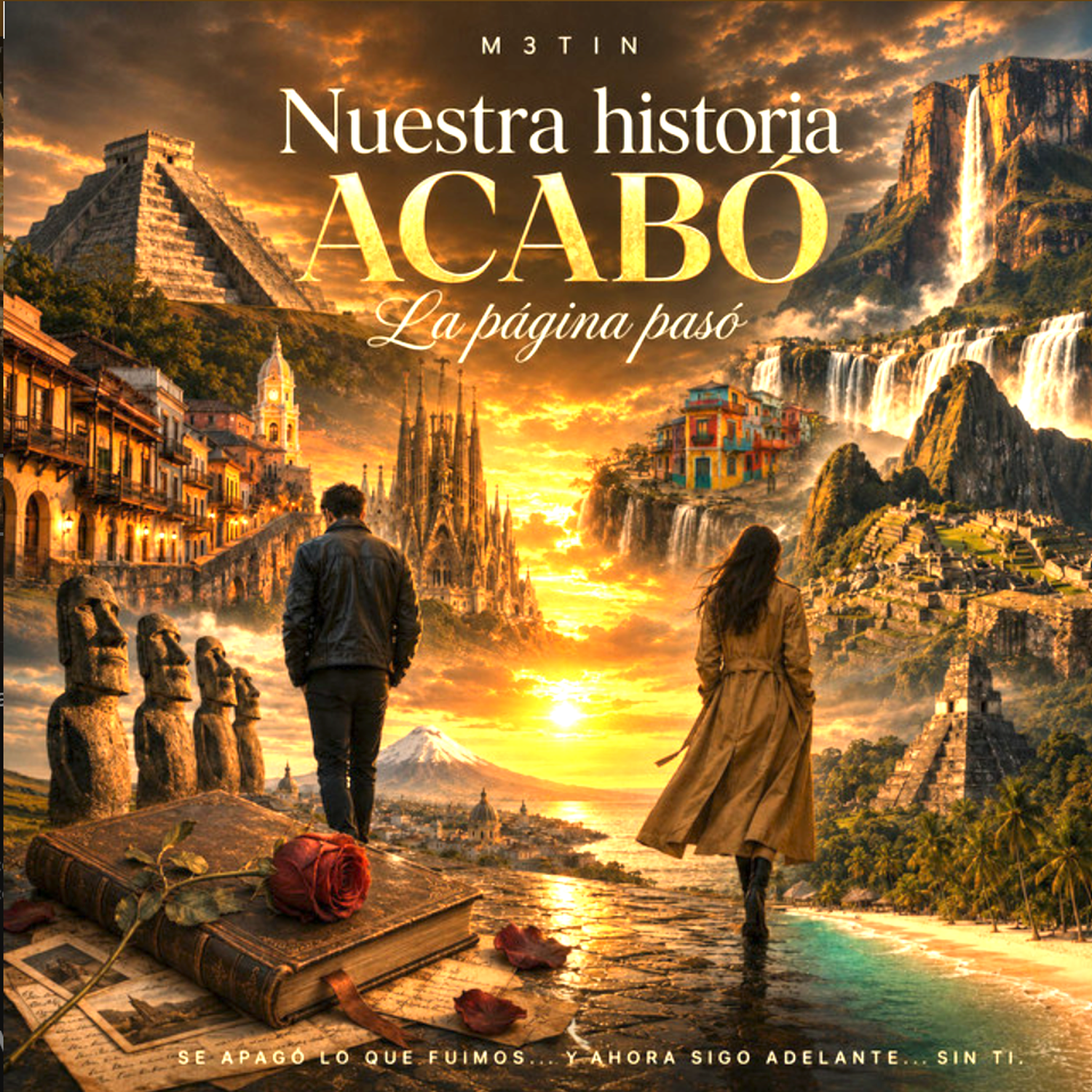
M3TIN is reshaping the idea of global music by proving that a song can belong to many cultures without losing its original emotional identity. Created by songwriter and music architect Ahmet Metin Oktay, the project challenges the traditional path of international releases by allowing a single story to be authentically reborn across multiple languages before returning to its Turkish roots. Rather than relying on direct translations, M3TIN embraces culturally native adaptations that preserve the song’s emotional core while speaking naturally to listeners in their own language.
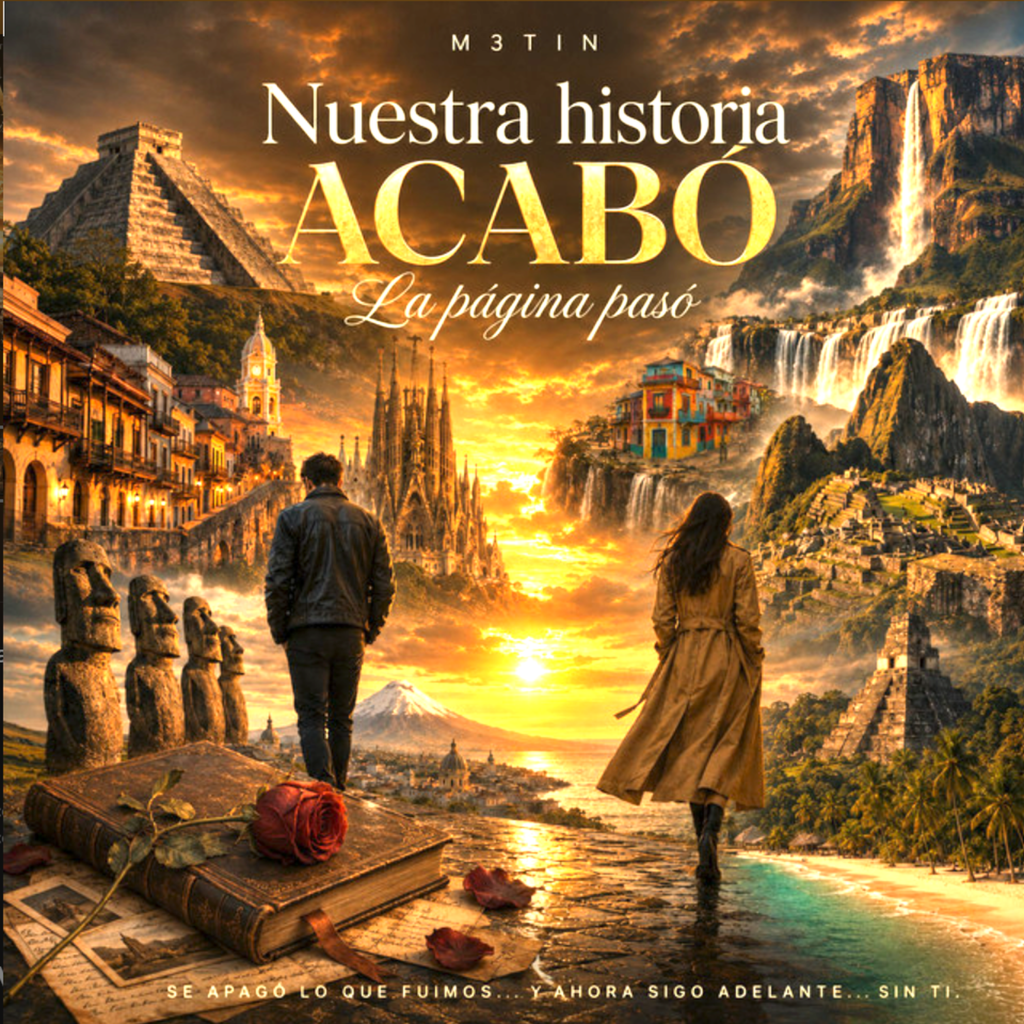
The latest release, Nuestra Historia Acabó, has already captured the attention of millions through TikTok ahead of its official debut, demonstrating that powerful melodies and heartfelt storytelling can transcend borders long before marketing campaigns begin.
In this exclusive interview with Boostrin, M3TIN discusses the vision behind this groundbreaking multilingual project, the importance of cultural authenticity, the responsible use of AI in music creation, and the mission to build a global catalogue where every listener can experience the same story in the language of their heart.
Congratulations on the release of “Nuestra Historia Acabó.” The song has already created a remarkable global journey before its official release, reaching millions of listeners through TikTok. What inspired the idea of allowing one story to travel across multiple languages and cultures?
Thank you. The idea began with a contradiction: we often say that music is universal, but the industry still treats songs as though they need passports.
I wanted to test universality properly — not by exporting one recording and adding subtitles, but by allowing one emotional story to be reborn inside each language. That means local idioms, local imagery and, where appropriate, local musical colours, while the story and melodic heart remain unchanged.
My aim was for someone in Almaty, Phnom Penh, Rio, Paris or Bogotá not to hear a foreign song visiting, but a song that seemed to understand where they lived.
The pre-release response on TikTok showed me that listeners understood the concept instinctively: the melody crossed the border first, and each language gave it a home.
The song was originally written in Turkish but is being introduced through different native-language adaptations before the original version arrives. What was the creative vision behind telling the same emotional story through different cultures while keeping each version authentic?
The Turkish original, “Sayfa Kapandı,” is deliberately being held for the finale. I call that “homecoming last.”
Most artists begin locally and dream of becoming global. I reversed the map. The song first travels through other cultures, earns a life in each of them, and only then returns home.
But authenticity requires discipline. Every adaptation keeps the same story, the same emotions and the same melodic heart. What changes is the way a culture would genuinely express those emotions.
We do not carry words mechanically; we carry the feeling. A line that wounds in Turkish may sound merely informative in another language, so the new line must be born inside that language and confirmed by a native speaker.
The result should feel neither translated nor imported, but native to the listener.
Heartbreak is a universal emotion, but every culture expresses love and loss differently. What have you learned from seeing listeners around the world connect with the same song through different languages?
The greatest lesson is that universality is not sameness.
The underlying ache may be shared, but cultures give it different gestures, silences, rhythms and forms of dignity. I receive comments in languages I do not speak, yet the emotional pattern is immediately recognisable. People connect the song to their own marriages, separations, memories and new beginnings.
That taught me that cultural specificity does not weaken a universal story; it is what allows the story to become universal.
When listeners use the song to tell something from their own lives, it stops being only my composition. It becomes a shared emotional space.
Your approach focuses on native adaptations rather than direct translations. How important is it for you to preserve the emotional meaning and cultural identity of a song when bringing it to new audiences?
It is not one detail in the process; it is the discipline that governs the entire process.
Our rule is simple: the story, the emotions and the melodic heart are untouchable. The idioms, imagery, cadence and way of saying goodbye are free to change until they feel true in the new language.
A sentence can be grammatically correct and still be emotionally wrong. That is why every version is reviewed by a native speaker before release.
We are not trying to prove that the same words work everywhere. We are trying to make the same feeling fluent everywhere.
It is not a translation, and it is not a different song. It is the same heartbreak, spoken naturally in your language.
Your music combines cinematic production with intimate storytelling. When creating a song, how do you balance the scale of a big emotional sound with the vulnerability of a personal story?
I think of it in cinematic terms: the production is the wide shot, and the lyric is the close-up.
The arrangement can be large enough to suggest an entire skyline, but the words must remain intimate enough to belong to one person alone at two in the morning.
I often build the emotional scale first and then remove anything that competes with the confession at the centre of the song. Strings, piano, rhythm and atmosphere should enlarge the feeling, not hide it.
A listener may admire the production once, but it is the vulnerable line that they carry home.
You have embraced modern technology, including AI tools, while emphasizing that the lyrics and creative decisions remain entirely your own. How do you view the relationship between technology and human creativity in the future of music?
I see technology as an instrument, not an author.
I use modern tools, including AI, openly, but they do not choose the story, write the emotional truth, define the cultural intention or decide whether a native phrase breaks the heart in the right place. Those are human decisions, and I remain accountable for every one of them.
The brush is not the painter, and the tool is not the artist. I conceive, write, shape, direct, select and approve the work. I lead the technology as a conductor leads an orchestra.
The future of music will not belong to artists who simply reject technology or surrender authorship to it. It will belong to those who use it transparently, imaginatively and with unmistakable human purpose.
The music industry often encourages artists to focus on one market or language, but your project takes a completely different approach. What made you believe that a song could begin as a global story rather than grow from a local audience?
My professional life has been spent working across markets and cultures, and it taught me something very simple: markets are local, but emotions are not.
The conventional advice is to choose one language, build one audience and expand later because that is easier to categorise and market. But digital discovery no longer respects that sequence. A melody can reach a country before a campaign does.
So I built M3TIN around the world from the first note instead of treating international versions as an afterthought.
A song does not have to become global only after proving itself locally. It can begin as a global story, provided every local version is treated with respect.
I did not ignore the map. I reversed it.
Every artist has a defining reason behind their creative choices. Beyond streaming numbers and international recognition, what personal mission or message drives the M3TIN project?
Beyond numbers, the mission is to prove that global ambition and cultural respect are not opposites.
Too often, global music asks the listener to come to the dominant language. I want the song to make the journey to the listener. That includes major languages, languages underrepresented in global pop and, over time, languages genuinely at risk of falling silent.
When a song lives in a language, that language lives a little longer.
There is also a personal principle behind M3TIN: one artist can carry one coherent creative identity without being limited to one voice, one market or one tongue.
One artist. Many voices.
The voices change; the responsibility and authorship do not.
Looking back at the journey so far, from the first creation of the song to hearing different cultures embrace it, what has been the most emotional or surprising moment for you?
The first Kazakh adaptation was the defining moment.
I am Turkish, and every instinct would normally say: begin at home. Instead, I allowed my own language to wait and listened as people in Kazakhstan embraced the song as something that belonged to them.
That was when the concept stopped being a strategy and became something I felt physically.
The other deeply moving moments have come from ordinary listeners who place the song beneath a video about their own ending, survival or recovery.
The most powerful sentence an artist can receive is not, “I like your song.”
It is, “This is my story.”
As M3TIN continues expanding into new languages and territories, what do you hope listeners understand about your vision? What kind of legacy do you want this multilingual musical journey to create?
I hope listeners understand that multilingual does not mean mass-produced.
Each version is deliberate, culturally accountable and shaped to feel native without losing the identity of the original work.
The legacy I want is a catalogue in which people can be heartbroken, understood and eventually healed in their own language without feeling like a secondary market.
I would like M3TIN to be remembered as a project that reversed the map, treated adaptation as an art form and showed that technology can expand human authorship rather than erase it.
When the Turkish original finally comes home, the circle will close — not because home was forgotten, but because it was saved for the finale.
Many tongues. One heart. Music speaks them all.
