


Some songs have a way of outliving the moment in which they were created. For Hamish, “Singing In My Soul” is one of those songs. First recorded in 1999 at Hatfield Court, the track began in an intimate, almost bohemian setting surrounded by local musicians, but its journey would eventually take it far beyond that old drawing room. More than two decades later, it remains a song people remember, request, and choose for deeply personal occasions.
Produced by Les Penning, whose musical experience and sharp ear played an important role in shaping the recordings, “Singing In My Soul” emerged from a creative environment that was as informal as it was musically rich. With musicians moving between violin, saxophone and bass, and even the sound of a local children’s choir finding its way into one of the recordings, there was a sense of spontaneity around the sessions. Hamish knew the song was special when hearing it back gave him goosebumps, but he could not have known just how long that connection would last.
The song would later reach the New Zealand folk charts while Hamish was travelling, while also finding its way onto television. More importantly, it became something personal for listeners, with friends and strangers stopping him to express their love for the track and couples choosing it for their weddings.
That long musical journey is only part of Hamish’s story. His years around the UK subculture scene and his founding of the Rabbit Hole at Glastonbury exposed him to countless emerging artists, sharpening his appreciation for melody and songwriting. His own writing often arrives instinctively, with choruses, melodies and lyrics appearing suddenly and demanding to be captured, even if that means writing them in the dust on a car bonnet in the middle of the desert.
Then there is Significant Others, an album that spent sixteen years buried among piles of cuttings while life continued to unfold around it. Family difficulties, work, children and personal struggles made completing the project seem increasingly unlikely. Finding those lost pieces again reopened a door Hamish thought might have closed for good. With Chris Oldfield eventually helping shape the recordings through his musical skill and attentive ear, the project finally began moving toward completion.
Now, as older music returns to listeners, the moment carries a meaning that goes beyond nostalgia. Hamish describes the album as something that has recently rebooted his confidence and self-esteem, while the re-release of “Singing In My Soul” feels like a natural way of joining the dots between different chapters of his life.
In this conversation, Hamish looks back at the recording of a song that refused to disappear, the people and places that shaped his music, the long road to Significant Others, and what it means to finally hear these songs finding their way back into the world.
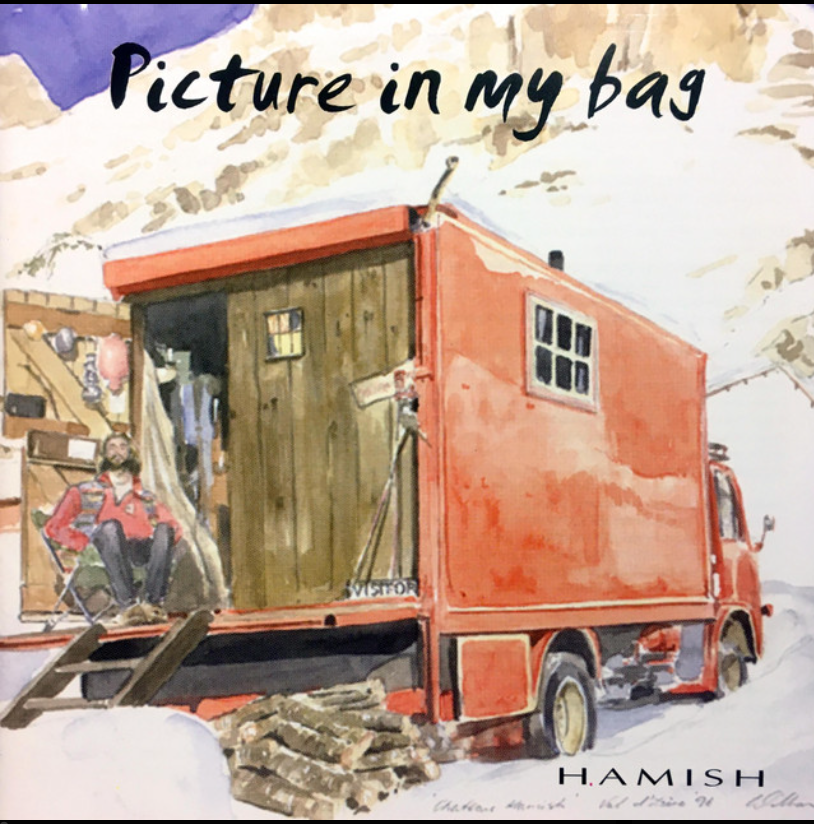
Take me back to 1999 for a moment. When you were recording “Singing In My Soul” at Hatfield Court, did you have any idea that the song would still be part of people’s lives more than two decades later?
I had no idea!…I knew it was a good song because I got goose-pimples when I heard it back.
The setting at Hatfield Court sounds like it must have contributed something to the recording. What do you remember most vividly about being in that old drawing room with the local musicians, and did the atmosphere of the place actually influence the way you played or sang?
Les Penning would arrive with a four pack of cold, special brew and a cigar, and would just press record. Having my friend Felix, Toby’s, there was amazing because he is such a great virtuoso on the violin, saxophone, and bass. On one of the tracks, you can hear the sound of a local choir of kids… The atmosphere was Bohemian to say the least!
Les Penning produced the original album, and given his connection with Mike Oldfield, I’m curious about what he brought into the room when you were making “Picture In My Bag.” Was there anything he did with “Singing In My Soul” that changed the song from what you originally imagined?
Les penning is a master wood instrumentalist and can be heard on Mike Oldfield’s Ommadawn… but he also has a brilliant set of ears, which is essential on a producer.
The song found its way onto the New Zealand folk charts while you were travelling there and was also used on a major television program. What was it like discovering that something you had recorded back home was finding a completely different audience on the other side of the world?
It was an amazing feeling and gave me great satisfaction knowing that I had created something that so many people loved
You describe “Singing In My Soul” as a beloved track that has remained a staple at weddings and events. Do you remember the first time you realised people were connecting with the song in that very personal way, rather than simply listening to it as another track in your catalogue?
Friends and strangers would stop me and say “I LOVE that track”….It was always a honor to play it for their weddings…
You have spent three decades around the UK subculture scene and founded the Rabbit Hole at Glastonbury, where you supported young artists from very different musical backgrounds. Did being around so many emerging musicians over the years change the way you understood your own songwriting or the importance of giving artists a space to be heard?
Yes…. I had to listen to many many Neue young up-and-coming artists, and this made me more sensitive to what a good melody is and what is not.
Your music is known for melody and storytelling. When you write a song, do you normally begin with something you want to say, or can a melody arrive first and almost force the story to follow it?
Usually, I get a chorus, tune and lyrics in my mind and have to write it down quickly or record it immediately before I forget it… Then I work on it when I have time… Once I was driving in the desert, I had no paper, so I had to write the lyrics and notes in the dust on the bonnet of my car
There is also this remarkable story of *Significant Others* being lost in a pile of cuttings for sixteen years before finally finding its way back into the world. What actually happened during those sixteen years, and what went through your mind when you realised the album had not really disappeared forever?
I went through years of tumultuous family situation’s, mental health difficulties, and having children and work, etc. and I didn’t think I would ever get this album off the ground… Having lost all the bits and pieces and then we found them I was over joyed to think that I might be able to finally get around to recording it.
You have credited Chris Oldfield, formerly of Dreadzone, with helping bring *Significant Others* into the form we are hearing now. After such a long gap, what was it like handing those recordings over to someone else and asking them to help shape something that had been sitting with you for so long?
Having Chris Oldfield suddenly appear in my life was amazing… I could never have got this project finished without his expert skill and acute listening abilities.
After everything that has happened around “Singing In My Soul” and the journey from *Picture In My Bag* to *Significant Others*, what does this moment mean to you personally? Does bringing this older music back to listeners make you look at those early recordings differently now?
My life has been recently quite difficult, and this album has rebooted my confidence and my self-esteem enormously… Re-releasing “singing in my soul” seems like a natural and beautiful way to join the dots over all these years.
