


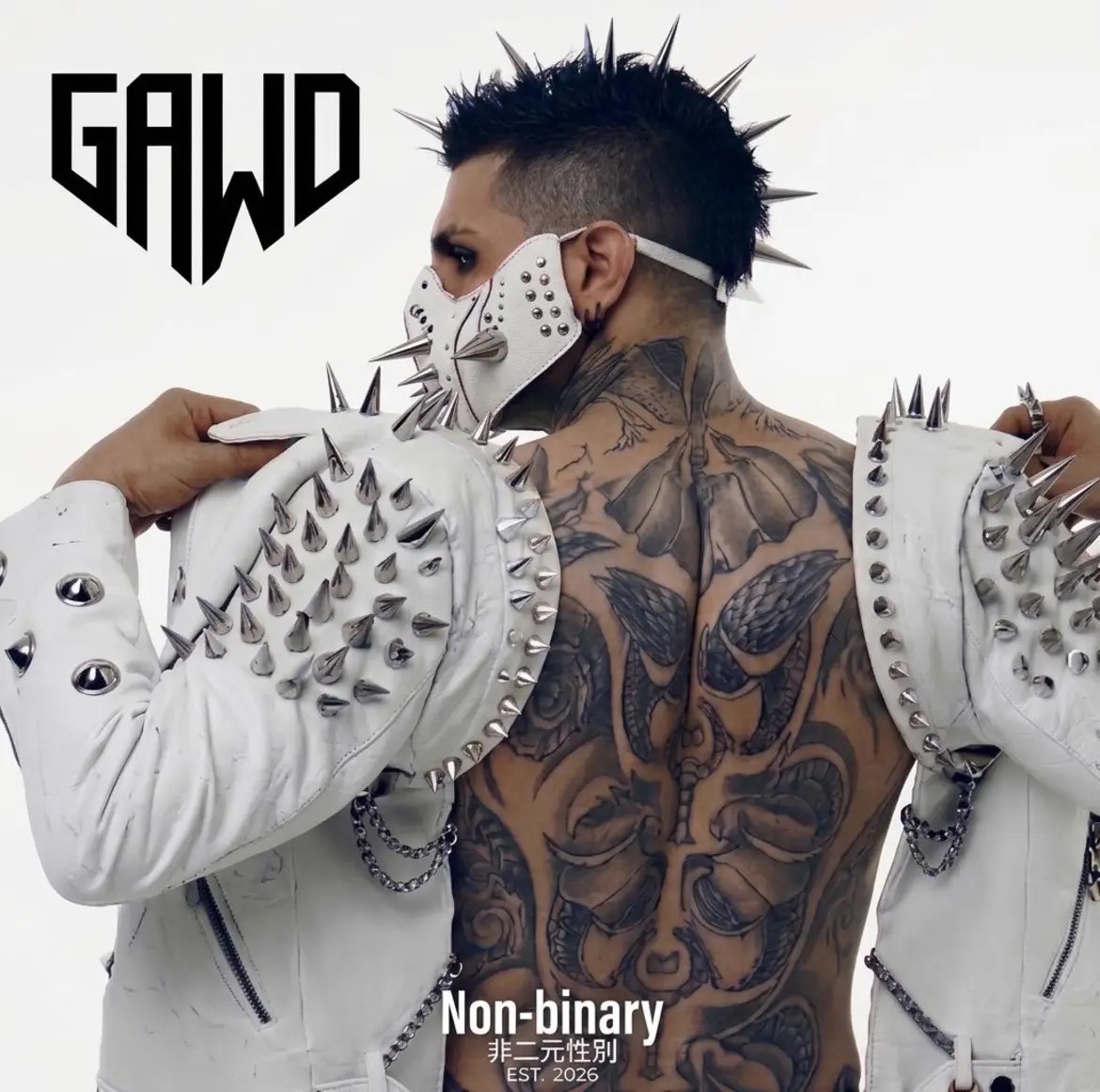
Some songs arrive quickly, while others take years to find the words, the sound and the right moment to be shared. For GAWD, “To My Angels” belongs to the latter. Nearly 18 years in the making, the song grew out of personal loss and a long process of understanding grief, eventually becoming a heartfelt tribute to departed loved ones and a source of comfort for anyone who has struggled to put that kind of pain into words.
The story began after the loss of GAWD’s grandmother. At the time, the emotions were too overwhelming to translate into music. Further losses within the family, alongside witnessing friends navigate their own experiences of grief, gradually gave the song new meaning. Rather than trying to write something that simply captured sadness, GAWD came to understand that grief is also an expression of the love that existed before the loss. That realisation became central to the song’s direction: remembering those who are gone while holding on to the possibility that their influence, values and love remain with us.
It is a deeply personal subject, but GAWD never intended the finished song to remain a private expression. The hope is that listeners will recognise something of their own experiences in it, whether as a tribute to someone they have lost, a way of expressing emotions they have kept inside, or simply a reminder that they are not alone. Its emotional journey moves from the helplessness of saying goodbye towards faith, acceptance and hope, without pretending that the pain of losing someone ever completely disappears.
That honesty also shapes the accompanying music video, filmed over several years and across different locations. Through changing landscapes, seasons, sunrises and sunsets, it reflects the passage of time and the different ways people learn to live with loss. For GAWD, healing is not something that follows a fixed timetable; it happens gradually, with memories and emotions continuing to occupy their own place in our lives.
There is another interesting dimension to GAWD’s artistic identity: the decision to remain anonymous. By keeping a personal image out of the conversation, the artist wants listeners to approach the music without being influenced by a public persona. The intention is simple: let the words, melodies and emotions take centre stage. It also provides the freedom to create without being overly concerned with visibility, trends or expectations.
Musically, GAWD embraces that same freedom. Shaped by French and Lebanese cultural influences, personal experiences and encounters with different musical traditions, the artist moves between pop, electronic, oriental, African, Latin and rock elements without feeling the need to settle into one category. The creative process begins with a story and a melody, allowing each composition to develop its own identity. Collaboration also plays an important role, with producers bringing their individual musical backgrounds into the final sound.
Beyond music, GAWD is also involved in authorship and digital entrepreneurship, approaching songs, videos and online storytelling as connected parts of a larger creative vision. Yet music remains the most personal space in that world: a place to process memories, explore emotions and communicate experiences that ordinary conversation sometimes cannot reach.
In this interview, GAWD reflects on the long journey behind “To My Angels,” the changing relationship with grief, the freedom of anonymity and the belief that music should exist beyond labels and passing trends. It is a thoughtful look into an artist whose most personal work is ultimately intended to make room for other people’s stories, too.
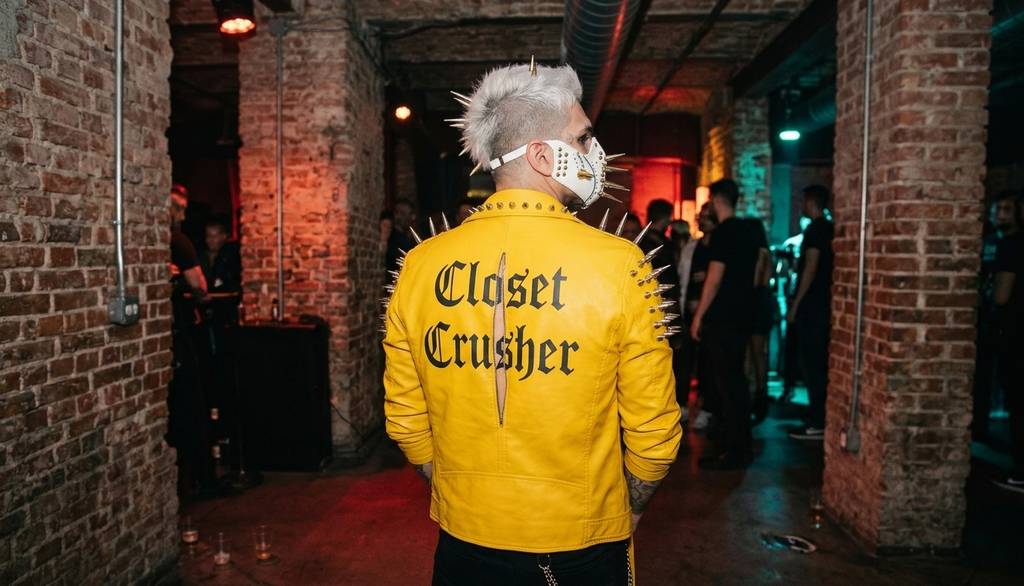
You describe your work with the words, “I actually have something to say.” What was the moment or experience that made you feel it was important to create a project like “American Closet”, and what did you most want to communicate?
American Closet is, in all honesty, a psychic rupture. It’s a product that years of being gaslit and projected on by a group of downlow guys kind of sorta erupted after holding back what I felt was conditioned to never say out loud. I realized the consequence of willingly holding back the truth for the sake of someone’s fear and loathing. I ended up bearing the blame for all their insecurities until it sort of overwhelmed me into becoming GAWD, which was a means to retain sanity. What kept me going through all the injustice I faced was the relentless drive to destroy the closet. As presumptuous as that may sound, it is entirely true.
“American Closet” is structured across five movements and explores concealment, masculine performance, and repressed identity. Why did you choose to tell this story through a concept album rather than a collection of separate songs?
I made the album as I naturally experienced it. It was a sequence of songs and experiences that inevitably formed into a collection of songs that, in all honesty, redeemed the experience. I can’t go into the full details of what happened, but all I can say is it was A LOT.
The album includes confrontational titles such as “American Faggot”, “Mister Masculine”, and “God Hates the Downlow”. What is behind the choice of such direct and provocative language, and how do you hope listeners understand the ideas behind these songs?
I didn’t really have a reason behind the song titles, to be honest; when I wrote them, it wasn’t really thought out. To me, the context behind them changes the meaning, and I suppose that was always the intention behind it. Not a conscious reclamation, but a reclamation in itself.
Your sound combines the heavy percussion of 1990s industrial rock with the aggression of early-2000s nu-metal. Which artists and records helped shape this musical direction, and how did you develop a sound that feels connected to those eras while remaining your own?
I’ve been a Marilyn Manson fan since I was a kid. Regardless of the recent media reports about him, he will always be my idol.
Several publications have compared your music to Marilyn Manson’s “Antichrist Superstar” era. How do you feel about those comparisons, and are there other artists or musical movements that have influenced your approach?
I feel they are spot-on in the sense of inspiration, though there can only be one. As far as the tradition goes, I guess it would only come naturally as an artist to have a subconscious drive to express the same kind of polarizing message. I can relate in the sense of being a scapegoat through which the cultural shadow expresses itself—in this case, the masculine shadow.
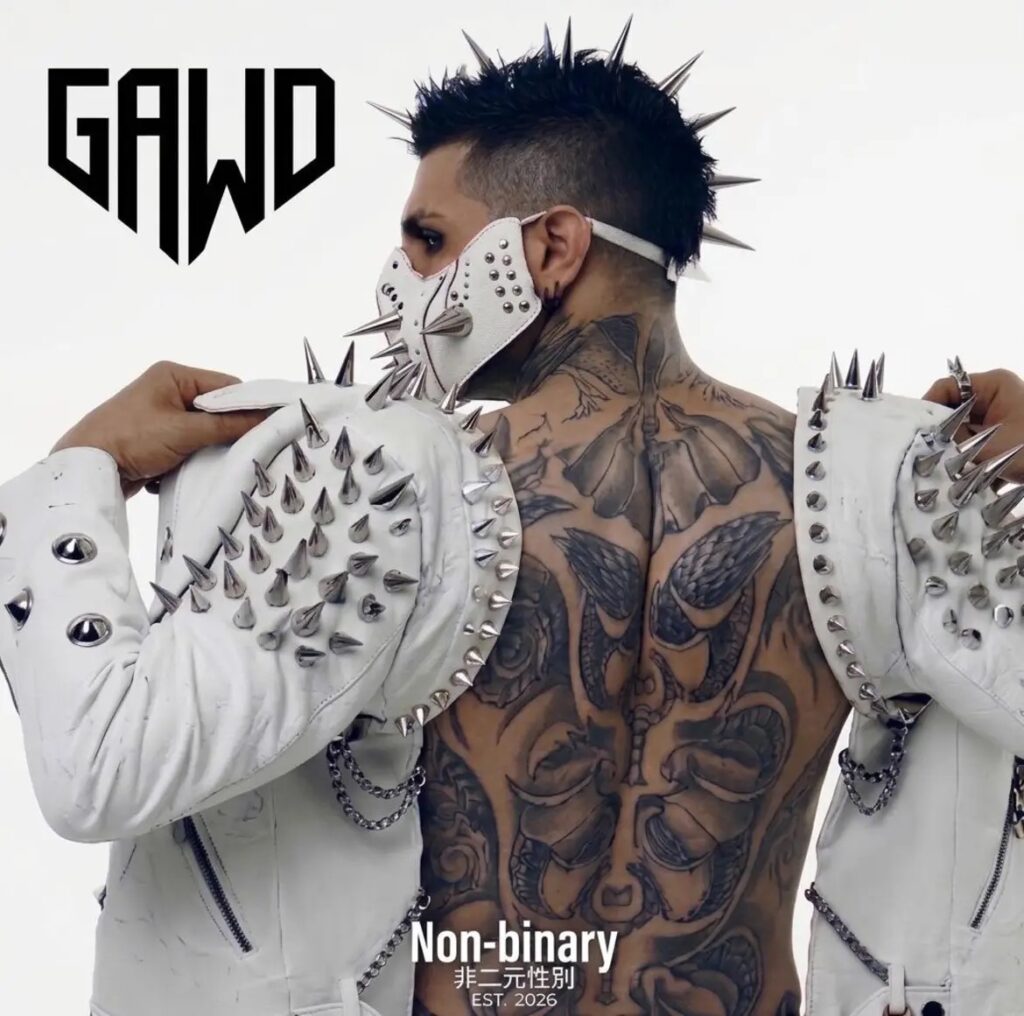
Your visual identity uses clinical costuming and AI-assisted visuals to explore the difference between a manufactured public image and a concealed private self. How important is the visual side of GAWD, and how closely do you connect it with the themes in the music?
GAWD is pretty much me with an outfit—I guess you could say—co-designed with artificial intelligence. I plan to recreate it and perform with it on. The visuals are just what I’m doing in the meantime because they resonate with the point I’m trying to get across.
“American Closet” has received coverage across more than 12 countries, with over 30 media placements. What has the international response meant to you, especially as an independent artist working without the support of a traditional record label?
During the campaign, I guess the intensity behind the trauma—which became the fuel for the engine running it—has kept it going.
I know the message is long overdue; the whole idea of being afraid to be perceived gay or soft is, in itself, hypocrisy. The downlow has become an alternative for queer culture and, in itself, a means to shame it—the downlow, by origin, stemmed from that shame. Though it is, in itself, a joke: how can you be ashamed of something you don’t even have the courage to admit?
