


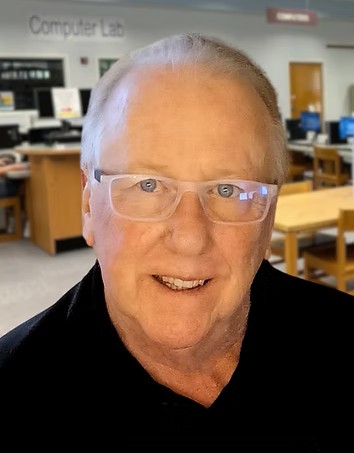
Barry Kukes’ story is not simply one of longevity. After more than five decades of songwriting, performing and storytelling, he continues to approach music with the curiosity of someone still discovering what a song can become. His latest project, “Songs for Bryan,” opens another chapter in that journey, moving into contemporary dance and EDM-influenced pop while remaining rooted in the storytelling instinct that has shaped his work for decades.
What makes the project particularly interesting is the way Kukes has embraced a musical language that sits far outside the boundaries of what might be expected from an artist with such a long history. His answer to why he moved toward dance and EDM is characteristically straightforward: the stories he wanted to tell simply seemed to work better there. Rather than allowing familiarity to determine his direction, he followed the song, even when that meant entering territory that was unfamiliar to him. His son Bryan also played an important role in encouraging him to explore contemporary pop and connect with a younger generation, adding a personal dimension to an already adventurous creative decision.
That willingness to keep learning extends into the production itself. Kukes has incorporated AI into his songwriting and demo process, sometimes beginning with nothing more than a hummed melody before developing the resulting material through stems and extensive editing in Audacity. His perspective on the technology is nuanced. He sees it as a powerful development tool that can preserve the core of a songwriter’s original idea while allowing arrangements and production to develop far more quickly than traditional studio processes. At the same time, he remains deeply appreciative of the musicians he has worked with throughout his career and sees AI as a tool rather than a replacement for human musicianship.
At the heart of everything, however, is storytelling. Kukes has written seven books alongside his eight albums, and he approaches songs with the same instinct that drives his literary work: create characters, establish a situation and give the listener a reason to stay with the story. Even when writing about intimacy, desire or contemporary relationships, he is interested in what lies beneath the immediate subject. His discussion of “Keep Me Up All Night” reveals that instinct clearly, as he reconsidered the song’s original perspective and changed it to a female point of view so the emotion could remain central without the lyrics becoming overly literal.
His decades as a drummer and songwriter have also shaped this approach. He understands rhythm from the inside, often beginning with a drum track and building a song around its tempo and cadence. Yet his role has never been limited to performance. From serving as a stage manager and technical director in high school to becoming a behind-the-scenes contributor as a drummer, songwriter and producer, Kukes has consistently found creative purpose in shaping the complete picture rather than standing at its centre.
Perhaps most striking is that, after all these years, he still refuses to treat his past catalogue as a formula for the future. He recognises that musical tastes change across generations and that what connected with audiences yesterday cannot simply be assumed to work today. Instead, he approaches each new genre with an open mind and commits himself fully to the challenge.
That spirit becomes even more poignant when Kukes speaks about the urgency behind his current work. While facing personal health challenges, he is conscious of how much more he still wants to create, from new music to the unfinished prequel to his novel “The Christmas House.” His motivation is therefore not simply to remain active. It is to keep creating while there is still time to bring the stories in his head into the world.
In this conversation, Barry Kukes reflects on “Songs for Bryan,” his unexpected journey into EDM and contemporary pop, the creative possibilities and complications of AI, his lifelong commitment to storytelling, his relationship with performance, and the urgency that now drives him to keep writing. His story is ultimately about an artist who has spent more than fifty years proving that experience does not have to mean staying in one place.
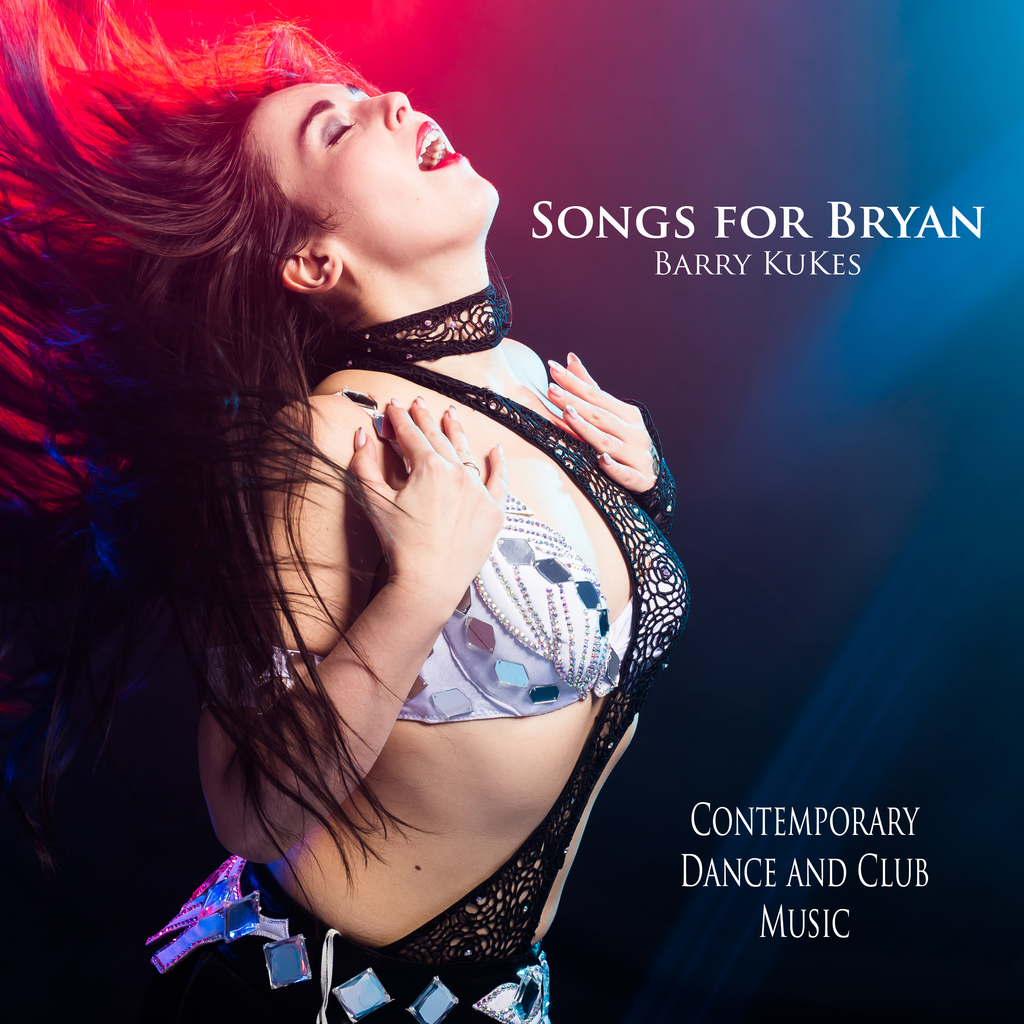
“Songs for Bryan” represents a significant shift after more than five decades of making music, particularly because it moves you toward contemporary dance and EDM-influenced pop. After building such a long history across genres, what made you feel that now was the right time to step into a sound so different from much of your previous catalogue?
That’s a very good question, and the answer is, it just happened. I write when I sleep, and when I rise, I work on the story outline and then convert the story into lyrics. I always begin with a story. The decision to focus on the dance and EDM genre at this time was because the lyrics and story did not flow as well in other genres. The assistance that AI provided made the dance genre songs possible.
Your son Bryan encouraged you to explore contemporary pop music for a younger audience, which makes the album a particularly personal creative experiment. What did his encouragement make you reconsider about the way you had been approaching songwriting, and was there anything about modern pop that initially felt unfamiliar or challenging to you?
As a songwriter, I need to venture into other genres and styles of music to have a well-rounded catalog. If I only wrote pop ballads or smooth jazz tunes, I’d be pigeonholed, and the writing would become stymied. Even if a genre is unfamiliar to me and not my preferred wheelhouse, I will still give the effort a 100% commitment. Associates had commented, “You are heading toward rap and hip-hop; can’t wait for those.” They are being facetious. God forbid a 70-year-old white guy starts writing gangster rap. But then again, you never know.
The song at the heart of this release centres on a woman wanting the night to continue because she is enjoying the experience with her lover. When writing a contemporary pop song around such a direct and intimate idea, how did you approach making the subject feel sensual and engaging without allowing the concept to become more important than the emotion of the song
I don’t really feel the song, Keep Me Up All Night, is the center of the LP. If I
had to choose the strongest song, I would go with Don’t Need You. Both songs have had great listening numbers, but I think Don’t Need You is a bit more unique with a broader appeal. But to answer the question about Keep Me Up All Night, again, I start the writing process with a storyline. In this case, the story content was about a guy wanting the girl he is with to keep him up all night, literally. After review, I thought that perspective was a little too provocative, so I changed the story and song presentation to the female POV. The lyric is not as literal and is open to interpretation. The male POV assumption would be more sexual than sensual. By switching to a female perspective, I was able to maintain the emotion of the song without it being overshadowed by the lyrical context.
You have spent decades writing across big band, classic rock, dance, Christmas music, smooth jazz, and country. What have those years taught you about the fundamentals of a strong song that remain true regardless of genre, and what did contemporary pop force you to rethink about those fundamentals?
Most genres follow the verse, verse, chorus, verse, bridge, chorus, chorus structure. Dance-EDM does not. This genre takes a simple verse and expands it to different arcs and directions. Lots of improv and fills, both vocal and instrumental. Writing the music for Dance-EDM is much more challenging, at least for me, than any other genre. The lyrics need to be expanded to include the vocal chopping necessary to carry the flow of the song.
One of the most interesting parts of this project is your use of AI during the creative process, including humming melodies into AI software and then working through the resulting stems in Audacity. How did you decide where AI could contribute creatively and where your own musical judgment had to take over, and did working this way change your understanding of what it means to produce a song?
Working with AI is both a blessing and a curse. I have worked with hundreds of studio musicians over the years, and that process was always the same. Here is the chart; play this. AI is not as structured. Although I can take a song in demo form that consists of a guitar track, drum track, and vocals, and then upload it into an AI program, it will usually retain the tempo, structure, and lyrics. The snare and kick drum are usually identical to the demo track. The same applies to the vocals. AI will take some liberties with the musical instrument arrangements and delivery, but overall its pretty close to the original demo, just more polished and produced.
To get the type of finished product AI can produce in an hour would take weeks with studio musicians and at a far greater cost. Don’t get me wrong. I love studio musicians; I am one, after all, but in the development stages of song production, AI is so much more efficient. The goal is for the AI demo to reach a producer’s or musician’s ears, so they record it with studio musicians or their band.
You are primarily known as a songwriter and drummer rather than someone who needs to be at the centre of the stage. What is it about songwriting itself that has kept you creatively engaged for more than fifty years, and what do you think you are able to express through writing that you do not necessarily need to express through performance?
I have always been a behind-the-scenes contributor. When I was in high school, I was the stage manager and technical director for our school plays. Not on stage in the spotlight, but controlling every aspect of the performance that wasn’t the performer themselves. As a drummer, I am always in the back of the stage, but if I don’t control the tempo and create the groove with the bass player, the band sounds less inviting.
I have also written many books and consider myself a storyteller. I apply this same writing process when composing a song. I seldom write a song that would be similar to She Loves You by the Beatles. It’s a great song, but what’s the story it tells?” “She loves you, and you know that can’t be bad? She loves you ya, ya, ya.” Hey, it worked for John and Paul, but I like more depth of story in the songs I write.
Performing regularly with The Taylor Road Band and the Copper Creek Band while simultaneously developing your own original material gives you two very different relationships with music. How has playing covers in front of audiences influenced the way you write your own songs, and does performing other people’s music ever make you hear your own compositions differently?
As a songwriter, I am influenced by other songs and songwriters. Many times I will be listening to or playing a song, and I might think, “I like the feeling of this song. I need to write something similar.” As a drummer, the goal is to establish the tempo and cadence (4/4, 6/8, ¾, etc.). I will often lay down a drum track and then build a song around the track. Then I apply the lyrics I wrote, and then hum or sing the song the way I hear it in my head, into an AI program. Once I have the basic demo of the song, then I spend days and even weeks on editing stems to get the finished track. AI helps, but it’s not as easy as it sounds. Many composers now use AI to help structure their songs. Imagine if Burt Bacharach had the opportunity to engage with AI. He would have written hundreds of more songs than he did, many of which I’m sure would have been major chart busters.
With eight albums already behind you and a new project aimed at a younger generation, how do you balance the experience that comes from having spent decades in music with the willingness to approach a new genre without assuming that what worked in the past will automatically work today?
I don’t assume anything will work. The musical tastes of the consumer change constantly. Yes, there are generational favorites, and writing for a generation that is not one that you experienced first-hand is challenging. I wasn’t even alive in the 40s, yet I can write big band music that is well-received. I was alive in the 90s, but it wasn’t the most influential decade of my musical life. I was a teenager in the 70s, so greatly influenced by 60s and 70s music and artists. What I have written in the past worked in the past. Today, I am writing for multiple generations, so I need to keep an open mind and heart.
Your creativity also extends beyond music, with seven books to your name and “The Christmas House” reaching more than 25,000 downloads. Do you see songwriting and writing books as separate creative worlds, or do they come from the same instinct to create characters, emotions, and stories that people can connect with?
As I mentioned, storytelling is storytelling, whether a novel, opera, or song. The structure will vary, but in the end, a story is being told. There are many wonderful storytelling songs. The Wreck of the Edmund Fitzgerald, by Gordon Lightfoot, El Paso, by Marty Robbins, You Ought to Know, by Alannis Morrisette, and thousands more. I recently wrote a book called When Angels Cry. This novella is based on 16 songs from 4 different albums written by Janis Ian. I had to reproduce each song as a cover under a licensing agreement, but it came out great. The reader reads the chapter and then listens to the corresponding song. The audiobook is the best format for this novella because the song plays immediately after each chapter narration. I consider this novella the true connection of story and music.
After five decades of songwriting, you are still experimenting with new technology, new sounds and new audiences. When you look at the next chapter of your creative life, what are you still curious enough to learn, and what would you like your music to prove about the possibilities that remain open to an artist who refuses to stop evolving?
To be transparent without being too morbid, I am experiencing several health problems. I don’t know how much longer I will be around to share my music, so I am trying to get as much of it out as possible. If something comes of it in the future, after I’ve crossed over the rainbow, then my song, Bryan, will need to manage the details. The worst part of being ill is not knowing you are dying; it’s not having enough time to complete all the things you wanted to create. I am working on a prequel to my Christmas House book. I have written 200 pages, and I’m still nowhere near to completion. I hope to live long enough to get this novel to the publisher.
I will continue to evolve for as long as possible, God willing. Until then, please encourage your readers to check out my body of work, both literary and musical, by visiting www.minicooperproductions.com.
