


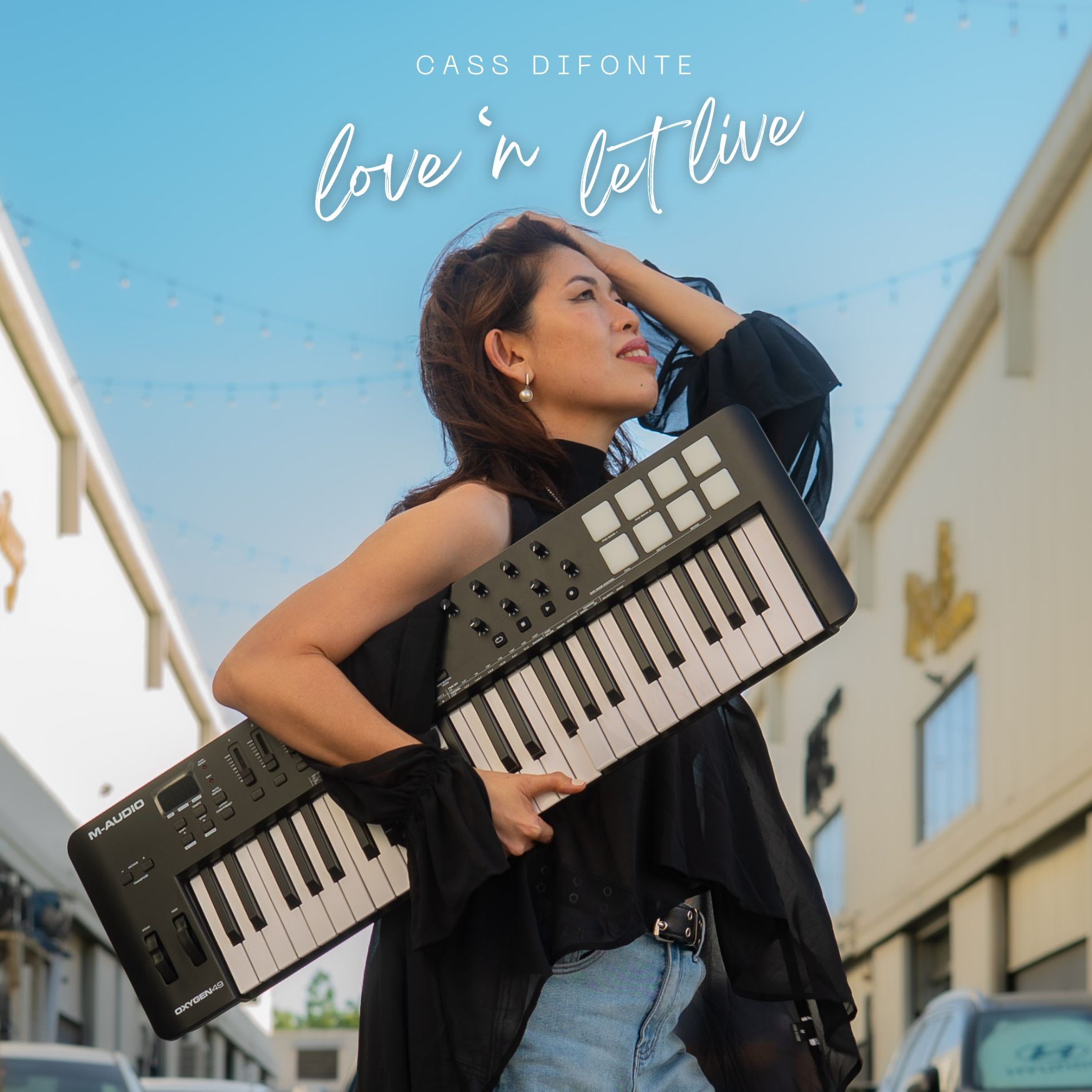
Cass DiFonte’s music comes from a place where personal experience, spirituality and everyday life meet. Her latest single, “Love N Let Live,” is built around a simple but meaningful idea: choosing love over fear, allowing people to live through their struggles, and remembering that life is still worth embracing even when it becomes difficult. Yet beneath its uplifting message is a deeper story of self-discovery, faith and learning to find perspective in moments that can easily become overwhelming.
The song emerged during a spiritual period in Cass’s life, when she believed in God but was still questioning the path that would eventually lead her to Jesus. At the same time, she was paying close attention to the experiences of people around her and the ways fear, pain and attachment to temporary problems can sometimes consume us. Rather than presenting those observations as simple answers, she turned them into music that could serve as a companion for people navigating their own difficult seasons.
Musically, “Love N Let Live” reflects the same sense of openness found in its message. Cass draws from jazz, soul, R&B and Latin influences, using unexpected chord changes to mirror the unpredictable nature of life. The carefree “la la la” section introduces a feeling of freedom, while R&B-inspired rhythms keep the song moving. Kamara’s arpeggiated bass work, Gina’s Gospel-tinged background vocals, horn stabs from Marques Young of Qsoundmusic and the arrival of Latin percussion toward the end gradually build the track into something celebratory. The production does not ignore hardship. Instead, it seems to suggest that joy can exist alongside it.
That balance is central to Cass’s songwriting. She believes the strongest songs are often the most personal ones, allowing raw experiences to become a way of understanding life while also giving listeners room to see themselves in the story. Her background as a pianist has also shaped the way she approaches music, often beginning with harmony before allowing melody and lyrics to develop around it.
Following “Fly Like A Bird,” which explored freedom and embracing one’s true self, “Love N Let Live” continues to introduce listeners to the kind of artist Cass wants to become. Working from Dubai, surrounded by people from different cultures and backgrounds, she sees music as a way of reminding listeners that they are not alone, particularly people balancing work, ambition, family and the everyday pressure of trying to build a meaningful life.
As her catalogue develops, Cass is discovering that her songs can reach further than she initially imagined. With her next chapter set to explore love from a much more personal perspective, her journey is still unfolding. At the heart of it all is a desire to create music that leaves people with something simple but powerful: light, connection and perhaps a small glimmer of hope when they need it most.
“Love N Let Live” carries a message about choosing love over fear and continuing to embrace life despite its difficulties. What personal experience or realization brought you to that message, and why did it feel important to express it through a song?
I was going through a very spiritual stage in my life at the time. I can’t remember exactly what triggered it, but I remember that I had always believed in God; what I wasn’t sure about was the path that leads to God. This was before I came to believe in Jesus.
Writing this song came not only from observing my own experiences, but also from watching the experiences of people around me. I’ve seen people become so upset and worked up over things that matter deeply to them in the moment, sometimes to the point of exaggeration, where it ends up causing harm to themselves or others. These are things that we won’t be taking with us when we leave this world.
I felt it was important to express this through a song because I want my music to be there for people during difficult times. I want it to feel like a companion—something that can help someone through whatever they may be going through.
The song feels uplifting without ignoring the challenges that sit underneath its message. How did you balance warmth and optimism with the realities of fear, uncertainty, and hardship while writing and producing the track?
First of all, it has a lot to do with the chord progression. There are quite a few borrowed chords from parallel keys that take you somewhere you might not expect the song to go after the first chord. In a way, this mimics how life is a series of unexpected events.
In one of those parallel keys, I opened up into a carefree mood with the “la la la” section because I was trying to capture that feeling of freedom and being carefree. Underneath that, I used R&B-inspired beats to drive the song forward.
The bass also plays an important role. The bassist, Kamara, had a fantastic idea to use arpeggios, which helped create a positive mood while also fitting the prosody of the song.
The background vocals by Gina brought in some Gospel flair that complemented the overall feeling. Towards the end, the horn stabs by Marques Young of Qsoundmusic punctuate the song with a sense of assurance. Finally, Latin percussion joins in at the end, almost like a celebration, signalling that life is still worth celebrating despite its hardships.
Your songwriting often explores personal growth, self discovery, perseverance, and finding light during difficult moments. How do you know when an experience is ready to become a song, rather than something that is still too personal or unresolved?
On the contrary, I believe a good song is a personal song. A song resonates with listeners when there is something real and emotionally honest at its core. Without those raw emotions that come from a personal story, a song can sometimes miss the mark when it comes to connecting with people.
For me, the more emotional and personal an experience is, the more I know it is ready to become a song. Sometimes, putting an experience into music is actually part of the process of understanding and making sense of it.
You began your musical journey as a pianist, and that foundation clearly informs your relationship with melody and harmony. How has being a pianist shaped the way you write songs, and do you approach a song differently when you begin from the piano compared with starting from a vocal idea or lyric?
Writing from the piano first always feels like laying down the foundation of a song, because harmony to me feels like a bed. Almost immediately, I’ll have a melody flowing on top, which means the lyrics tend to come last.
When I start with lyrics, the melody tends to come second and the harmony last. Sometimes all three elements—lyrics, melody, and harmony—come to me at the same time, almost as if they’ve been downloaded from above, but that’s quite rare.
Your music brings together the warmth of jazz and soul with contemporary production. What have you learned from those traditions about emotion, groove, and storytelling, and how do you make sure their influence becomes part of your own identity rather than simply sounding like an homage?
My chord progressions are jazzy, while my style of singing leans a little more toward the pop/R&B side. My production leans toward R&B and soul, but I sometimes bring a splash of jazz and Latin as well.
All of those elements come together to create my identity. I’m not trying to sound purely like one particular genre, but Jazz/Soul always speak to my music.
“Fly Like A Bird” focused on freedom and embracing your true self, while “Love N Let Live” moves toward love, resilience, and finding joy through adversity. Do you see these songs as connected chapters in your personal and artistic journey?
Releasing “Love N Let Live” as the second single after “Fly Like A Bird” was an intentional plan. As I emerge into the industry as a new artist, I wanted these songs to help set the tone for who I am and give listeners a sense of my identity as an artist.
They explore different aspects of life, but both reflect the kind of messages I want my music to carry—messages about embracing yourself, embracing life, and finding the strength to keep moving forward.
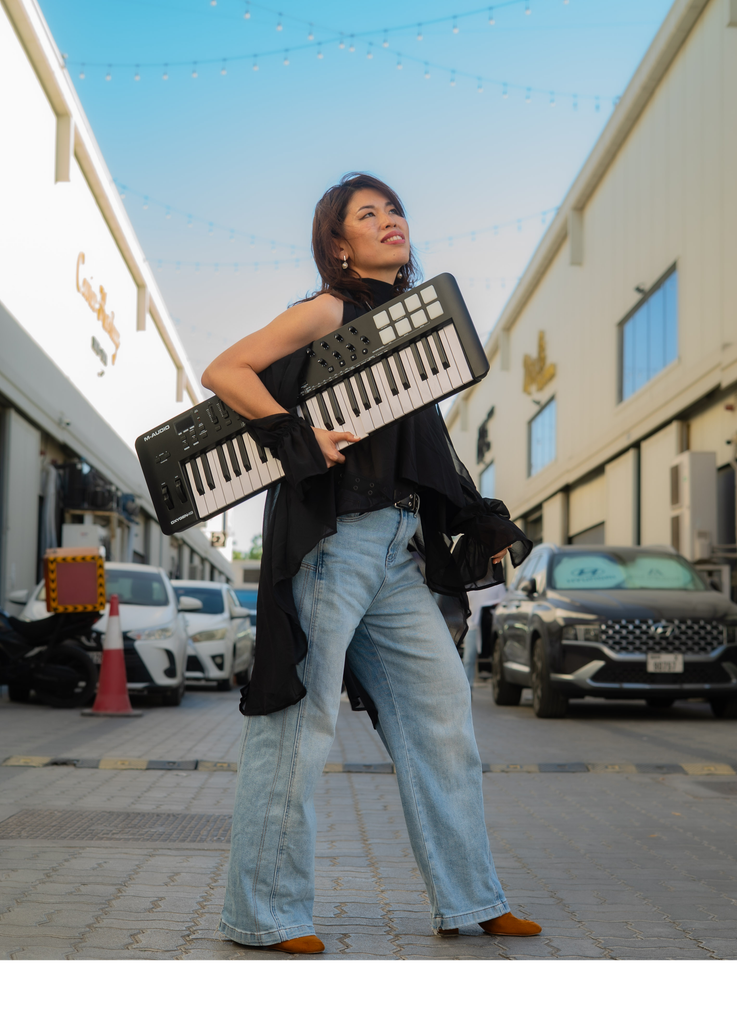
Working from Dubai, a city where different cultures and musical influences constantly meet, gives you an interesting creative environment. How has living in Dubai shaped your perspective as a songwriter, particularly in the way you think about identity, connection, and the different audiences your music can reach?
Living in Dubai allows me to look at my music as something that can connect with people from different cultures and backgrounds.
If I think about my target audience, they are almost literally copies of me—a working mom, hustling through life, smashing life goals, and trying to thrive as a person. Sharing my music feels like shouting, “Hey, you’re not alone. I’m right here with you.”
I think living in such a multicultural city reinforces that feeling for me. Music can cross so many boundaries, and I want mine to be something people can connect with regardless of where they come from.
Your songs are emotionally intimate but also designed to encourage listeners to reflect and feel hopeful. When you write something deeply personal, how do you transform your own story into something that leaves enough space for listeners to find their own experiences inside it?
“Love N Let Live” was written in a way that I could be singing it to myself as a reminder, but I could also be singing it to someone else—as if I had heard their story and understood how difficult life had been for them.
The place I’m coming from in “Love N Let Live” is one of compassion and resilience. When I call out people who are hurting, they’ll remember what has hurt them. When I call out people who carry scars, they’ll remember how they got those scars.
I think that space is what allows the song to become more than just my story. It can become a reflection of someone else’s experience too.
As your catalogue grows, what have you discovered about yourself as an artist that you did not understand when you first began releasing music? Has your definition of what it means to be an authentic artist changed along the way?
I’ve realised that my music is able to connect with more people than I thought it would. Before I started releasing music, I had doubts about whether anyone would even listen to my songs, let alone remember them. It turns out that, eight times out of ten, people do—and that has been an amazing thing to discover!
My definition of authenticity hasn’t changed much, though. I’ve always believed that an authentic artist shouldn’t shy away from sharing personal experiences through their music, because those real experiences are what make an artist authentic. I’ve believed that since the beginning of my journey, and releasing music has only reinforced that belief.
Looking beyond “Love N Let Live,” what stories, emotions, or sides of Cass DiFonte are you most interested in exploring next, and what do you hope your music ultimately gives people when they press play?
I’m excited to explore another side of myself with my listeners—love. I want to explore what love has done to me, what it is doing to me, what I thought love was, and what I think it is now.
Ultimately, when people press play, I hope they find light through my music. Even if it’s just a small glimmer of hope—a feeling that their life has meaning or that they’re not alone—I would feel that my music has served its purpose.
CONNECT
WEBSITE | FACEBOOK | SPOTIFY | SOUNDCLOUD | YOUTUBE | INSTAGRAM | TIKTOK
