


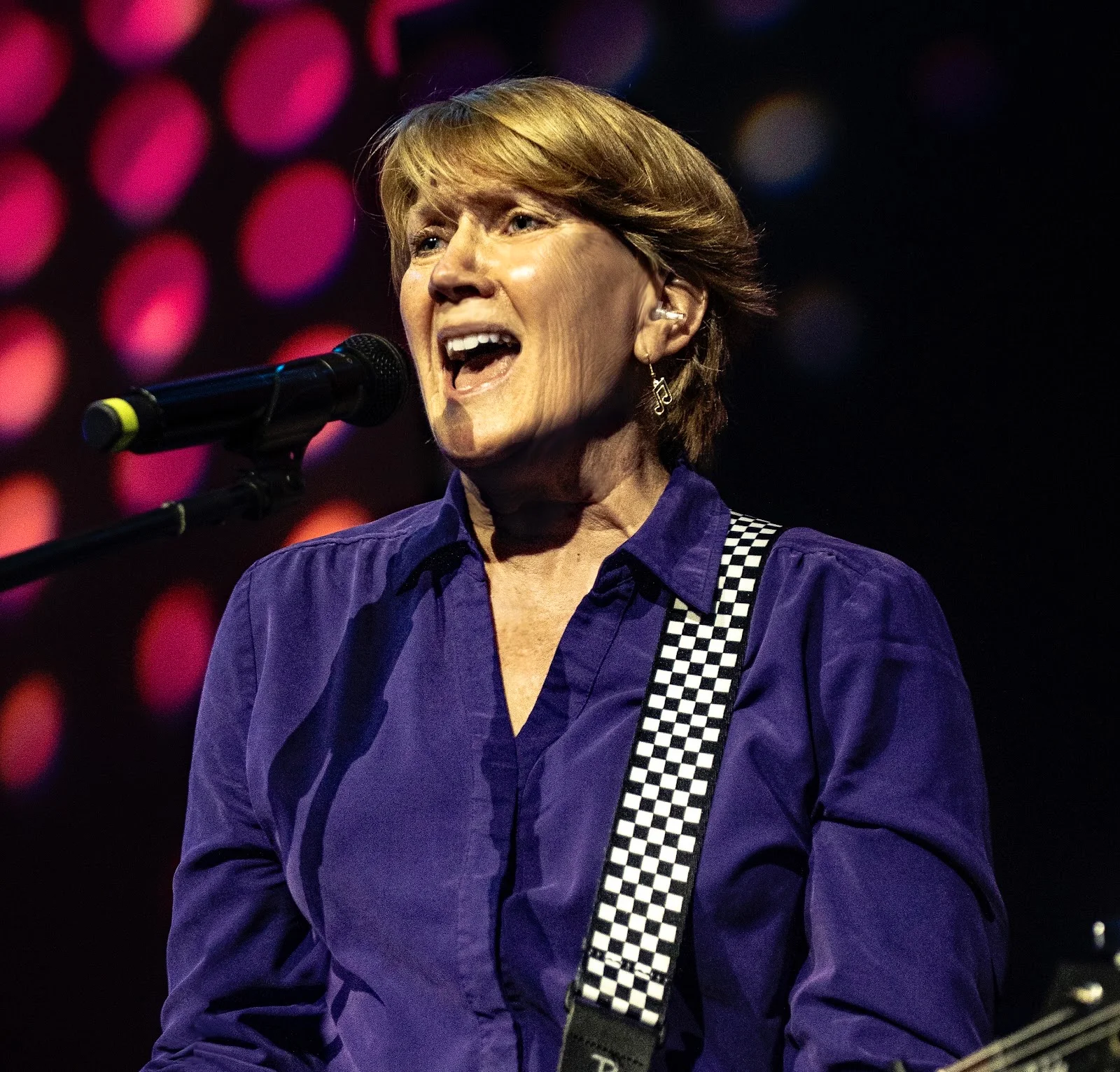
For Mary Strand, music has always been a way to tell stories, share emotions and connect with people. But with her latest song, “Annunciation,” the Minneapolis-based singer-songwriter takes on a subject that is deeply personal and impossible to ignore. Written in response to the 2025 mass shooting at Annunciation Catholic Church, the song brings together grief, anger and a firm belief that change is still possible.
The tragedy struck close to home for Strand, whose connection to the Minneapolis community made the events even more difficult to process. Rather than simply grieving, she found herself turning those emotions into music, using her voice to address gun violence and the responsibility that comes with protecting children.
“Annunciation” carries a message that reaches beyond sympathy. Through its intense, punk-influenced sound, Strand challenges listeners to think about what can be done when tragedy strikes, particularly when the lives of children are at stake. Her words are direct, her emotions are genuine, and her focus remains on the need to create a safer future for the next generation.
The song also reflects Strand’s growth as a songwriter. After spending 16 years writing merger agreements before moving into novels, she discovered another powerful way to tell stories through music. Her songwriting journey began in earnest at Rodney Crowell’s songwriting camp in 2018 and continued through years of learning, collaboration and participation in the Singer/Songwriter Songwriting Challenge.
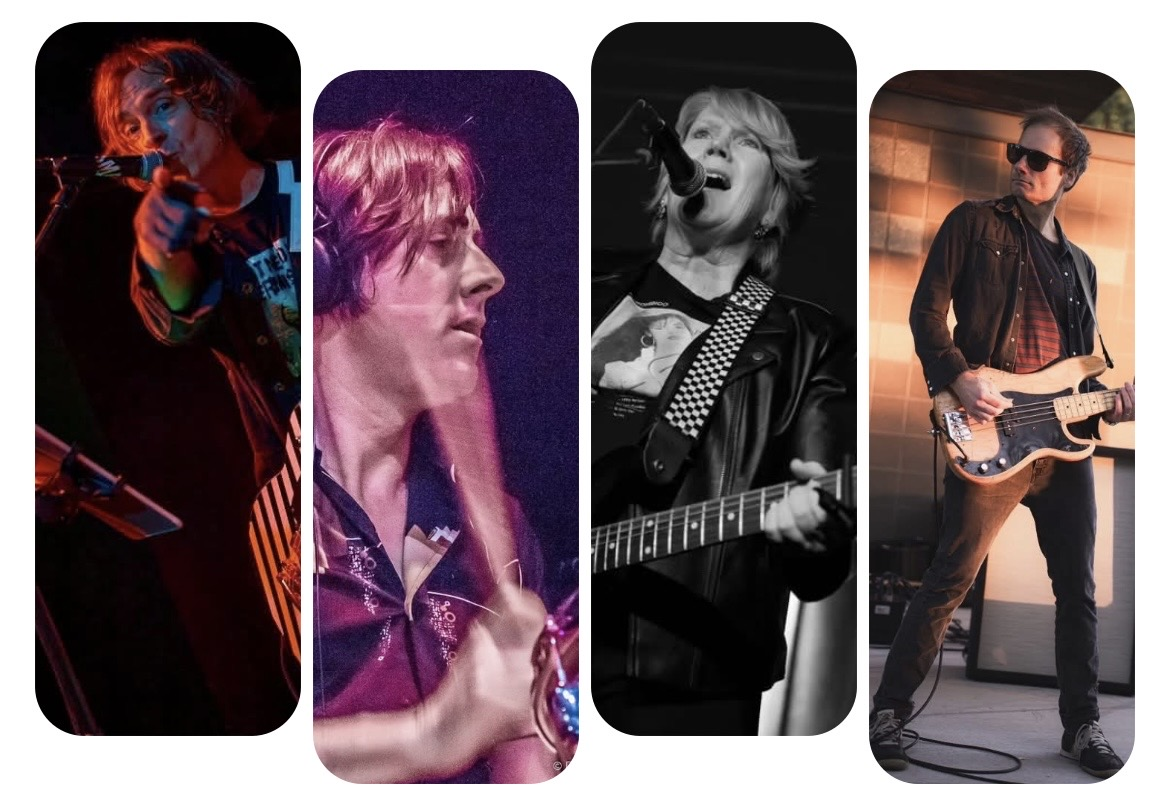
With Mary Strand & The Garage, alongside longtime collaborators Ryan Smith and Mark Wade, Strand has found a musical home where her stories can come alive. The band’s raw rock energy gives “Annunciation” the urgency its message demands, while the addition of drummer Peter Anderson brings a new chapter to the group’s sound.
In this exclusive interview with Spinex Music, Mary Strand opens up about the tragedy that inspired “Annunciation,” the emotions behind its lyrics, her songwriting journey, the Minneapolis music community and her hope for meaningful change. She also shares why she believes music can do more than express how we feel. It can encourage us to pay attention, speak up and take action for our children.
“Annunciation” was written in response to the 2025 mass shooting at Annunciation Catholic Church, a tragedy that deeply affected many people. What was the moment when you realised that simply grieving what happened was not enough, and that you needed to turn those emotions into a song?
I knew it immediately. I was planning to write a different song that morning, and then the shooting happened, and my reaction was both grief and anger. I have that same reaction every time there’s a mass shooting involving kids, powerfully so, but this was amplified because it was my city and my community.
The song carries grief and anger, but it also holds onto a belief that change is possible. How did you balance the emotional weight of the tragedy with the hope and resolve that ultimately drive the song?
I always believe that change is possible and that we need to have hope. Those are both my political views and my life views. And in writing the song, I felt that I have the power — and each of us has the power — to send these thoughts into the world. Collectively, we can absolutely make a difference.
You challenge the tendency to respond to gun violence with sympathy alone, particularly when children are among those affected. What do you hope listeners confront within themselves after hearing “Annunciation” that they might otherwise be tempted to look away from?
I never cease to be stunned at how many people, and especially politicians, blithely say “thoughts and prayers” at the time of a tragedy and then do nothing about it. After Columbine? After all those little kids died at Sandy Hook? I hammered hard on politicians in the song, and I also hammered hard on voters. I hope all listeners take to heart the fact that if they continue to vote for politicians who don’t make changes in our gun laws, they’re also responsible for what happens. But my main point on the song is to focus on the kids. It’s all about the kids. That’s why the song ends with “for our children, for our children, for our children.” We simply have to do what’s right for the lives and futures of our children.
Writing about a real tragedy can carry an enormous responsibility, especially when real families and communities are still living with its consequences. How did you approach the songwriting process with sensitivity while still allowing yourself to express the anger you felt?
I felt anger, yes, but I also deeply felt and shared the grief of the victims, the families, the church and school, and the Minneapolis community. I am part of that community. Increasingly, I’ve been writing songs that tackle tough subjects like this, such as “Least of All Her” on my second album, I Don’t Need Your Permission, which dealt with domestic violence. My heart is in my songs, and I believe that listeners know and understand that when they hear me sing. I’ve absolutely found that to be true at live gigs. We’re all in this together, and we need to share these feelings.
You spent 16 years writing 100-page merger agreements before moving into novels of 300 to 400 pages, and eventually found songwriting as another way to tell stories. What does writing a song allow you to express that hundreds of pages of prose cannot?
I actually hate to compare novels with songs, because I’m telling a story in both, and I love both forms of storytelling. And I do still write novels. But a song allows me to capture someone’s attention and interest in three minutes, so the potential audience is much greater. It also forces me to tell a complete story in two pages rather than 300 or 400 pages, but that’s a fun challenge. Oh, and I have to rhyme! ha ha! But in my songs I also get to tell a story with music, and in my case rock & roll, and I’ve loved rock & roll my whole life. It’s a powerful tool.
Your songwriting journey began in earnest after attending Rodney Crowell’s songwriting camp and later accelerated through the Singer/Songwriter Songwriting Challenge. How did those experiences change the way you understood songwriting, particularly when you began sharing your work with other writers?
When I wrote my very first song, for Rodney Crowell’s first songwriting camp in 2018, I didn’t even know that I was supposed to rhyme! Just now, I looked at my first song: there are only two rhymes in it, and they were probably accidental. That first camp was the single most important piece of my development as a songwriter, because I truly knew nothing except what I’d learned about chords and melodies in the prior two years of playing in rock jam bands through Twin Town Guitars here in Minneapolis. But then, yes, I joined the Singer/Songwriter Songwriting Challenge in 2020.
If you keep up with the challenge (and I do, every year), you’ll write 20 songs per year, each based off what is usually a one-word prompt. After writing the song, you post a quick-and-dirty video of yourself playing it, and other members of the group watch the video and offer positive comments on it. Watching other people’s videos was also a huge help to me, because we all write and play so differently. I’ve spent the last seven years soaking it all in, and I’m so grateful for everyone in that group. And to Rodney Crowell!
You have described the Minnesota songwriting community as a source of mentors, collaborators and friends. How important has that community been in helping you find your voice, and how different is writing a song with others from the solitary process of writing a novel?
I do write most of my songs alone, not with others, although I’ve now done co-writes on 10 or 12 songs, including five co-writes on my upcoming Christmas album. The difference between writing a song and writing a novel is that a novel takes months, while I often write a song in a day or two. I’m the rare novelist who’s an extrovert, so spending a whole lot of time sitting by myself isn’t fun. I’m able to make that work when possible by writing in coffee shops or similar places so I can hear and feel the constant hum of voices and activity. But the music community — and Minneapolis has an amazing one — helps me find and hone my voice by hearing other people share their songs in real time.
Two nights ago, I participated in a songwriter showcase gig in which a dozen of us from the Singer/Songwriter Songwriting Challenge each played two of the songs we wrote this summer in our songwriting challenge. We all write so differently, but everyone is wildly supportive of the others. I also spend a huge amount of time with two of my bandmates, Ryan Smith and Mark Wade, who have been my two biggest mentors. Mark usually is the first person to hear my latest song, and he helps me tweak it when I’ve gone astray or simply to make it even more powerful. Ryan helps me shape my songs for recording, usually in terms of tempo and comparisons to other bands and songs that seem to fit with my sound. And playing with my entire band, Mary Strand & The Garage, also helps to shape my songs. I’m so grateful to everyone in my music world.
Mary Strand & The Garage brings together musicians with deep connections to Minneapolis rock, including Ryan Smith and Mark Wade, while your son Jack plays drums. What does that combination of longtime musical collaborators and family bring to the emotional character of the band?
Ryan and Mark have been with me from the very beginning, and words can’t possibly describe all that they’ve done to bring my sound to life. Jack was part of my sound for my first two albums, and I absolutely loved having the chance to play with him, both as my son and as an incredible drummer. Earlier this year, Jack decided to leave my band to focus on another band he plays in, and also to spread his wings beyond a band that happens to be fronted by his mom.
So we added the wonderful Peter Anderson on drums, starting with our recording of “Annunciation.” It’s been an easy transition. I’m working with musicians who are all at the top of their game, and I admire them greatly. I learn so much from them, too! But the key to the band and to my music is that everyone trusts the others to “do their thing” to bring my songs to life, resulting in things like amazing solos and riffs and sometimes hilarious vocal harmonies that Ryan and Mark make up in the recording studio. We all get along well, and we laugh, even sometimes at what we’ve done with the original music I wrote.
Your music draws from garage rock influences ranging from The Muffs to The Cars, yet “Annunciation” tackles a subject far heavier than the carefree energy often associated with garage rock. How did you use the rawness of that sound to serve the seriousness of the song rather than allowing the music to soften its message?
I love garage rock, which is part of why we call ourselves Mary Strand & The Garage, but I’m influenced by all types of rock, including punk rock. I would guess that our sound on “Annunciation” was more influenced by bands like The Clash or The Ramones. When I’m first writing a song, the guitar strum that I use is one of my first decisions in capturing the mood of the song, and on “Annunciation” I went with what I think of the classic punk strum. It’s intense and powerful — and yes, raw — definitely not carefree, and that’s obviously my intent with that song. I want people to pay attention to “Annunciation.” So punk rock served that intention and delivered my message.
You have said that you still believe that with enough effort we can change the world and that it is long past time to make it better. After putting something as personal and difficult as “Annunciation” into the world, what does meaningful change look like to you, and what do you hope this song contributes to that conversation?
I absolutely believe, and always will, that with enough collective effort we can change the world. And yes, it’s long past time! Every other major country in the world has dealt with and mostly eliminated gun violence of the kind that we still face in the United States. It’s both horrifying and shameful, and it’s also unnecessary. Meaningful change, to me, means enacting and enforcing laws concerning reasonable and responsible gun restrictions as well as other laws that protect and help our people.
Human rights, the protection of children, etc. I hope that “Annunciation” causes far more people to think about what they can to do to make this a better world for our children. Thoughts and prayers alone don’t do it. We have to vote. And when the people we elect don’t do what’s right, we have to vote them out. No more excuses.
CONNECT
