




Some artists make music to tell stories about the world around them, while others use their songs to make sense of what they have experienced in their own lives. For Noah James Mass, music offers a way to do both. His self-titled debut album brings together personal experiences, powerful rock sounds and detailed production, creating a record that reflects a period of mental health recovery, creative burnout and a growing understanding of his own identity as an artist.
The album carries a strong sense of contrast. Its subject matter comes from a vulnerable period in his life, but the music itself is full of confidence and energy. Built around fuzz-heavy guitars, muscular grooves and energetic live drums, the record shows how personal struggles can become something powerful when they are expressed through music. Rather than allowing uncertainty to define the sound, Noah uses his musical confidence to give these experiences a different kind of life. As he explains, the lyrics reflect what he has been through, while the music represents his attitude despite the uncertainty.
One of the most interesting parts of Noah’s journey is the level of creative control behind the album. Having worked in bands and contributed to other projects as a producer, editor and studio musician, he has experienced music-making from different sides. With Noah James Mass, however, he wanted to create something that belonged entirely to him. From the first guitar and piano recordings to the strings, organs, synths, production and final release, every part of the album reflects his own vision. That independence has not always been easy. He admits that the lack of enthusiasm from people around him affected his confidence and contributed to the long wait before the album was released. Still, he remained certain about what he had created and what he wanted the project to represent.
His description of the record as “filmic” rock also offers a closer look at his creative mind. Noah does not see music as simply a collection of riffs, melodies and lyrics. He imagines where a song might fit in a film, sometimes picturing opening or closing credits, a particular scene or even music playing before a live sporting event. These ideas influence the production choices he makes, including the use of strings, horns, synthesis and sound design. The goal is not necessarily to make the music bigger, but to give each song the right energy and atmosphere to carry its message.
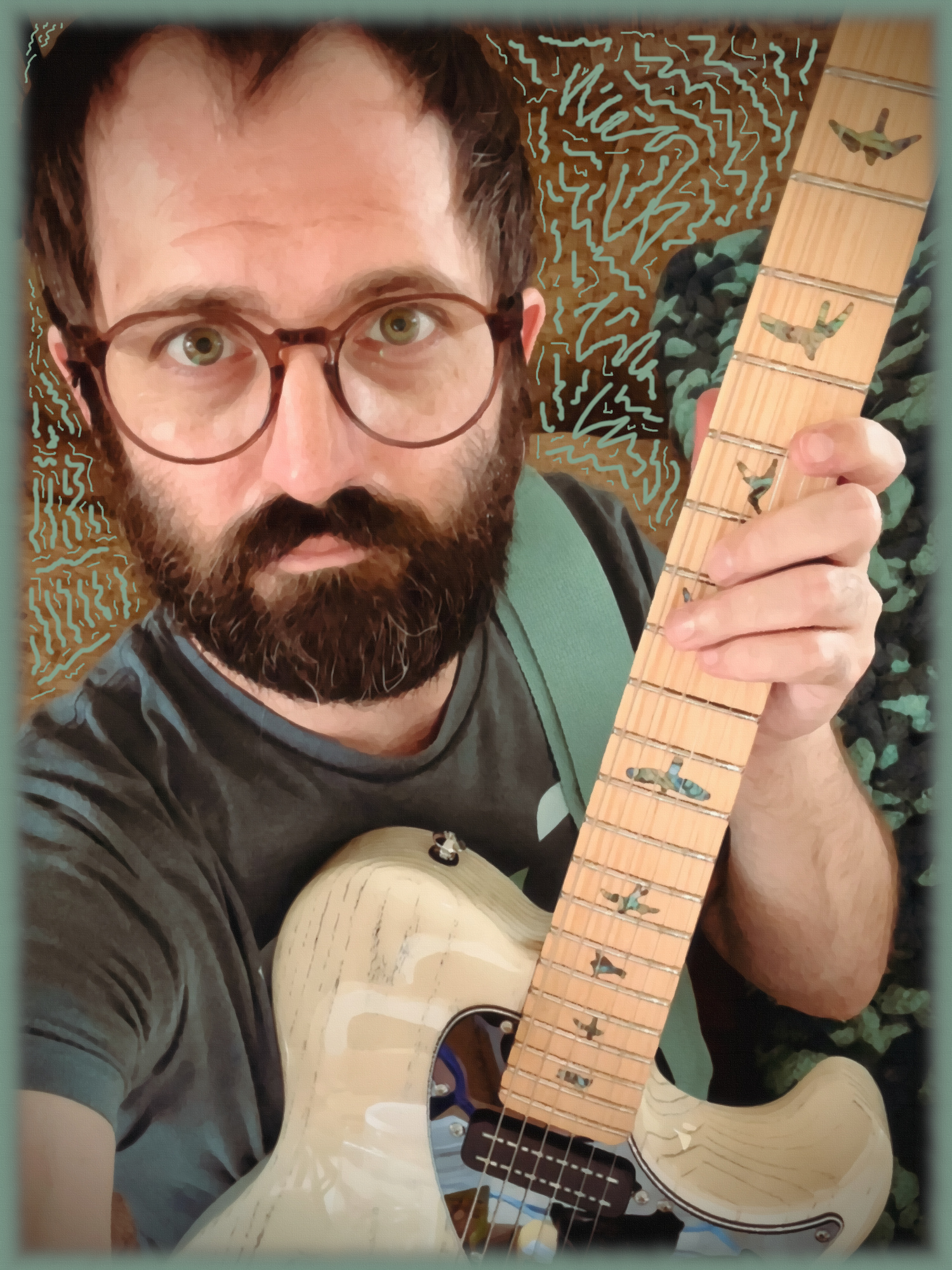
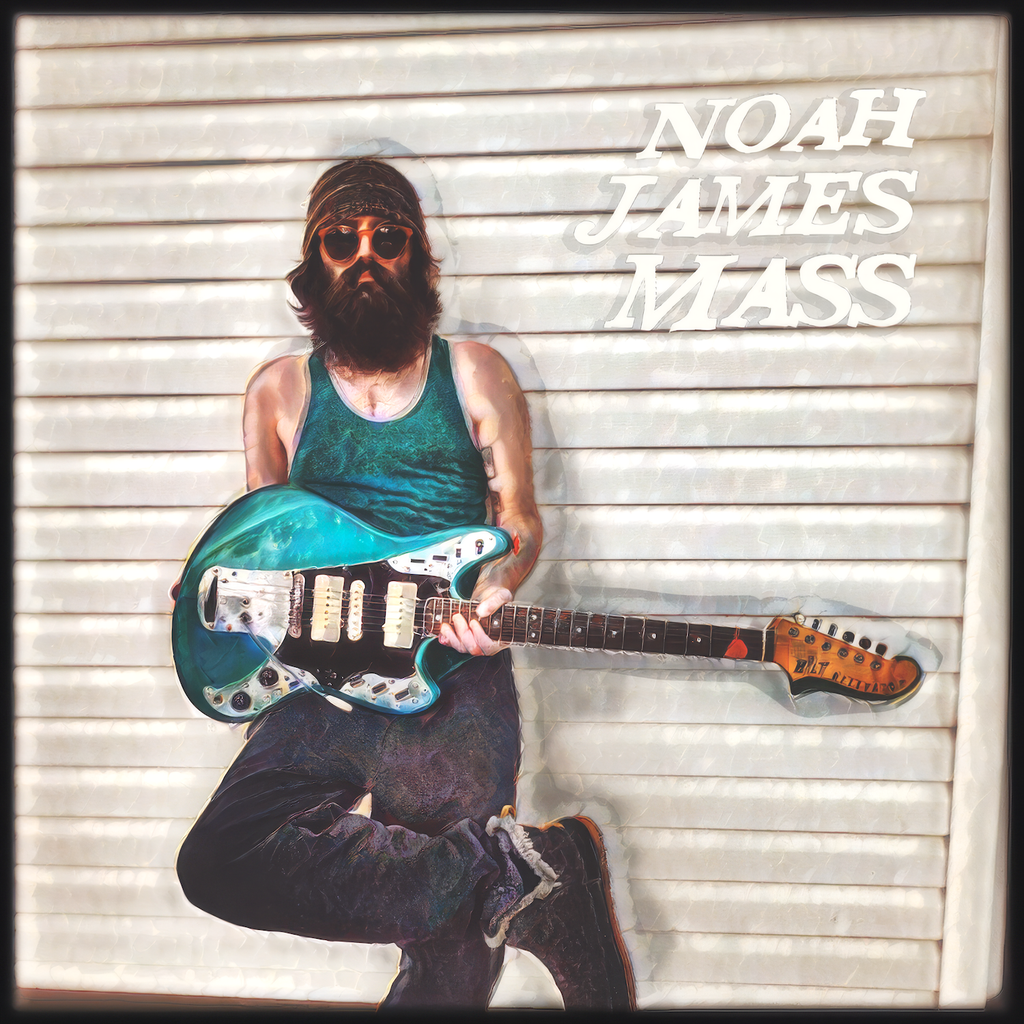
His approach to recording is equally important. By using live drums and allowing room sounds to remain audible, Noah aims to preserve the human quality of the performance. He believes that space can help transport listeners into another reality, whether familiar or completely new. His custom BilT Relevator guitar also plays a key role in shaping the album’s sound, offering distinctive tones and built-in delay and fuzz effects that he uses to create textures across intros, outros, transitions and solos.
Although listeners may hear traces of The Black Keys, Arctic Monkeys and Queens of the Stone Age in his music, Noah sees influence as a starting point rather than a destination. He draws from different sounds, rhythms and production styles before allowing his own imagination and experiences to shape the final result. For him, creating something original also means understanding what inspired the artists who came before you.
Now that the debut is reaching listeners through regional radio, The Reader and KIOS 91.5 FM, Noah hopes that his personal experiences will connect with people who may be facing struggles of their own. He does not try to predict how audiences will interpret his work, but he hopes that even one person might find something meaningful in it. With much of a new album of more than ten tracks already completed, he is also preparing to explore different kinds of relationships and the emotional weight that comes with them.
In this interview with Spinex Music, Noah James Mass opens up about turning difficult experiences into confident rock music, the freedom and challenges of complete creative control, his film-inspired production process, the artists who have shaped his sound, and what listeners can expect from his next chapter. His debut is not just an introduction to his music. It is a statement of independence from an artist who knows what he wants to create and is ready to keep building on that vision.

Your self-titled debut album comes from a period of navigating mental health recovery and creative burnout, yet the music itself is built around muscular grooves, fuzz-heavy guitars and energetic live drums. How did you translate such an internal and vulnerable period into music that can still feel physically powerful, and did making the album change the way you understood what you were going through?
The lyrics and subject matter pertain to what I’ve been through, but the music is a representation of my confident attitude despite the uncertainty. The music is an amalgamation of a life of studying and really listening to music in the form of my personal tastes. Not only did I learn from what I was writing about. I learned what my sound is and how to get there efficiently and effectively through the various stages of production.
The album was created with absolute creative control, from the first guitar and piano recordings through strings, organs, synths, production and final release. What does complete ownership of the creative process allow you to explore that might have been difficult if you were working within someone else’s production vision, and where can that level of control become challenging?
I’ve spent a decent amount of time playing my role within a band/group setting. I’ve also worked on many projects as a producer, editor, and studio musician who has witnessed song creation and recording from about every perspective. Noah James Mass is my turn realm of creation. That’s why my name is the project’s name. Everyone has an opinion, though, and if I want an opinion I’ll ask for it. I ultimately know what I want and appreciate suggestions, but they are suggestions. I will take them or leave them. At this point everyone has had time to see my potential and invest thought into what I do.
Most have chose not to, though. Everyone was a bit shocked that this album turned out as well as it did. I, however, knew what I had done. The hardest part was realizing nobody really saw it coming. That’s part of why it took so long to release. I was expecting more buzz coming from the people I know. Ultimately, the lack of enthusiasm from others was disheartening and messed with my confidence in what I had accomplished. Now that the record is out, people want to include their opinions in what I do next. Chances are that I don’t care what most people think. Noah James Mass is me, it’s my vision, and it’s my execution. It’s been a struggle to get to this point, and I’m not very keen on someone else attempting to force themselves into what I’ve built so far. To reiterate; if I want an opinion, I’ll ask for it.
You describe the record as “filmic” rock, which suggests that the songs are intended to create scenes, images or emotional environments rather than simply deliver riffs and hooks. When you begin writing a song, do you usually hear a musical idea first, imagine a particular visual world, or start from an emotion that eventually becomes both sound and atmosphere?
The musical idea comes first, usually derived from how I’m feeling at the time. Next comes the formation of the song’s message and when I’m developing that message I imagine where the song would likely fit if it were to be synced. Many times I imagine the opening or closing credits sequence of a film. Sometimes I’ll picture a specific scene. Also, it’s entirely possible I might hear the work playing before commercial breaks during live sporting events. Anytime I create music I’m imagining where it might fit in. Also, “filmic” represents the sonic decisions I’ll make as the producer. Usually this is achieved through string or horn arrangements, synthesis, and some sound design. All of it surrounds the “message” of the song.
The decision to use energetic live drum tracking and preserve raw room tones gives the album a sense of physical space. What were you trying to capture by allowing the room and the imperfections of the recording environment to remain audible, and what do you think can be lost when rock production becomes too polished?
I try to embed as much human element to my works as I can without sacrificing fidelity or coherence. Live drums have a great deal of humanity to them and I just prefer a live drum sound. It can be a lot of work, but it’s almost always worth the effort in the end. Music is a way to transport oneself into another reality. Spatial elements are a quick way to allow the listener to be transported somewhere familiar or somewhere new. Either way, room tones and space are just another form of taste that I like to use to reach a listener.
Your custom BilT Guitars are a significant part of the album’s sonic identity. What is it about those instruments and the way they respond to your playing that made them right for this particular record, and how much of your songwriting is influenced by the physical relationship you have with an instrument?
The build quality of a hand-made BilT guitar is unmatched. The Relevator model and the pickups in it that I own get some cool old school tones. Its playability is superb and it has built-in guitar effects. Particularly mine has a delay and fuzz with roller and button controls. Besides the tones it can achieve, having control over your guitar effects within reach allows a little more fun than an average guitar player is used to. I like to use these interesting sounds they can create for texture in intros, outros, transitions, and solos. I absolutely love my BilT Relevator + Effects.
Your music sits somewhere between the directness of alternative rock and a much more detailed production world involving strings, organ and synth sound design. How do you decide when an arrangement has reached the point where another layer adds something meaningful rather than simply making the production bigger?
With music you have limited space and time. As well, one thing cannot disrupt the other. These sort of restrictions mean that a small thing that gets in the way can ruin everything. If I write or produce something and it’s not a “hell yeah”, then it’s a “no”. It’s entirely possible to play something that works with the music, but interferes with the song. In that case the part is no good. In which case I would rework the part or perhaps cut the idea altogether. I’m not too concerned with sounding “bigger” as I am with showcasing the correct energy and delivery of the song and it’s intended message.
The album draws comparisons to artists such as The Black Keys, Arctic Monkeys and Queens of the Stone Age, but your songwriting also comes from a deeply personal place. What have you taken from those artists beyond their sounds, and what parts of your own personality or experience have been most important in making sure the music does not simply become an extension of your influences?
Once I’ve developed the core idea of a song which may be derived from a riff from The Black Keys, the timing of Arctic Monkeys, or drum impact of Queens of the Stone Age, my own imagination and experiences take it from there. I could completely rip off drum pattern, a song structure, or lyrical idea, but once I begin reworking it or adding to it without any guidance the work will surely turn into something of its own. I’m pretty good at extracting the thing I like most from practically any place. If you’re honest about creating something new, it’s easier than one might expect to deviate from the original idea source. I might like the guitar tone from one place, the groove from another place and the overall production from somewhere else.
Lastly, I will say that if you want to sound like a band, then learn what band they wanted to sound like. Learn how they utilize their influences. That’s a great method to get to where you want to be. If you want to sound like AC/DC, then learn who AC/DC wanted to sound like. You should automatically end up with something new that matches your tastes. I suppose it’s a trick I’ve come to learn.

Being 100% self-produced, self-released and independently owned means that every creative decision ultimately comes back to you. How has having to occupy the roles of songwriter, musician, producer and independent artist simultaneously changed the way you work, and have you developed any methods for knowing when to trust your instincts and when to step away from a song?
My theory is that if you want to create something, you should at least be aware of the process. Not only am I aware, but my interest has garnered ample experience that allows me to take on different roles with confidence and speed. I might track something as an engineer and performer, but listen back as a producer. It’s not always in that order, though. It’s sort of like asking a painter how they know which brush stroke is the last. You instinctively know when there’s no more to add or something is missing. Eventually you’ll a have sense is to whether you’ve created what you’ve hope for or not. You know a work is complete when there’s nothing left to change.
The album has already begun reaching listeners through regional radio, The Reader and KIOS 91.5 FM. After spending so much time inside these songs during their creation, what has it been like hearing other people respond to music that came from such a personal period, and have listeners interpreted any part of the record in a way that surprised you?
I have had great responses to this album. Although, I don’t necessarily concern myself with the audience perspective during the creative process. Well, except for maybe one or two specific people I may be subtly singing at or towards. I typically obfuscate it a little bit, because I want it to feel personal no matter who may be listening. As an artist a portion of my life is an open book. Most of it is, actually. I want to display my personal experiences in hopes that there’s a chance even just one person can relate to it. I also hope it helps them in their own life.
As your self-titled debut introduces Noah James Mass as a fully independent artist, what do you feel this album establishes about who you are musically, and what are you most interested in exploring next now that you have experienced the freedom, pressure and creative responsibility of building an entire record from the ground up?
I believe this album is a solid introduction. It establishes that I can write, play, sing, engineer and produce. I’m essentially a one-stop shop for anyone looking to sync music. I must include that I have most of the hard work on a new 10+ track album already completed. As soon as this first album was finalized in the mixing and mastering stages, I just had loads of new songs pouring out of me. They aren’t an exploration of love songs this time, though.
This next record explores many different types of relationships and the emotional weight attached them. There’s plenty of Noah James Mass attitude and vibe, too. It looks like I might have a new release within a year of this debut, which dramatically contrasts the reality of how long it took to release the debut. I’m excited to hear this new record completed and I hope many more people feel the same way by then.
CONNECT
FACEBOOK | X | SPOTIFY | SOUNDCLOUD | YOUTUBE | INSTAGRAM | TIDAL