


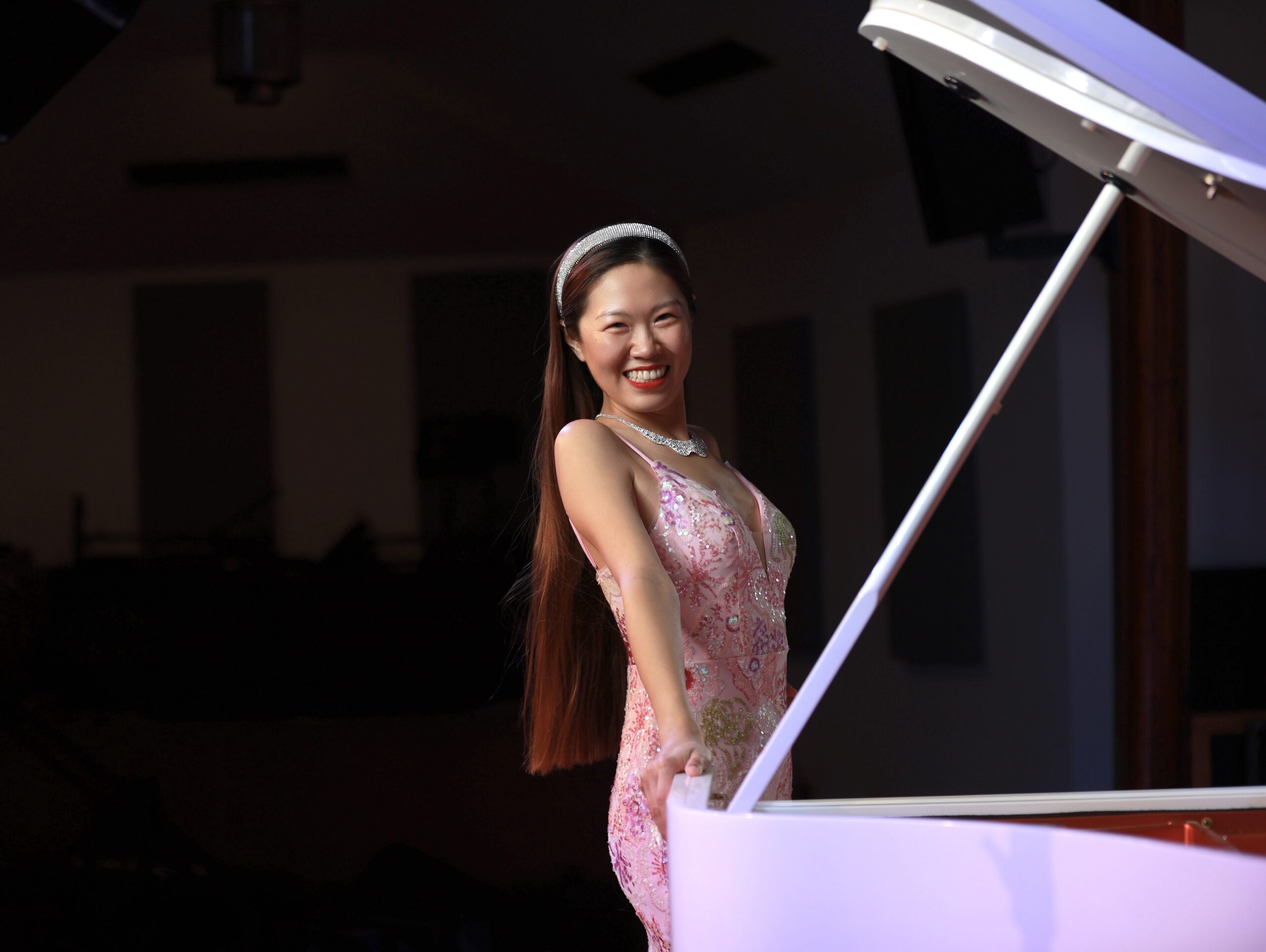
There are some pieces of music that ask to be heard, and others that ask to be imagined. “The Music Box Lovers”, the latest original composition from concert pianist and composer Dr. Tingting Wu, belongs firmly to the latter.
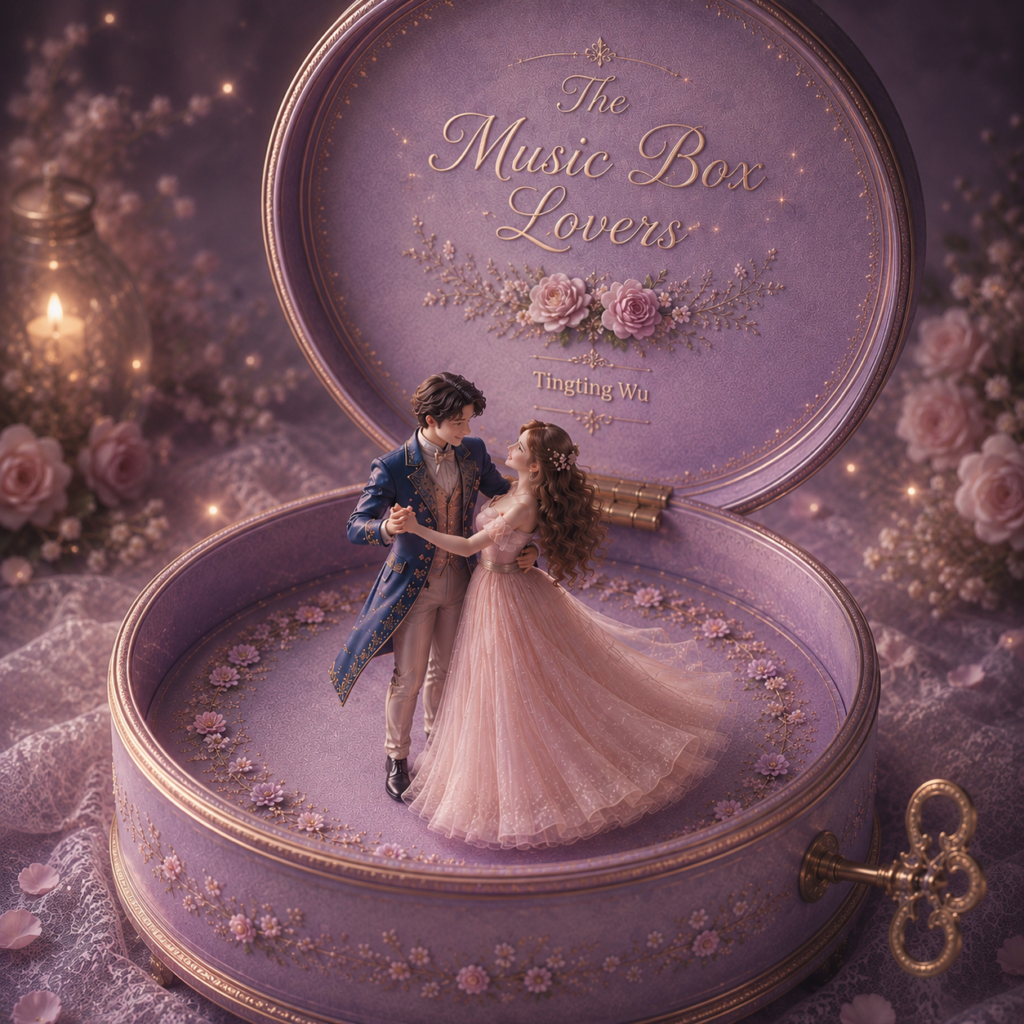
Inspired by the timeless world of fairy tales, the composition tells the story of a lonely prince trapped inside a delicate music box and a princess who discovers him and makes the extraordinary decision to enter his confined world rather than simply leave him behind. Yet beneath its romantic premise lies a much more complex meditation on love, freedom, identity and the invisible boundaries that can shape our lives. The music does not offer an uncomplicated “happily ever after.” Instead, it leaves listeners with questions that extend far beyond the characters themselves: What confines us? How far should we enter another person’s world? And can loving someone mean allowing them, and ourselves, the freedom to leave?
Tingting translates these questions into sound through a composition that is simultaneously delicate, nostalgic, mechanical and emotionally unpredictable. The piano is deliberately shaped to evoke the fragile character of a music box, while a striking harmonic shift from B-flat minor to B minor introduces a sense of emotional distance beneath the apparent closeness. It is a fitting musical metaphor for the story itself: two people can exist remarkably close to one another while still inhabiting profoundly different emotional worlds.
What makes Tingting’s approach particularly compelling is her refusal to dictate exactly what the listener should feel. Without lyrics to define the characters or explain their fate, the composition becomes an open narrative. One listener may imagine the prince and princess remaining together forever, while another may hear their dance as a temporary encounter that ends when the music stops. For Tingting, neither interpretation needs to be considered definitive. Once a composition enters the world, it becomes partly the listener’s creation too.
This openness is central to Tingting’s wider artistic identity. As a concert pianist, she has spent much of her life interpreting the works of composers from the classical canon. As a composer, however, she has discovered the freedom to take the musical “detours” that a performer cannot take when faithfully interpreting another composer’s work. Her original compositions allow her imagination to move without predetermined boundaries, creating contemporary musical worlds that reflect the emotional language of the present while remaining deeply connected to the expressive traditions of classical piano.
That relationship between music and imagination extends naturally into LumiMusic, the immersive concert experience she founded, where synchronized colored lighting becomes an extension of the emotional journey of the music. For Tingting, sound and imagery are not separate creative languages. They are two ways of expressing the same emotion, working together to create a dreamlike environment in which audiences can enter the story rather than simply observe it.
Her creative process often begins in that visual realm. Before the notes arrive, scenes and emotions can already be playing like a film inside her imagination. The task then becomes finding the musical language capable of giving those images physical form. It is perhaps this instinct that gives her compositions their particularly cinematic quality: the music does not simply accompany an imagined story; the music becomes the story’s voice.
That sensibility also connects her contemporary work to her life as a performer. Her acclaimed performance of Mussorgsky’s Pictures at an Exhibition, broadcast across 220 PBS stations in the United States, offered an important connection between visual art and musical storytelling. Looking back, Tingting recognizes a possible parallel between Mussorgsky transforming visual images into music and her own tendency to compose from scenes that exist first within her imagination.
Following the international response to her previous original composition Turning, which surpassed 18,000 Spotify streams within three weeks, The Music Box Lovers represents another step into a world where classical technique, contemporary composition, visual imagination and emotional storytelling meet. Yet the heart of Tingting’s music remains remarkably human. Her compositions are rarely concerned with a single emotion. Happiness can contain uncertainty. Love can coexist with freedom. Beauty can carry a trace of sadness. Even a fairy tale can conceal questions about the realities of human relationships.
Perhaps that is why the unresolved ending of The Music Box Lovers feels so appropriate. Tingting herself is still searching for the answer to what happened after the dance. Rather than deciding whether the characters remained together or eventually found happiness separately, she leaves the question open, suggesting that the more meaningful question may be whether each person is able to discover happiness through the way they choose to live.
Now, with her identities as performer and composer increasingly converging, Tingting is entering an exciting new chapter. Her ability to immediately explore her compositional ideas at the piano, combined with the perspective gained from performing the great works of the classical repertoire, creates a rare dialogue between interpretation and invention. Her next ambition takes that dialogue even further, bringing her original compositions together with synchronized lighting in a fully immersive concert experience for the opening of the LumiMusic 2026–2027 season in Miami.
In this conversation, Dr. Tingting Wu takes us inside the imaginative world of The Music Box Lovers, exploring the symbolism hidden inside its music box, the freedom of composing without words, the relationship between sound and visual storytelling, the influence of the classical repertoire, and the deeply personal questions that continue to shape her evolution as both a concert pianist and composer.
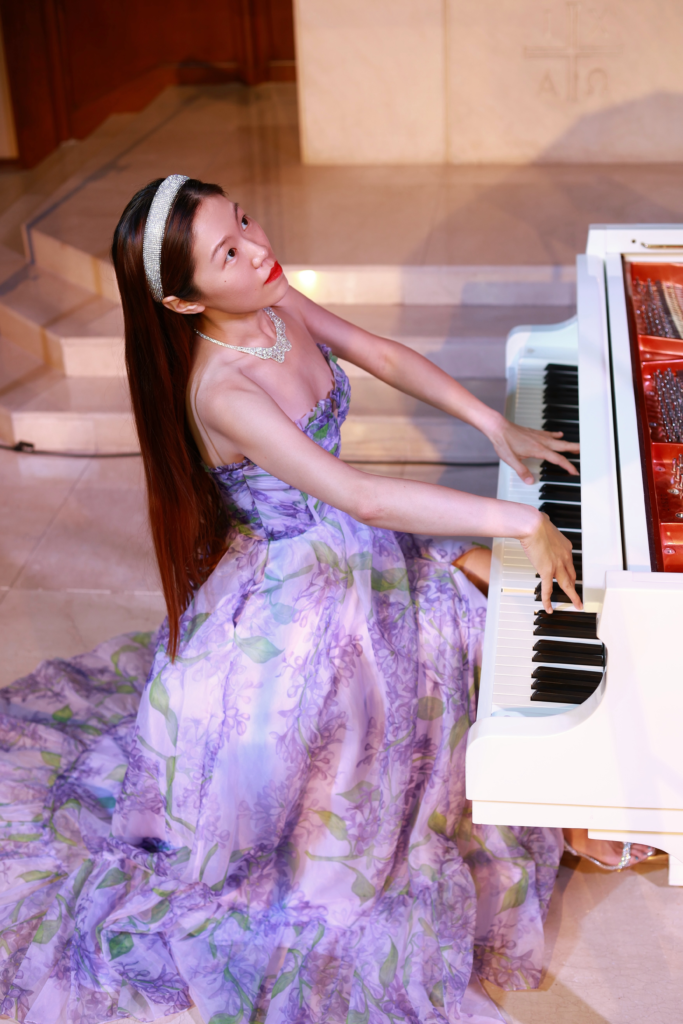
“The Music Box Lovers” tells a fairy tale through instrumental music, with no lyrics yet a very clear emotional narrative. How did this story first come to you, and how did you translate the characters, emotions, and scenes into piano composition?
Tingting: Wow, you really listened to The Music Box Lovers with your heart. You could hear that it is very emotional, while at the same time delicate and almost fragile.
The story came partly from the fairy tales we grew up with. As little girls, we dreamed of meeting a prince and living happily ever after, like Snow White or Cinderella. But as we grow up, we realize that princes have their own problems to solve, too, and “happily ever after” may not be quite as simple as we once imagined. That became the image of a lonely prince living inside a beautiful but delicate music box.
Musically, I wanted the piano to sound nostalgic and fragile, yet slightly mechanical, just like a music box. The emotional surprise comes at 0:40, when the music shifts from B-flat minor to B minor. The two keys are only a half step apart, yet harmonically they feel remarkably distant. I love that contradiction: they are so close, but somehow still far away.
The idea of a prince trapped inside a music box and a princess choosing to enter his world is both romantic and symbolic. What deeper meaning does this story hold for you beyond the fairy tale itself?
Tingting: The deeper question for me is: why is the prince trapped inside the box? In a broader sense, it doesn’t even have to be a music box – it could be any kind of box. What does that box represent? It could be his work, his family, certain habits, or anything else that somehow confines him. You name it.
The princess chooses to enter his world, and I think that is actually quite brave. However, she has other choices, too. She can stay there and dance with him forever; or she could leave the box if she finds that it doesn’t fit her own goals or dreams. Entering someone else’s world doesn’t necessarily mean that you must stay there forever.
Your composition invites listeners to imagine their own version of the story. When writing a piece like “The Music Box Lovers,” how do you balance having your own narrative vision while leaving space for audiences to create their own interpretations?
Tingting: This is a great question! The fascination of writing piano music without lyrics is that it can carry so many different meanings, depending on the background and imagination of each person listening. Even I sometimes interpret The Music Box Lovers differently.
For example, we could imagine that, happily or not, the prince and princess stay together inside the music box forever. Or perhaps their story lasts only as long as the music itself: they dance together while the music box is playing, and the moment the music stops, the princess simply steps out and leaves.
There are so many possibilities within the same musical story. Even as the composer, I don’t feel that I need to decide which one is “correct.” Once I finish a piece and release it into the world, it belongs to the listeners, too. They are free to interpret the music in their own way or find their own stories inside the music.
Your music often combines classical piano traditions with cinematic storytelling. What attracts you to creating contemporary compositions that feel like soundtracks to emotional journeys rather than simply traditional piano pieces?
Tingting: When you say “traditional piano pieces,” I imagine you mean music rooted in the classical styles of eighteenth- and nineteenth-century Europe. But it is worth remembering that the composers we now call “classical” were writing contemporary music for audiences of their own time. To us, their music belongs to history; to them, it was alive in the present.
As a concert pianist, I have spent most of my life playing the great music of other composers. Sometimes I wonder: what if this music suddenly took a detour toward a completely different ending? As classical musicians, we don’t do that, because we deeply respect what the composer actually wrote. That can feel safe, but at the same time limiting.
With my own compositions, I can take that detour. The music can follow my imagination and emotions wherever they lead, from my heart to my fingertips and eventually into the world. Classical music is deeply emotional, too, but as times change, perhaps the ways we express those emotions through music change with them.
As a concert pianist, composer, and founder of LumiMusic, you explore the relationship between sound, light, and visual experience. How does your work with immersive performances influence the way you compose new music?
Tingting: LumiMusic deeply influences the way I compose. As you mentioned, my music can sometimes feel as though you can actually “see” its emotional journey—and that is also how I experience and perform music through LumiMusic.
In our concerts, synchronized colored lighting shifts with the emotions of the music. For me, sound and imagery often come at the same time; they are simply different ways of expressing the same emotion. LumiMusic brings those two forms together and enhances both, creating an immersive atmosphere. My compositions have the same purpose for listeners: the music guides us into an imaginative, dreamlike world where we can enter the story together.
Your previous release “Turning” achieved impressive international attention and more than 18,000 Spotify streams within three weeks. What do you think connects with listeners when they experience your original compositions?
Tingting: All of my compositions try to share certain emotions and feelings, and I think listeners can recognize some of those emotions in their own hearts.
Turning is highly emotional but in a completely different way from The Music Box Lovers. To me, Turning feels almost like a sorrowful smile—feeling deeply for people, sympathizing with what they are going through and wishing them the best, while knowing that we still have our own goals and need to keep looking ahead and moving forward.
The Music Box Lovers, on the other hand, even has a touch of coldness and something slightly mechanical. After listening a few times, you might even find a little satire beneath the fairy tale. I think perhaps that is what connects people to my music: the emotions are rarely just happy or sad. Different feelings can coexist at the same time.
Many classical compositions tell stories without words, but your work feels especially visual and narrative-driven. When composing, do you imagine specific images and scenes first, or do the musical ideas create the story naturally?
Tingting: For me, specific scenes and emotions usually come first. It is almost like my brain starts playing a movie, and then I search for the sounds that match what I am seeing and feeling in that scene.
So rather than creating the music first and attaching a story afterward, I often feel as though the story is already happening in my imagination. My job as the composer and pianist is to find the musical notes that bring that imagination to life.
Your performance of Mussorgsky’s *Pictures at an Exhibition* reached audiences through PBS across the United States. How has performing major works from the classical repertoire influenced your own voice as a contemporary composer?
Tingting: Gosh, thank you for reminding me of that! Pictures at an Exhibition was one of the most important showcases of my career, with the performance broadcast on 220 PBS stations across the United States.
And just look at the title: Pictures at an Exhibition. Mussorgsky composed the masterpiece after the unexpected death of his friend Viktor Hartmann, inspired by an exhibition of Hartmann’s art and designs. He transformed those visual images, together with the emotions they evoked in him, into music.
I actually had never really thought about how that might have influenced my own compositions until you asked me this question! Perhaps spending so much time inside a masterpiece built around turning images into sound helped shape something in me, too. Mussorgsky composed from pictures he could see; I often compose from pictures and scenes that exist in my imagination.
The ending of “The Music Box Lovers” leaves listeners wondering whether the characters truly found their happily ever after. Why was it important for you to leave that question open rather than provide a definite conclusion?
Tingting: Well, haha, because I am also searching for the answer!
Did they stay together happily ever after? Or after their dance, did they eventually find happiness on their own? Or perhaps it doesn’t even matter whether they stayed together after the dance. The more important question is whether each of them can find happiness in the way they approach life.
I’m still exploring that answer myself, and I think we all have to search for our own answers.
You have built a career as both a concert pianist and composer, bringing together performance, storytelling, and original musical expression. How do you see these two creative identities influencing each other, and what new stories, emotions, and musical worlds are you excited to explore through your future compositions?
Tingting: The two roles positively influence each other. When an idea comes to me as a composer, being a concert pianist means I can immediately explore it at the piano without a barrier between my imagination and the instrument. And when I feel tired from composing, I can turn around and play some of Beethoven’s greatest music. Somehow, I feel inspired again and ready to dive back into my own creation. Knowing what Beethoven created while facing the profound challenge of losing his hearing always makes me think: No hardship is harder than Beethoven’s!
What excites me the most now is that these different parts of my artistic life are coming together. I will soon design synchronized colored lighting for my own original music and present it as a fully original immersive experience at the opening concert of the LumiMusic 2026–2027 season in Miami on the evening of September 26, 2026. When the ideas, emotions, music, and images that once existed only in my head finally become a complete immersive piano concert shared with everyone in the audience, that is when my excitement reaches its peak.
