


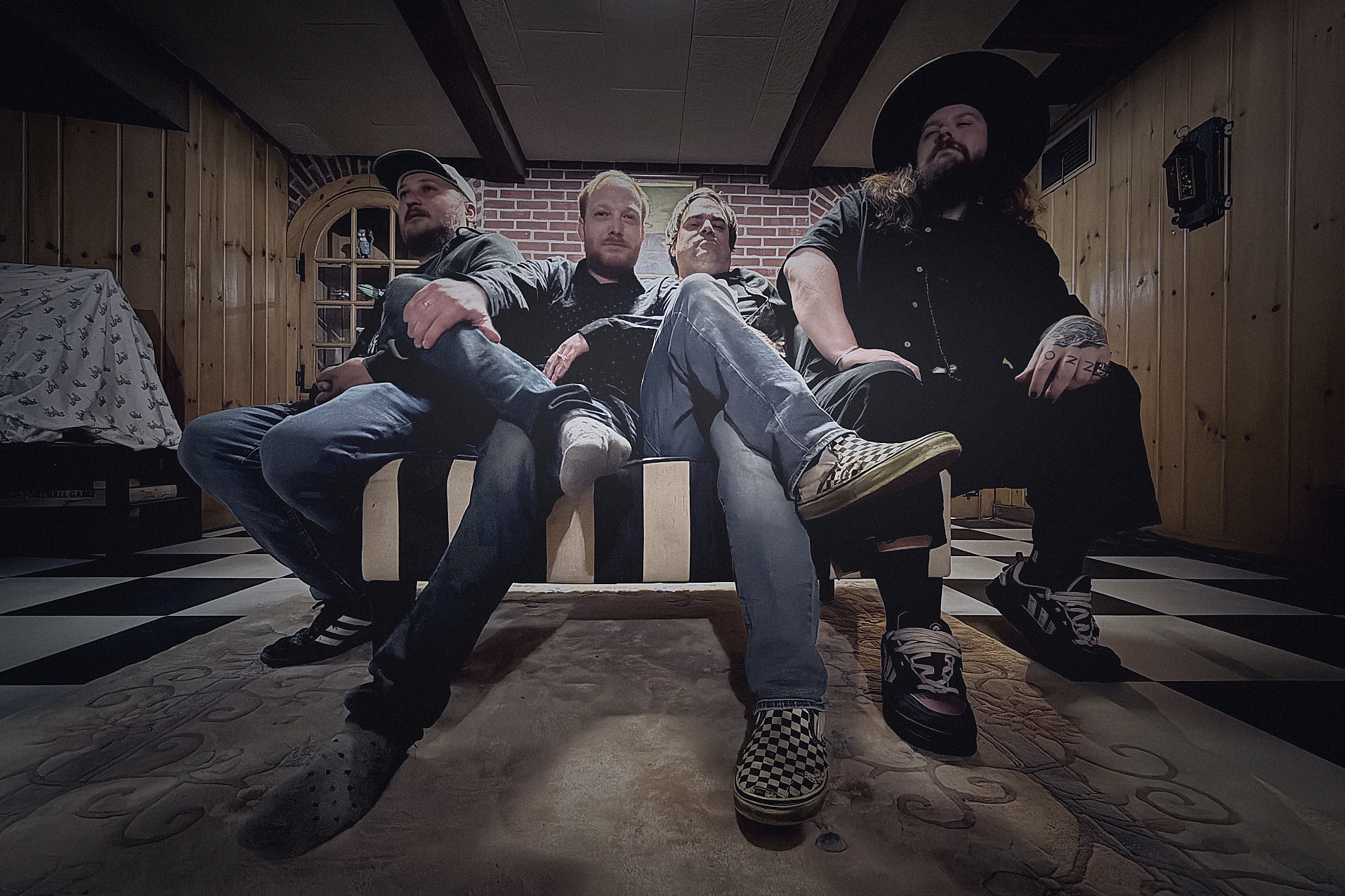
There is a particular kind of unease that runs through The House Flies’ music. It is not always loud, and it does not always arrive through distortion. Sometimes it exists in the space between two notes, in a repeated phrase that refuses to disappear, or in songs that deliberately take their time before revealing where they want to go.
On Lions and Ore, the Moline, Illinois four piece pushes further into that tension, allowing heaviness, atmosphere, repetition and restraint to coexist. At the center of that world is “Derelict Crawl,” a track built around the stark refrain, “We don’t belong.”
Rather than defining the phrase, the band intentionally leaves it open to interpretation. Listeners are invited to connect their own experiences of alienation, uncertainty and disconnection to the song. Repetition becomes part of the message, with each return of the lyric carrying a different emotional weight.
That patience also reflects the band’s growth. Earlier material often moved quickly from one idea to the next, but Lions and Ore embraces a slower and more deliberate approach. Songs are given room to breathe, instrumental passages are allowed to expand, and quieter moments are no longer treated as brief transitions between heavier sections.
The album’s atmosphere is also shaped by the band’s Midwestern roots. Without consciously trying to create a regional identity, The House Flies absorb the realities of Moline into their music. Industrial landscapes, small towns, changing seasons and the rhythms of ordinary life quietly influence the emotional character of their songs.
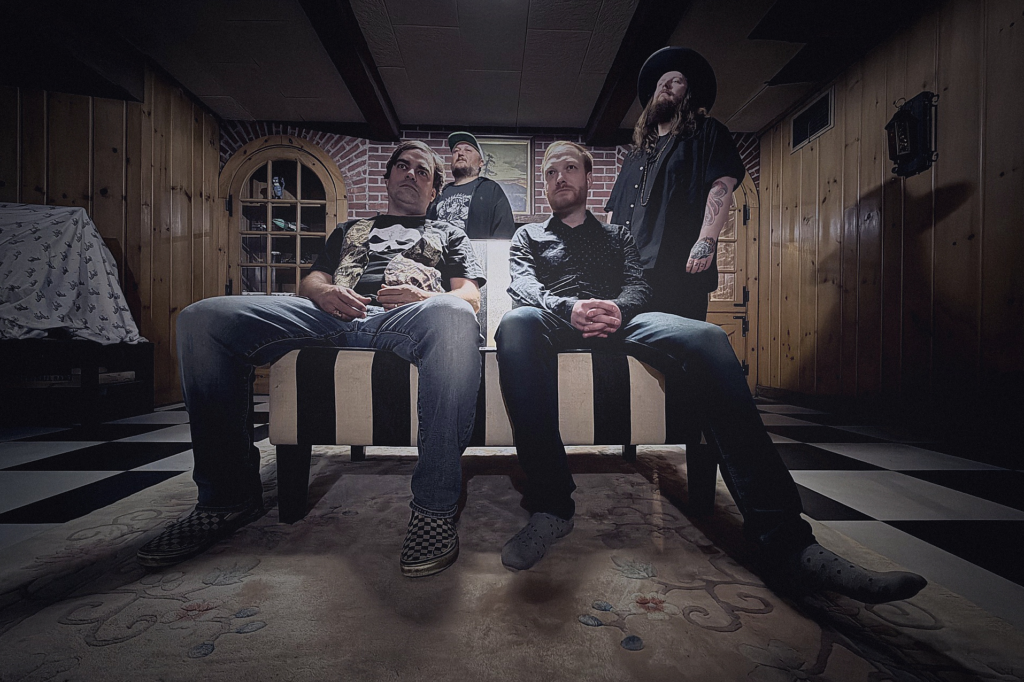
Musically, the band draws from goth, shoegaze, grunge and post punk, but Lions and Ore refuses to be limited by any single label. The album also represents an important milestone for the current lineup of Alex Riggen, Burnie Eckhardt, Ozzie Woods and Nick Pompou, whose collaborative chemistry helped transform individual ideas into something more textured and expansive.
In this exclusive interview with Spinex Music, The House Flies discuss the creative process behind “Derelict Crawl,” the evolution of their songwriting, the importance of atmosphere and dynamics, the value of physical releases in the streaming era, and the artistic territory they are still eager to explore.
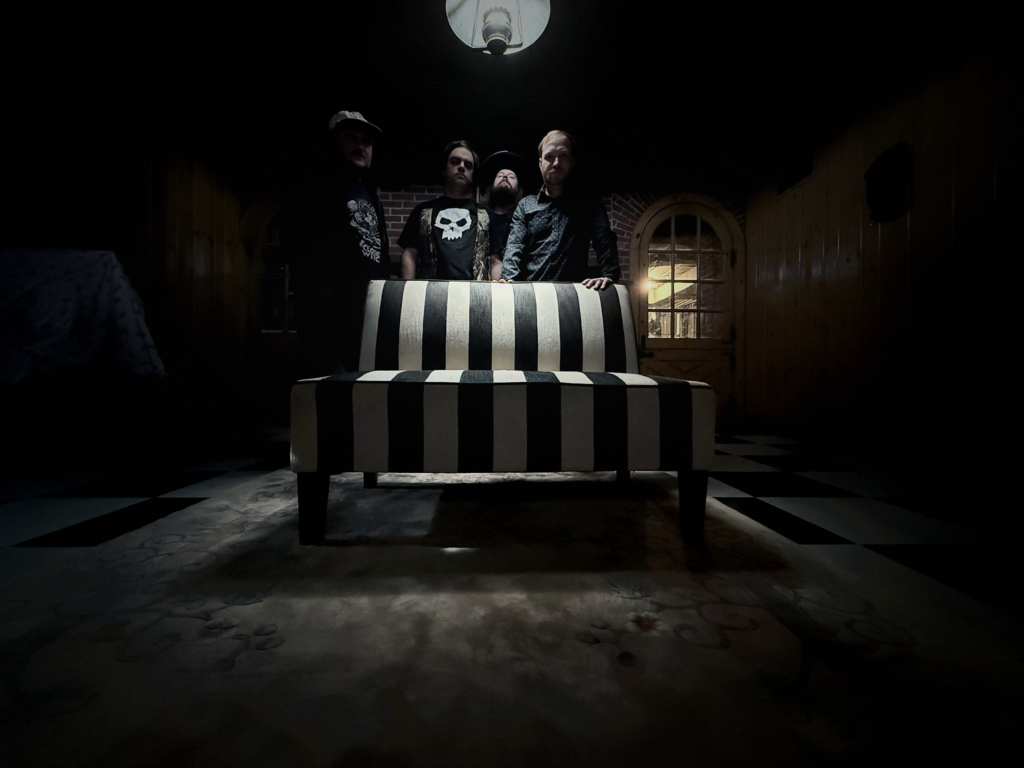
“Derelict Crawl” is one of the more direct and repetitive songs on Lions and Ore, built around a persistent rhythm and the repeated refrain “We don’t belong.” What does that feeling of not belonging mean to The House Flies, and why did repetition feel like the most honest way to communicate it?
We’ve tried not to define “We don’t belong” too specifically. I think the line works because people can attach their own experiences to it, and I’d rather not narrow that down for them.
The repetition just felt natural to the song. Once that phrase was there, it made more sense to keep returning to it than to try to explain it with more words. By the end it starts to feel different simply because you’ve heard it so many times.
The song moves between dense guitars and quieter drop-down sections, creating a tension between pressure and release. When you were arranging “Derelict Crawl,” how did you decide when the music needed to become more aggressive and when it needed to pull back and leave space?
A lot of that happens pretty naturally when we’re playing together. We don’t usually sit down and map out where something needs to get louder or quieter. You start noticing that a heavy section works better if there’s some space before it, or that something has more weight if you don’t stay at the same intensity for the entire song.
That contrast became more important across this record. We were more willing to let a quieter part stay quiet instead of immediately filling every space.
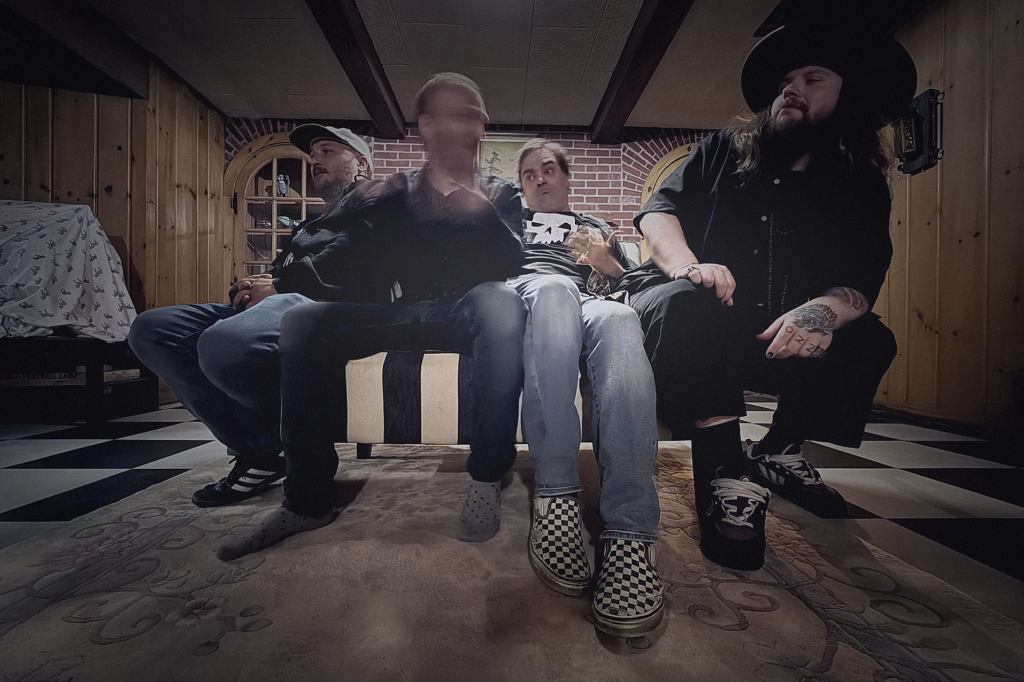
You describe Lions and Ore as moving into heavier transitions, quiet repetition and longer arrangements while retaining the directness of your earlier work. What changed in the way you approached songwriting between your previous releases and this album?
I think we became more patient.
On some of the earlier material there was probably more instinct to get to the next part quickly. With Lions and Ore, we were more comfortable letting something repeat, letting an instrumental section stretch out, or allowing a song to take longer to arrive somewhere.
It wasn’t really a conscious decision that we were going to make longer songs. We just stopped worrying as much about whether a part had stayed around too long if it still felt good to us.
There is a distinctly Midwestern sense of place running through The House Flies’ music, alongside influences from goth, shoegaze, grunge and post-punk. How does living and creating in Moline, Illinois shape the atmosphere, imagery and emotional character of your music in ways that might not be possible somewhere else?
It probably affects us more than we consciously realize. We’ve never sat down and decided that we need to make Midwestern music or represent where we live in a particular way. It’s just the environment we know.
There’s a certain pace here, a lot of space once you get outside the city, older industrial areas, small towns, changing weather and long stretches of pretty ordinary life. Those things inevitably become part of how you see the world.
Some of the connections between the music and that sense of place only became obvious to us after the record was finished. I think that’s more interesting than trying to deliberately manufacture a regional identity.
“Derelict Crawl” introduces listeners to the heavier side of Lions and Ore, but you have suggested that the album also contains much slower and more atmospheric material. How important was it to resist making the entire record sound like one version of the band, and what did that wider emotional range allow you to explore?
That was pretty important. We like heavy music, but none of us listens to only one kind of music, and we wouldn’t want the band to be limited to one mood either.
There are songs on the record that are much slower and quieter than “Derelict Crawl,” and there are parts that probably hit harder because of that. If every song had the same level of distortion and intensity, I think a lot of what we like about the record would disappear.
The quieter songs also gave us room to approach melody, repetition and atmosphere differently without feeling like every song had to prove how heavy the band could be.
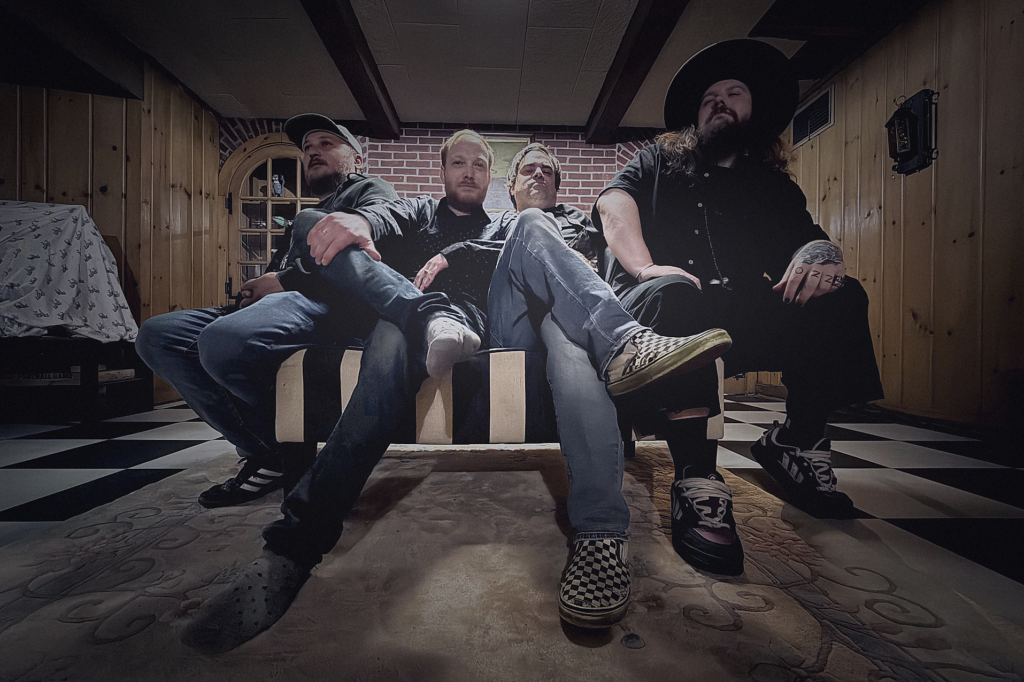
This is the first full-length The House Flies record to feature Alex Riggen, Burnie Eckhardt, Ozzie Woods and Nick Pompou as the current four-piece lineup. How did the chemistry of this particular lineup change the songs once you began developing them together, and were there moments when the collective arrangement took the music somewhere you hadn’t originally imagined?
Definitely. Even when a song begins with a fairly complete idea, it changes once everybody starts playing it.
Nick and Ozzie can change the entire feel of something just through rhythm, and adding Burnie gave us another guitar voice without simply doubling what was already there. Sometimes one guitar can stay very simple while the other does something more textural or noisy.
There are plenty of parts on the album that ended up somewhere I wouldn’t have gotten to by myself. That’s one of the reasons being a band is more interesting than just reproducing a demo exactly.
Your music often creates a sense of physical environments through sound, whether through rural imagery, darkness, repetition or heavily textured guitars. When you’re writing, are you consciously trying to create a specific place for the listener to inhabit, or does that atmosphere emerge naturally from the band’s musical language?
Mostly it emerges naturally.
We’re not usually starting a song by saying it should sound like a particular room or landscape. We’re responding to whether something feels right. The atmosphere tends to reveal itself as the song develops.
Sometimes afterward you start noticing that several songs seem to occupy a similar world, and then the artwork or visuals can reinforce that. But I like that better than deciding what the world is supposed to be before the music exists.
Post-punk has always had a complicated relationship with alienation, identity and social disconnection. When writing music in 2026, what aspects of that tradition still feel genuinely relevant to you, and what do you think The House Flies bring to it that belongs specifically to your generation and your own surroundings?
I don’t think we think about representing post-punk as a tradition very much when we’re actually making music. It’s one of the things that has shaped our sound, but all four of us listen to a lot of music from different genres and different eras.
Alienation and disconnection probably don’t stop being relevant because a certain style of music came out forty or fifty years ago. People still experience those things, just under different circumstances.
What we bring to it is probably just our own lives and where we’re from. I’d rather that come through naturally than try to define what our generation’s version of post-punk is supposed to be.
With Lions and Ore being released digitally, through Bandcamp, on streaming platforms and in a deliberately limited 100-copy vinyl edition, there is an interesting contrast between modern accessibility and something tangible and scarce. What does owning a physical copy of this particular album mean to you, and how important is the album as a complete object in an era dominated by individual tracks?
Physical releases have always mattered to us. All of us grew up with albums as objects, and there’s still something different about holding the artwork, turning the record over and listening to two sides rather than seeing a group of songs on a screen.
We approached Lions and Ore as an album more than a collection of singles. It’s seven songs and a fairly concise running time, so vinyl felt especially natural for it.
The 100 copies aren’t really about creating artificial scarcity. We’re an independent band and that’s a realistic amount for us to make. Hopefully those copies end up with people who actually want to keep the record.
Streaming makes it possible for almost anyone to hear the music, which is obviously important too. I don’t really see the two things as being in conflict.
Looking beyond Lions and Ore and “Derelict Crawl,” what do you feel The House Flies are still trying to discover about yourselves as a band, and what kind of artistic territory would you like to explore next that you haven’t yet been able to reach?
I think we’re still figuring that out, which is probably a good place to be.
This record opened up more room for us in terms of dynamics, longer songs and how the two guitars can work together. I’d like to keep following things like that without deciding too early what the next record needs to sound like.
We’re also interested in meeting and working with other bands and artists who are building something of their own. Playing in new places, sharing audiences and being around people with different ideas can change a band in ways you can’t really plan for.
Hopefully whatever comes next feels like another step rather than us trying to recreate Lions and Ore.
STAY IN TOUCH:
FACEBOOK | X | SPOTIFY | YOUTUBE | INSTAGRAM | WEBSITE
