






Some musical journeys begin with a carefully planned debut. Others begin with a melody that refuses to disappear.
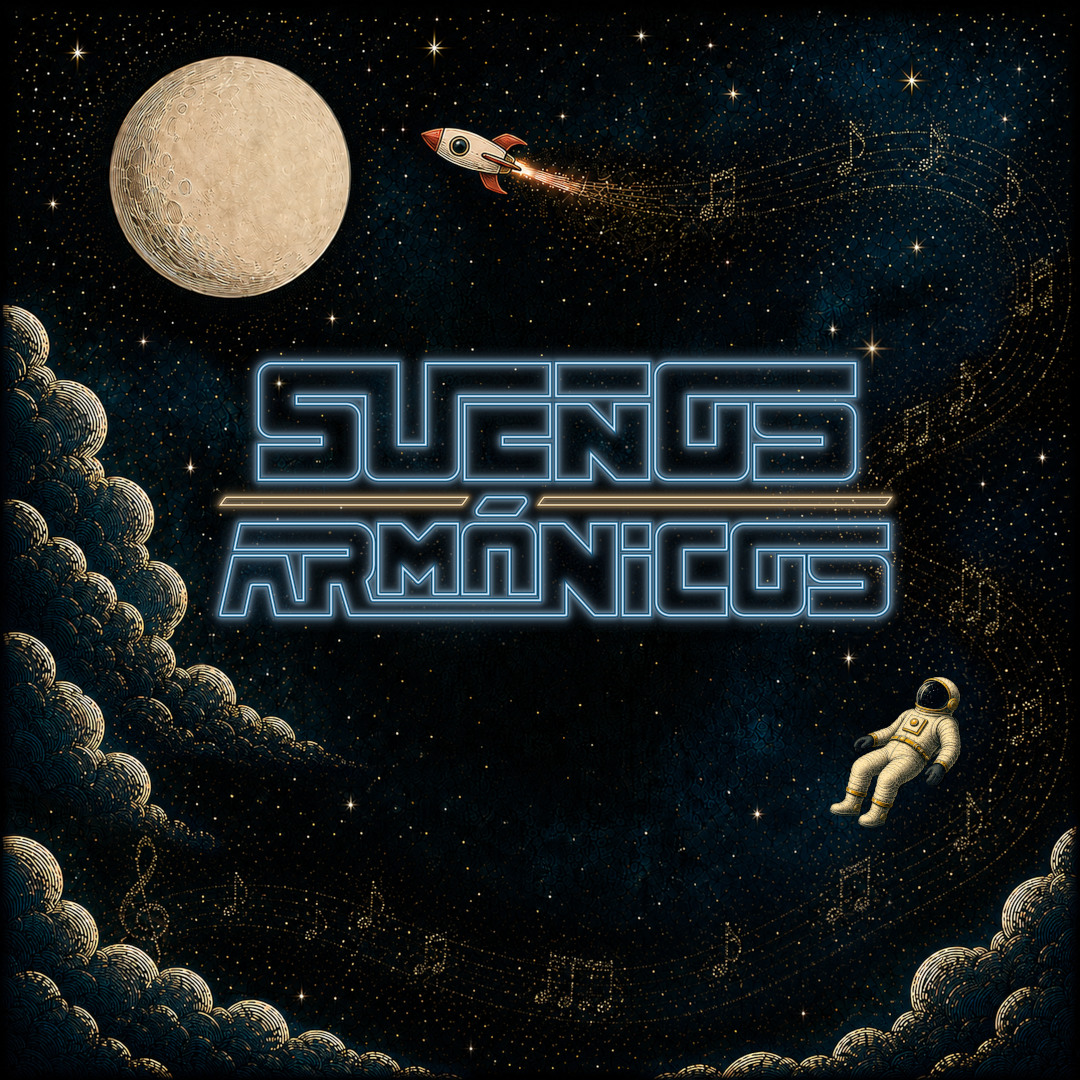
Sueños Armónicos arrives with a story that is as compelling as the music itself. Behind the project’s debut release, “Melodías de la Luna,” lies nearly two decades of memories, creativity and unfinished expression. Originally written in Madrid in 2007, the song has finally found its completed form nineteen years later, opening the door to a remarkable archive of more than fifty songs, demos and ideas created between 2000 and 2009.
What makes Sueños Armónicos particularly fascinating is that these songs were never created to chase attention or follow a commercial path. They were written as deeply personal expressions, born from moments when music became the most natural way to process emotions, experiences and ideas. Now, after years of remaining private, those songs are beginning to find their way into the world.
The passage of time has given this project an extraordinary sense of depth. Revisiting these recordings is not simply about looking back. It is about reconnecting with different versions of oneself and recognising that the emotions which inspired those early songs remain part of who we become. Sueños Armónicos transforms that relationship with the past into something meaningful and forward-looking.
From the creative energy of Madrid to the dramatic natural landscapes of Iceland, where the project has continued to evolve, Sueños Armónicos represents an artist shaped by movement, experience and an enduring need to create. Spanish remains at the emotional heart of the songwriting, while the music itself is free to explore different sounds and identities.
At the centre of everything is a beautiful idea: songs can wait.
They can remain unheard for years, quietly existing in recordings, memories and fragments of melody, until the moment arrives when they are finally ready to be heard.
Sueños Armónicos is giving those long-silent songs their moment.
In this interview, we speak with the artist behind Sueños Armónicos about returning to “Melodías de la Luna” after nineteen years, reopening a remarkable archive of music, the influence of Iceland, the emotional connection between past and present, and the journey of allowing sleeping songs to finally awaken.

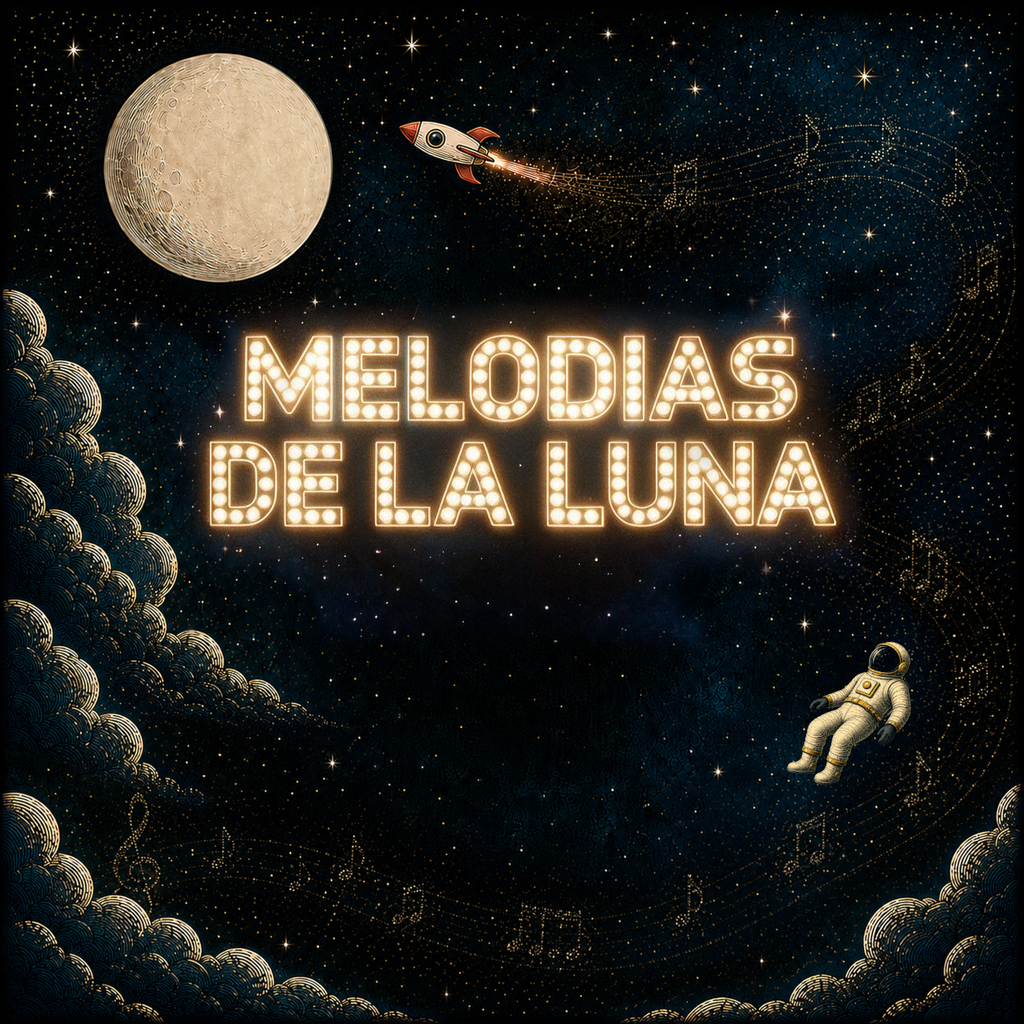
“Melodías de la Luna” was originally written in Madrid in 2007 and only completed and released nineteen years later. What did you feel when you first returned to the song after all those years, and did it still sound like the song you remembered writing?
It was completely unexpected. Over the years, I would return to those songs very occasionally, and whenever I did, it felt like going back to a very personal place that was still alive inside me. There remained an entire universe of experiences, emotions and ways of expressing myself that only I knew. It was like opening, every now and then, a little creative attic full of unreleased songs. But when I decided to go through that whole archive again in 2026, “Melodías de la Luna” immediately felt like a particularly fitting song to return to.
Back in 2007, I had written it precisely from that feeling of wondering where my melodies were, what had happened to them and whether they would ever come back. I remember sitting with the guitar and feeling, in a very natural way, that those melodies were returning, that they belonged to me and could once again express themselves through me.
So returning to it nineteen years later felt almost like coming home. I recognized the emotion, the intention and the essence of the song, even though it was now being expressed in a very different way. The original version already contained the heart of the idea, but it still was not a fully finished song. In 2026, I was able to complete it, add some of the lyrics and give it the final form I had not found back then.
The form has changed a lot. The emotion, for me, is still the same.
There is something beautifully circular about a song about inspiration returning eventually finding its own way back into your life. Did the experience of resurrecting “Melodías de la Luna” change your understanding of what the song was originally trying to say?
I think it did, although it did not change the essence of the message, but rather my understanding of how far it could reach.
When I wrote it, I was thinking mainly about artistic creation: those moments when a melody, an idea or an emotion appears and you feel that everything is flowing, and other moments when that connection disappears and you wonder where it has gone.
Now I see that feeling as something much more universal. It does not have to be only about the creative act. We all go through moments in life when things feel in sync, when something lifts us and everything seems to be moving in the same direction. And there are also periods when difficulties appear, we lose that connection and everything becomes harder, until we begin to feel that things fit together again.
So the change is mainly in the scope of the song. In 2007, it grew out of a very personal experience. In 2026, I feel it can be shared with other people, and each person can carry that emotion into their own experience.
The song comes from an archive of more than fifty songs, demos and ideas written between 2000 and 2009. What made you decide that now was finally the right time to open that archive and allow those previously unheard songs to enter the world?
I think that, in a way, I had no alternative.
I was not deliberately looking for a moment to bring these songs back, and I had not made a plan to release them. What happened was much more unexpected: new AI-based production tools became available and, suddenly, I had a way of developing those songs that I had never had before.
One day I returned to “Melodías de la Luna” and began working on it. When I heard that the essence of that song could finally have a production close to the way I would have liked to hear it back then, that became the first trigger. It was like opening Pandora’s box.
Because those songs had never really disappeared. They are still living inside me. Their melodies come into my head while I’m out for a walk, taking a shower, or at other unexpected moments. Then I begin to imagine how they might sound now, and I feel that they are waiting for their turn.
I did not stop creating during those years either. My creativity simply moved into other areas: I wrote screenplays, worked on film productions and expressed myself much more through audiovisual work.
So I do not see it as a calculated decision to recover an old catalogue. Once I opened that archive and realized I could give those songs a definitive form, I felt there was no turning back.
These songs were originally written for a band that never came to exist. Do you ever wonder what Sueños Armónicos might have sounded like if that original band had actually formed, or do you feel the passage of time has allowed these songs to become something more interesting than they could have been back then?
Actually, when I speak about “a band that never existed,” I mean it more symbolically than literally. Those songs existed, but there was no specific band waiting to play them, not even a name for the project. I was simply writing and recording songs as a very personal form of expression.
During those years I hardly ever presented them in public or shared them with musicians or collaborators. I was not writing them with the intention that they should spread or reach an audience; I simply needed to make them.
So if they had gone out into the world back then, I think they would have been very different. Not only because of how they might have sounded, but because I did not have the same intention I have now. I created in a spontaneous way, without fully understanding what was behind that impulse.
Time has allowed me to understand those songs better, and also to understand myself better as a creator. I can now recognize more precisely what I was trying to express.
So I do not think too much about what that hypothetical band might have sounded like. I am more interested in what actually happened: many years later, Sueños Armónicos became the form through which those songs can exist.
Moving from Madrid to Reykjavík creates a fascinating contrast between the origins of the songwriting and the environment in which the project now exists. How has living in Iceland influenced the atmosphere, emotional tone or sonic identity of Sueños Armónicos?
The impact of living in Iceland has been enormous. I think that, without having lived here, I would not have been able to express certain things in the way I express them now.
Iceland is a very special place, and living so close to such powerful nature has allowed me to expand, both personally and creatively. I do not feel that my encounter with this country was accidental. It is a very important place in my life, and I feel it as my home.
There is also a very strong contrast with Madrid. Madrid is an extraordinary city, full of possibilities, movement and opportunities to develop projects, but it is a much more urban, intense and aggressive environment. In Iceland I found a different kind of freedom.
I think the country’s own isolation has an influence on that. Living on an island, in a remote place with such a strong presence of nature, encourages a certain individuality. It has helped me listen more clearly to what I want to do, how I want to express myself and what things are truly important to me.
So I would say that Iceland has influenced not only the atmosphere of Sueños Armónicos, but also the way I understand the project. It has given me distance, freedom and space to return to what is essential.
The music combines Spanish-language songwriting with atmospheric guitars, indie rock, alternative pop and melodic rock. How important was it for you to preserve the original Spanish identity of these songs while giving them a contemporary musical context?
For me, keeping Spanish was fundamental, because it is my native language and the language in which I can most naturally express emotions, ideas and nuances.
At the same time, I have always been drawn to certain vocal and sonic qualities that I often find in my musical influences: melodic vocals with a wide range, soft moments and others that are rawer or more strained, changes in intensity, distortion and very different registers. Even in the old demos, I liked singing and building vocal melodies in that way.
What interested me was bringing that kind of sensibility into my own language. I did not hear that combination quite as clearly in the Spanish-language music I was listening to, so there was also a search for identity: taking influences that had marked me and expressing them through my own language, not as imitation, but as a personal translation.
Indie rock emerged naturally because it is a musical territory in which I have always felt comfortable. But I do not want Sueños Armónicos to be limited to one genre. The archive contains very different songs, and I am interested in allowing each one to find the form it needs.
Most of them were originally written in Spanish, although some were written in English. I’m also open to bringing some of those songs back in their original language, but Spanish remains the language in which I feel I can express myself with the greatest precision and naturalness.
There is a strong theme of time throughout the project: songs written in another era, ideas left dormant, and emotions returning years later. Has revisiting your younger self through these recordings changed the way you see the person who originally wrote them?
Definitely, and I think this is a very important part of the project for me.
When I return to those recordings, I do not feel that I am simply taking a trip into the past. It is more like meeting different versions of myself again, versions that are still alive in the present. I find that young man again, the one who was writing songs because he needed to express something. I do not feel that he is someone distant or gone. Those experiences are part of who I am now.
That is why finishing one of those songs is also a way of honoring that act of creation and giving it the value it deserves. If I forgot everything that was left unfinished or unshared, I would feel that I was
leaving a part of myself unexpressed. It would not only mean turning my back on the person I was then; in a way, it would mean turning my back on myself now.
Today I am a very different person and I have a different perspective, but the essence is still there. What interests me is being able to integrate who I was, who I am and where I want to go. When all of that comes together in the present, I feel that I move forward in a way that is much more coherent and true to myself.
“Melodías de la Luna” is your debut release, yet the material behind Sueños Armónicos represents almost a decade of songwriting. Does it feel strange to begin a public musical journey with songs that have already lived such long private lives?
Yes, and I think that is precisely where something very special exists: the tension between the part of the project I have already shared and the part that still remains private.
I know the universe of the project well. All of those songs already exist in some form. They have very different identities, they tell different stories and yet, for me, they are all part of the same world. The public, on the other hand, is only just beginning to enter it.
With each release, I reveal another part of something that until now had remained private: in recordings, ideas and archives. And simply releasing the first song felt like breaking through a wall. Suddenly I thought: “Here I am. This exists outside of me now, and I can begin to tell this story.”
So I do not feel as though I am writing one song and then another from scratch. There is already a large archive, and my work now is to decide what to bring back, in what order and how to give it a definitive form before sharing it.
I think that is quite a particular circumstance of Sueños Armónicos: for me, that universe already exists; for the listener, it has only just begun.
The phrase “where sleeping songs awaken” feels like more than a tagline for the project. What does it mean to you personally to finally give these songs a life, and are there any pieces in that archive that you are particularly eager to bring back next?
“The awakening of the sleeping songs” is probably the most direct way I have found to express the essence of Sueños Armónicos. It is a phrase that resonates very strongly with me because I truly feel that this is what is happening: the songs begin knocking at the door as if to say, “I think it’s my turn.
It’s time to wake up.”
I feel that many of them deserve to do so, although each one will have to find its own way and its own moment.
There is also something I find fascinating: I know the soul of those songs and what they mean to me, but I do not know how they will be received. They were never presented to the public, and now they are waking up in a world very different from the one that existed when they were written.
Within the archive there is a group of perhaps seven or eight songs that I feel particularly close to and that I consider very important for what I want the project to become. Interestingly, they are not necessarily the ones I want to release first. I would rather let Sueños Armónicos mature a little, understand its possibilities better and have more resources available before taking on some of them.
Right now I am trying to build the journey with a certain coherence: allowing some songs to speak to the ones that came before them, and gradually introducing others that open different paths.
Some of the songs I most want to recover will have to wait. I want them to wake up when the project is ready to receive them in the best possible way.
After waiting nineteen years to release the first of these songs, Sueños Armónicos now has the opportunity to tell a much larger story one release at a time. What do you hope listeners discover as they gradually enter this archive, and what would make you feel that these long-silent songs have finally found the audience they were waiting for?
I would like listeners, as they enter these songs, to discover something about themselves as well.
For me, that would probably be the most important thing: that when they listen, they do not only hear what I was trying to express, but recognize within themselves some emotion, some experience or some part of their own lives.
Most of these songs were born in a very spontaneous way, and for me they express real emotions. When I wrote them, there was something inside me vibrating that needed to find a way out. If, many years later, that same emotion can resonate in another person, then I feel the song has truly found its place.
That is why I would not measure success only by the size of the audience. It would matter much more to me that the people who come to Sueños Armónicos genuinely connect with the essence of the project and, in some way, make those songs their own.
I think that is one of the great purposes of art: to share something deeply personal and discover that, when it reaches another person, it can also become something universal.
If someone listens to one of these songs and feels that it is speaking about them too, then I think those songs will finally have found the audience they were waiting for.
STAY IN TOUCH:
INSTAGRAM | FACEBOOK | SPOTIFY | TIKTOK | WEBSITE | YOUTUBE


