




High school has a way of making every emotion feel permanent. Heartbreak can feel like the end of the world, insecurity can shape the way you move through every room, friendships can become lifelines, and a single mistake can seem impossible to escape. Years later, those same experiences may look different, but the emotions attached to them often remain vivid.
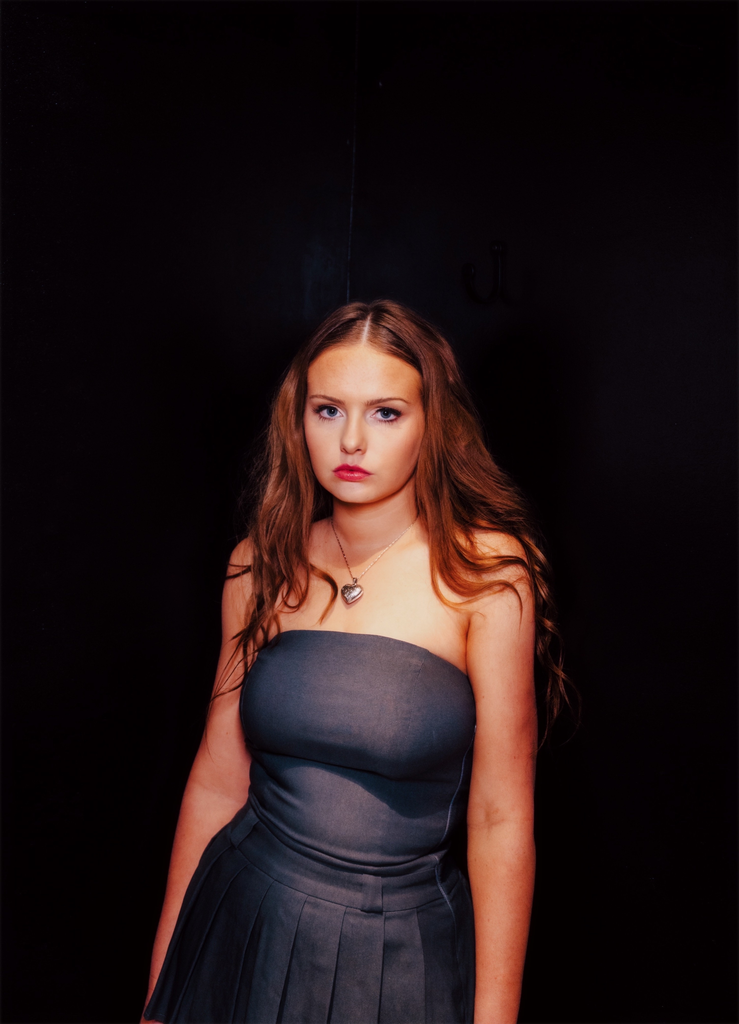
For Analiese, those memories became the foundation of “Miss Melancholy,” a deeply personal EP shaped by heartbreak, insecurity, friendship, growing pains and the complicated journey of learning how to become comfortable with yourself.
The project reaches back into some of the most vulnerable years of her life, including the period when she was seventeen and struggling with intense insecurity and the lasting effects of being bullied earlier in her life. Quiet and withdrawn during high school, Analiese found herself constantly comparing herself to those around her. Music eventually became more than a creative outlet. It became a place where she could process experiences she did not always know how to express and slowly begin to understand the person she was becoming.
What makes “Miss Melancholy” particularly compelling is that it does not simply revisit teenage pain from a distance. These songs were largely written while Analiese was living through those emotions. In many ways, the EP captures a younger version of the artist trying to make sense of her world in real time.
She describes the project as the kind of music she wishes she could have listened to during high school. While the songs acknowledge the loneliness, insecurity and heartbreak that can define adolescence, they also carry something more hopeful beneath the surface. Writing them helped Analiese begin choosing herself, transforming experiences that once made her feel powerless into music that encourages listeners to recognise their own strength.
That emotional weight exists alongside a sound that is often bright, colourful and undeniably pop. Raised on artists such as Britney Spears and Katy Perry, Analiese has always been drawn to infectious melodies and upbeat production. Yet her own life has not always reflected that same brightness. The contrast between darker subjects and playful pop songwriting has therefore become one of the most natural parts of her artistic identity.
It is a balance she describes almost like a spoonful of sugar. Difficult truths may be easier to confront when they arrive wrapped in catchy melodies.
Across “Miss Melancholy,” that duality becomes one of the project’s greatest strengths. Songs can sound playful while carrying insecurity beneath the surface. Humour can sit beside pain. Nostalgia can bring both warmth and discomfort. The EP understands something important about growing up: life is rarely made up of only one emotion at a time.
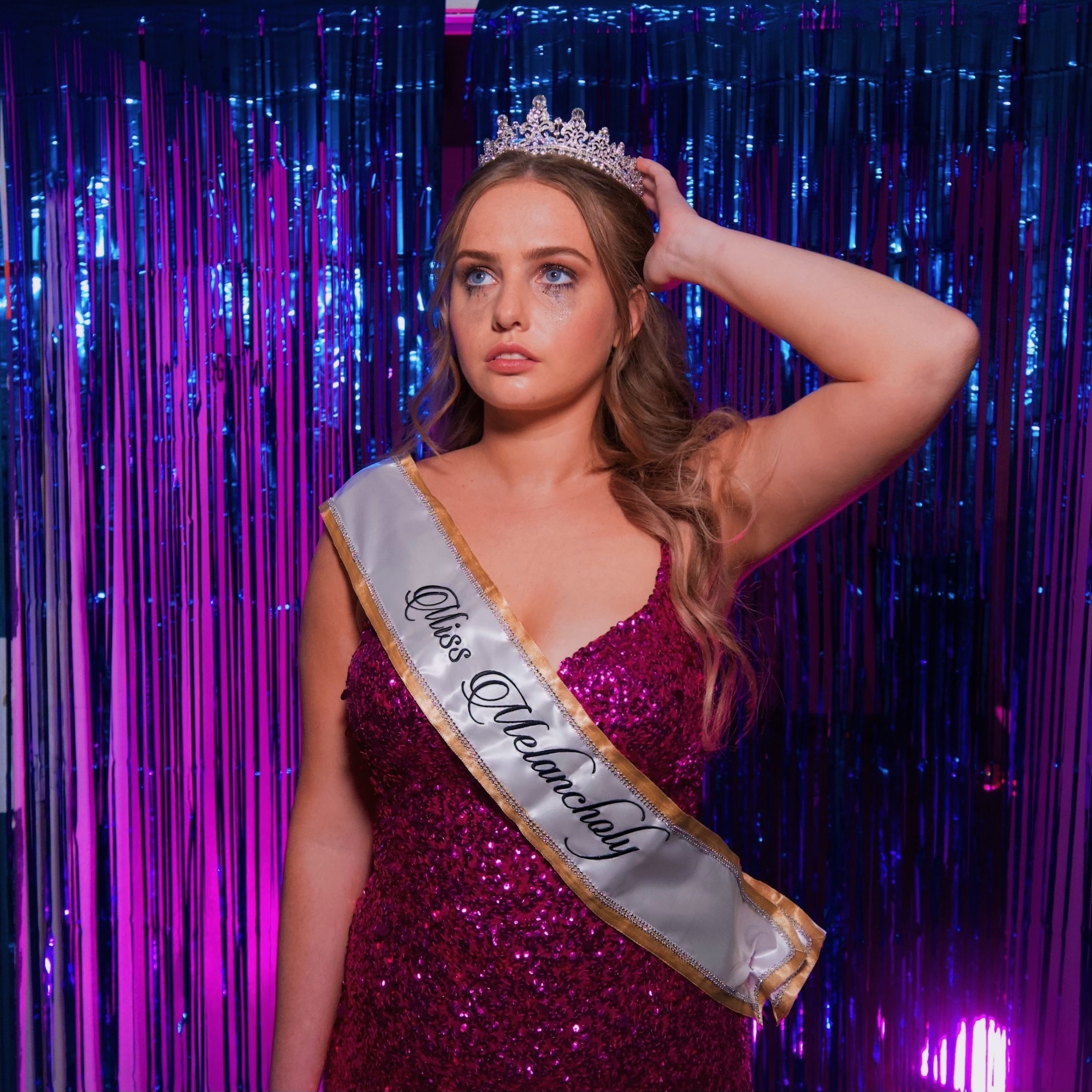
The project’s visual world reflects that complexity through its nostalgic high school and prom-inspired atmosphere. For Analiese, adolescence is one of life’s most defining periods, a time when people are beginning to discover who they are while being expected to navigate increasingly adult emotions. Prom becomes the perfect symbol for that experience: glamorous, dramatic, exciting and emotionally loaded all at once.
But “Miss Melancholy” is not designed only for teenagers currently living through those experiences. It also reaches toward adults who can look back at their younger selves with a mixture of affection, embarrassment and understanding. What once felt unbearable may eventually become something we can laugh about, even if the pain was very real at the time.
The response to Analiese’s music has also revealed unexpected things about how listeners connect with her work. “Ugly Crier” has surpassed 150,000 streams, while five of the EP’s seven tracks had already been introduced as singles before the complete project arrived. The songs listeners gravitated towards were not always the ones she expected, offering a valuable lesson as she continues developing her artistic future.
Still, “Miss Melancholy” remains more than a collection of successful individual songs. It represents a creative period that helped Analiese discover her voice and sound.
Collaboration also played an important role in that journey. While she began with a strong personal vision for the project, working alongside other writers and producers challenged her to step outside the solitary process she was used to. Learning to contribute ideas in rooms filled with experienced writers required a different kind of confidence, particularly for someone who once preferred to quietly work through an idea until it felt perfect.
That growth mirrors the larger story of the EP itself.
At its heart, “Miss Melancholy” is about finding a voice after spending years feeling unable to speak freely. It is about learning that vulnerability can become strength, that difficult memories can become art, and that the person you once felt embarrassed to be may eventually become someone you understand with compassion.
Analiese does not claim to have found every answer. Instead, her music leaves room for uncertainty, humour and contradiction. The saddest experiences can sometimes become funny with time, and the brightest melodies can carry some of the deepest emotions.
Perhaps that is what makes “Miss Melancholy” feel so human.
For Analiese, the message she would give her younger self is simple: you will get through this, and you will come out better on the other side. The things that feel impossibly heavy in adolescence will not always carry the same weight forever.
In this interview with Spinex Music, Analiese discusses the painful memories behind “Miss Melancholy,” surviving insecurity and bullying, finding empowerment through songwriting, the contrast between bright pop and darker emotions, the unexpected success of “Ugly Crier,” collaboration, nostalgia and the lessons she has learned about herself while growing into her own voice.
Sometimes the person you are desperately trying to become is already waiting for you on the other side of everything you thought would break you.

“Miss Melancholy” was inspired by your own high school experiences and explores heartbreak, insecurity, friendship and growing pains. When you began turning those memories into songs, what parts of that period were the most difficult to revisit, and did songwriting change the way you now understand that version of yourself?
The hardest period of time for me to revisit was probably when I was 17 and wrote Miss Melancholy. I was so painfully insecure and constantly comparing myself to the other people around me. Looking back, I now think it was silly to be so self conscious because I really had nothing to be worried about. I was extremely quiet in high school because I had been bullied severely in Elementary and Middle School so at that point in my life I kind of just shut down socially. I’ve since been able to come out of my shell and be myself, especially as it pertains to music.
You described the EP as the project you wish you could have listened to while you were in high school. What did you feel was missing from the music you heard during that time, and what kind of conversation did you want these songs to have with young listeners going through similar experiences?
I try to balance my music out by making it relatable but also empowering to a certain extent. At the time I was writing these songs I was actually not feeling very empowered, and I think that writing them is what gave me the strength to choose myself. I want young listeners to not only see themselves in my music, but realize that they are stronger than the circumstances they are in. The album “Sour” came out just as I was graduating high school, and I feel like that album does a great job of exploring insecurity and heartbreak. I feel like that album was a big turning point for pop music and it’s one that I wish I had in high school. A lot of the music I listened to in high school was written by adult artists, so it was nice to hear the perspective of someone your own age. I’m now an adult artist but I wrote all these songs in high school, so I hope that young listeners feel seen and heard.
There is a fascinating contrast between the bright pop melodies and the darker, more vulnerable subjects throughout your music. Why does that contrast feel natural to you, and what do you think happens emotionally when difficult stories are presented through catchy, colourful production?
Due to being raised on pop artists such as Britney Spears and Katy Perry, I have always gravitated towards upbeat, poppy melodies. At the same time, I struggled a lot with mental illness from a young age, so my life hasn’t always been sunshine and rainbows. I like to think that the contrast between darker subjects and brighter melodies makes my music and brand more unique, but it also just feels authentic to me. It’s almost like a spoonful of sugar, maybe the message will be easier to swallow if it’s happy sonically. Life is hard and I’m not going to pretend like it isn’t, but we can at least try to find a silver lining.
“Ugly Crier” has surpassed 150,000 streams, while five of the EP’s seven songs were already released as singles. Has the response to those individual songs changed the way you think about “Miss Melancholy” as a complete project, or have you remained focused on the story you wanted to tell from the beginning?
I wouldn’t say it changed the way I think about this particular project, however it definitely influences the way I think about future projects. I was surprised because the songs that I thought were going to be standouts are different from the actual standouts. As I’m still developing my fanbase and growing as an artist, it’s interesting to see which ones resonate. I put a lot of pressure on myself to make the next project as good as, if not better than, Miss Melancholy. When I approach writing and production for the next EP, I think a lot about if my audience will like it as much as Ugly Crier.
The EP uses a nostalgic high school and prom-inspired world to explore experiences that are deeply personal. How much of the visual identity and atmosphere was designed to recreate the feeling of adolescence, and what made that setting the right environment for these stories?
High school is a pivotal time in your life, some people regard it as the best time, some as the worst. It’s just hard when you’re in that period of your life because you’re just starting to figure out who you are as a person. When you’re in it, everything misstep feels like the end of the world, and why wouldn’t it? Teenagers have lived such a short life at that point and they’re just beginning to be treated like adults. I wanted to not only appeal to high schoolers who are experiencing it for the first time, but to appeal to the adults, and create a sense of nostalgia for them. I think prom is the perfect theme because it’s the biggest event of a teenagers life.
You worked with several producers and songwriting collaborators across the project. How did you maintain a consistent artistic identity while working with different creative voices, and were there moments when a collaborator helped you discover something about a song that you would not have found alone?
For me the overarching theme was always there. When it came to the songwriting process, I would say that most of it was me. I came up with every idea, but some of them were harder for me to execute. Most of the time I would bring in another writer to help refine the songs or to help me when I got stuck. I was very used to writing by myself and my team was beginning to introduce me to the idea of writing as a collaborative effort. All of them were either written by myself or with one other writer in the room (which is my favorite way to do it) except for Bitter. That was interesting because it was four of us, and I was in the room with seasoned writers.
I was so nervous but now, after working with them, I can say I’m comfortable entering a room full of writers. Writing with others is very different because you throw out a few melodies or lyrics and you just go with it. When I write by myself or with one other collaborator, we sit with the song and work on the melody or lyric for hours until we feel like it’s just right. You have to be very vocal in a group and just throw it out there even if it’s bad. When I first started writing in groups I would sit there silently and try to work it out in my head until it was perfect, but usually the group would throw out an idea and move on before I could work it out.
Songs such as “Bleach,” “Ugly Crier” and “Miss Melancholy” suggest very different shades of vulnerability. When writing about insecurity or painful experiences, how do you decide what should be expressed directly and what works better through imagery, character or metaphor?
The messages that I am writing about aren’t exactly revolutionary, and a lot of songs explore these themes already. The trick is to find a way to spin it so that you’re saying things in a way that they haven’t been said before
Your music often feels playful on the surface while carrying something much heavier underneath. Do you see that duality as a reflection of your personality and experiences, or is it more of a deliberate songwriting approach that allows you to explore serious subjects without making the music feel emotionally one-dimensional?
I think it’s definitely a reflection of both my personality and my experiences. I tend to use humor and playfulness as a way to cope with heavier emotions, so that naturally comes through in my songwriting. I love pairing bright, catchy pop melodies with lyrics that are a little darker or more vulnerable because I think that contrast makes the emotions feel more honest. Life is rarely just one feeling, and I don’t think music has to be either. Sometimes the saddest experiences can be funny in hindsight, and sometimes something that sounds upbeat can carry a lot of pain underneath. That duality allows me to explore serious subjects while still creating music that feels fun, relatable, and layered.
As a young artist developing a distinctive identity within pop, what have you learned about yourself through making this EP that you could not have learned simply by releasing individual songs? Has creating “Miss Melancholy” changed what you believe your voice can be?
Writing this EP was a way for me to process and cope with what I was going through at the time. I didn’t realize it when I first started writing the songs but it really does reflect my mental state and is consistent thematically. Writing this helped me find my sound and voice.
10. I guess I would tell myself that you will get through this and come out better. Like I said, everything feels so heavy at that time in your life, and I couldn’t have imagined feeling differently about these situations in the future. I want listeners to allow themselves to feel, but realize that someday you will look at their past self and laugh.

Once listeners have finished “Miss Melancholy,” what do you hope stays with them beyond the nostalgia, heartbreak and teenage memories? If the EP could give your younger self one message that you did not fully understand at the time, what would you want that message to be?
I guess I would tell myself that you will get through this and come out better. Like I said, everything feels so heavy at that time in your life, and I couldn’t have imagined feeling differently about these situations in the future. I want listeners to allow themselves to feel, but realize that someday you will look at their past self and laugh.
STAY IN TOUCH