


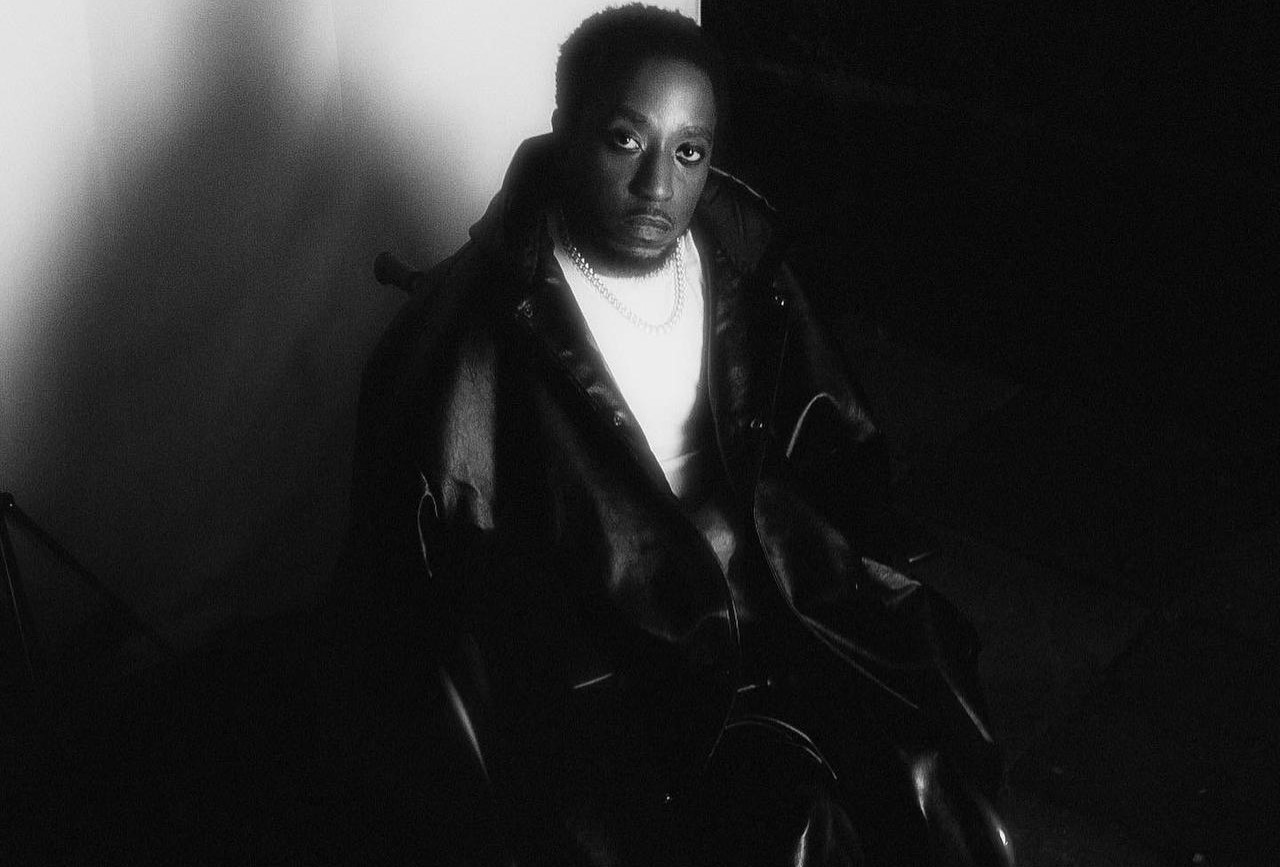
Some songs live forever not because they are replayed endlessly, but because they continue to be reinterpreted through new emotional lenses. For North London based producer Otim, Selena’s Dreaming of You became one of those songs after an unexpected encounter with her story through Netflix’s documentary series.
Before watching the documentary, Otim knew Selena only by name, unaware of the scale of her impact or the tragedy that cut her life short. What began as casual viewing quickly turned into a deeply personal experience, as Otim found himself emotionally invested in Selena’s journey, rooting for her global breakthrough as though it were unfolding in real time. The moment that ultimately reshaped everything was hearing Selena’s father explain that he could no longer listen to Dreaming of You after her passing, a quiet confession of grief that lingered long after the screen went dark.
That moment became the emotional catalyst for Dreaming of You Otim Remix, a reinterpretation that does not seek to overpower the original, but instead approaches it with restraint, care, and reverence. Drawing from a childhood immersed in soul and R&B, shaped by London’s multicultural soundscape, and filtered through his own experiences of vulnerability, mental health, and survival, Otim crafts a remix that feels both intimate and spectral.
Blending nostalgia with futurism, warmth with space, and memory with movement, the remix reframes Selena’s voice as something archival yet alive, drifting between eras, still resonant, still felt. In this interview, Otim opens up about grief, adaptation, invention, and the quiet persistence of music as a tool for survival, offering rare insight into the emotional architecture behind the remix and the philosophy guiding his work forward.
What follows is a conversation about legacy, vulnerability, and what it means to keep listening carefully, honestly, and differently.
Dreaming of You was inspired by Selena’s Netflix documentary, particularly the final episode. What about her story and that closing moment stayed with you enough to spark this remix?
Before I watched the documentary I’d only heard her name but never went to listen to anything she made. I still believed she was alive today, just living a quiet life. I grew attached to Selena’s story and was rooting for her to break the international market as if it was occurring now while watching, then to find out one her fans ended her life spun me.
The moment her dad tells the camera he’s not able to listen to “Dreaming of You” after she passed is what motivated me to make this remix. She had so much potential globally and achieved so much early on it reminded me specifically of both Aaliyah and Left Eye’s fates.
Selena’s life and legacy are deeply emotional and tragic. How did you approach honoring that weight while still putting your own creative spin on the track?
I knew she was already loved by many so my approach was not to deviate too much from the original and kind of gently merge past and present.
As a black, producer from North London, your lived experience shapes your sound. How do your personal experiences influence the emotional direction of this remix?
Growing up during the 90’s/00’s 70’s/80’s soul and R&B was played around the house by my dad as far back as I can remember so the sound was very innate to me. London is a musical melting pot so you will always hear different genres, especially growing up on a council estate so when I was younger you would hear a lot of dancehall, R&B, Grime, UK Garage and whatever was on the radio at the time.
Your production has been described as “smooth yet glitchy.” How did you balance soulful R&B elements with electronic textures on this track?
I started making beats during the early-mid 2010s and at the time what we now know as Alternative R&B that merges electronic elements heavily influenced and still influences my sound so I have always tried to emulate that.
The remix feels both nostalgic and futuristic. Was that contrast intentional, and what were you hoping listeners would feel when they hear it?
Coming back home from playing outside on the block I’d hear my mum playing congolese music so as far as sound went for this remix the point I tried to make was a sense of nostalgia that made you feel warm the same way a song usually takes you back to a specific moment during grief.
Late-night cityscapes and UK club culture are often cited as influences in your work. Where do those influences show up most clearly in Dreaming of You?
You can hear the club influence during the 2nd half of the track as I distort and manipulate the vocals using Logic Pro’s in-built half time plugin.
Vulnerability is a strong thread in your music. What emotions were you personally working through while creating this remix?
I made this remix the week of christmas on the 21st and put it out the next day. The week before that, I’d been attending therapy sessions as I was experiencing a wave of low mood, anxiety and self-doubt as a result of not being content with how my life was going. I was living at home with no room for privacy, late nights and lack of sleep, sharing an overcrowded room combined with two siblings and struggling to find a 9-5 job that began to take its toll on me.
You’ve described music as adaptation, invention, and survival. How does Dreaming of You (Otim Remix) reflect that philosophy for you?
For me, this song feels like all three—adaptation, invention, and survival—layered into one quiet act of care.
Adaptation.
The original song is pure 90s vulnerability: longing that doesn’t try to protect itself. I adapted that emotional core to a different era and emotional climate. The remix doesn’t modernise by overpowering it; it thins it out. Space, reverb, restraint. That’s adaptation as listening—reshaping the vessel so the feeling can still travel forward without breaking.
Invention.
What’s invented isn’t a new melody, but a new context. The remix reframes the song as memory rather than confession. Selena’s voice becomes almost archival—like it’s drifting in from somewhere you can’t go back to. That shift invents a new meaning: the song isn’t just about missing someone, it’s about missing a time, a self, a future that never arrived.
Survival.
This is the part that hits me hardest. Selena’s voice surviving through reinterpretation is literal, but it’s also emotional survival. The remix lets grief breathe instead of resolve. It doesn’t rush toward healing; it shows how people survive by replaying, recontextualizing, holding onto what still sounds like love. Music as survival doesn’t always sound strong—sometimes it sounds fragile but persistent.
So yeah—this remix feels like music saying:
I don’t need to be louder to stay alive. I just need to keep being heard differently.
What do you hope listeners take away from this track especially those who may not be familiar with Selena’s story?
I hope listeners feel the humanity first. Even if you don’t know Selena’s story, the track is meant to land as a feeling—joy, longing, resilience—before it lands as history. Selena wasn’t just an icon; she was a young woman chasing a dream, navigating love, pressure, culture, and vulnerability in real time.
If you walk away curious enough to learn more about her, that’s beautiful. But if all you take is a sense of how powerful it is to be unapologetically yourself—and how fragile life and legacy can be—that matters just as much. The song is an invitation to connect, not a test of what you already know.
Looking ahead, does this remix point toward the direction your future releases will take, or is it a standalone emotional moment?
Moving forward I think there will always be room for vulnerability, I’ve established that as the undercurrent to my songs and I will continue to evoke it with whatever directions comes next.
