






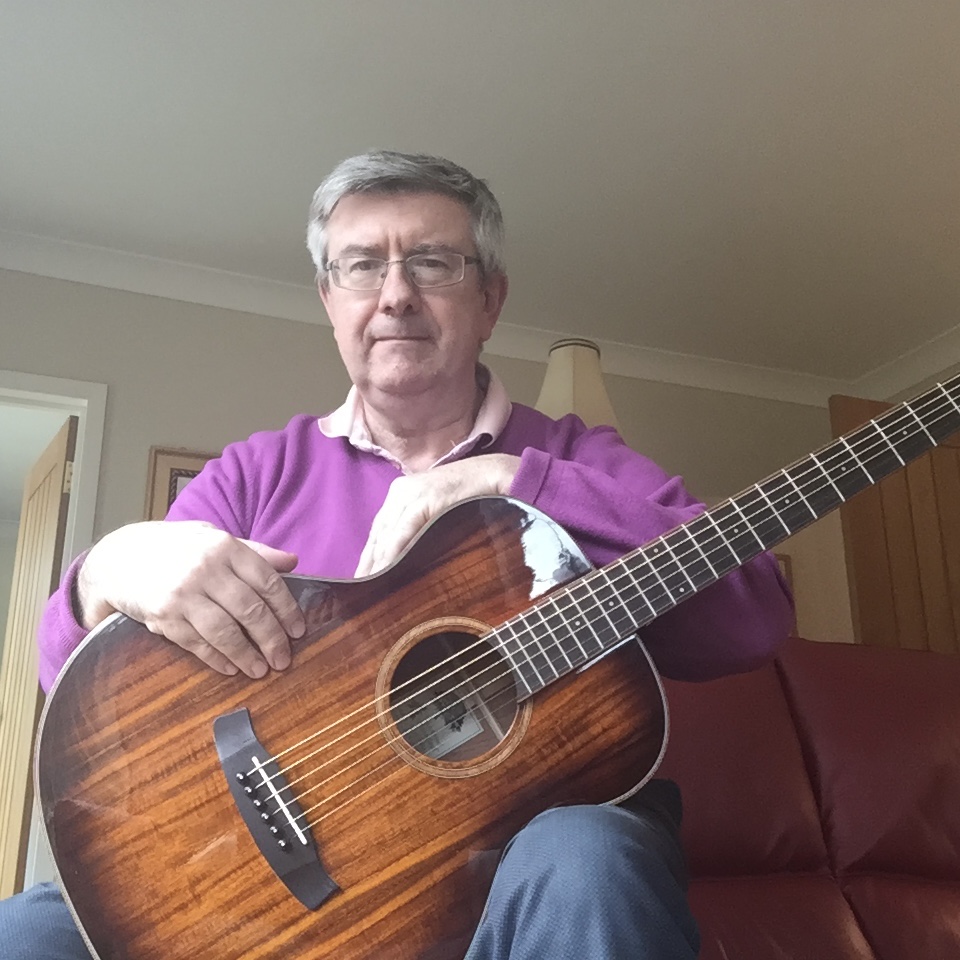
Some musical ideas begin with a story, a memory or a particular place. For Martin Lloyd Howard, it is often the other way around. The music comes first, and the story reveals itself along the way.
Howard’s relationship with the guitar began as a teenager, inspired by the likes of Led Zeppelin and Deep Purple and a desire to play like Jimmy Page. What started with folk guitar lessons soon took an unexpected turn when he heard another student perform “Romanza,” opening the door to classical guitar and a style of playing that would continue to influence him decades later.
Although classical guitar became the foundation of his musical identity, Howard never stayed within one musical world. Over the years, he explored rock, blues, acoustic and electric guitar, slide guitar and other styles, largely teaching himself along the way. Those experiences have not only expanded his playing but also helped shape the way he approaches composition.
His latest instrumental piece, “Surrey Bells,” is a perfect example of that approach. Built entirely around DADGAD tuning, the composition grew out of simple musical experimentation with chord shapes and ringing tones before gradually taking on the image of church bells echoing across a rural Surrey valley on a bright winter morning. The result is a piece where the guitar becomes more than an instrument. Through drones, suspended tones, melody and carefully shaped space, it creates the impression of sound travelling across a landscape.
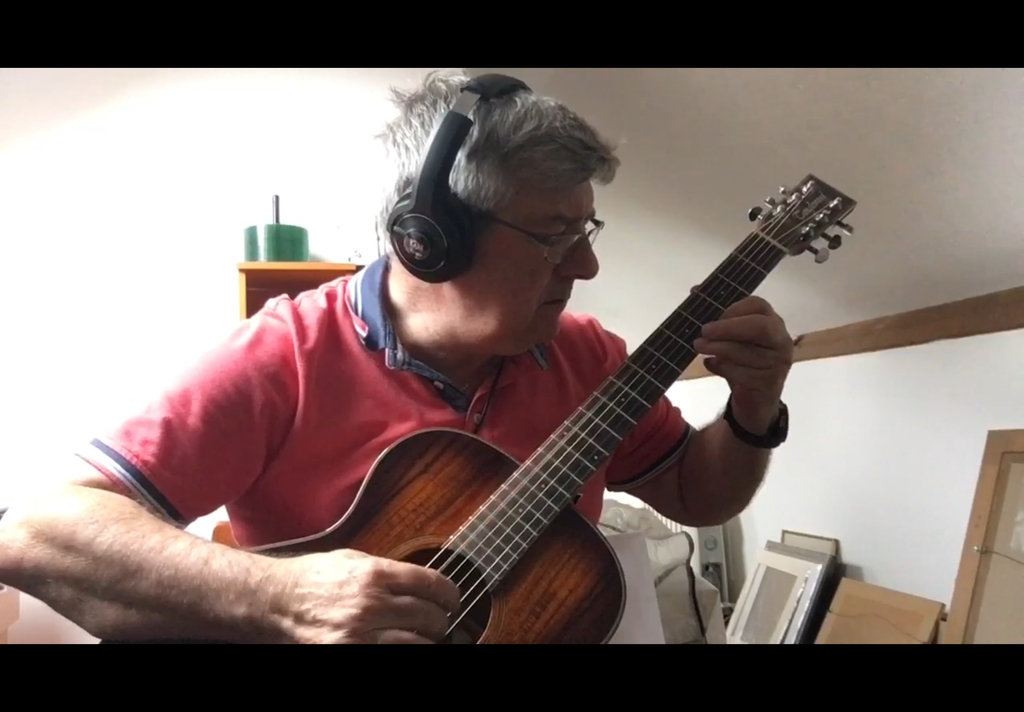
The recording itself was made at home in Howard’s loft, using a Tanglewood steel-string guitar and a single microphone. He later used reverb and echo to give one of the guitar parts a more distant quality, creating the sense of two sets of bells answering one another from across the valley. Interestingly, the second guitar part did not arrive exactly as planned. A more complex arrangement that looked promising on paper had to be abandoned when it failed to work alongside the first guitar, leading Howard to build a new part by ear that proved far more effective.
That willingness to experiment is central to Howard’s creative process. Whether working alone or collaborating with other musicians, he approaches music from the perspective of a guitarist, composer, producer and recording engineer. His collaborations have also pushed him to think beyond his own instrument and consider how guitars, vocals and other musical elements can come together as a cohesive whole.
Yet perhaps the most interesting thing about Howard’s instrumental music is that he does not insist on telling listeners exactly what they should hear. The imagery behind “Surrey Bells” may be a rural winter valley in Surrey, but he leaves room for listeners to create their own pictures and emotions from the music.
As he continues writing, Howard is already taking on new musical challenges, including an attempt to compose a waltz with its own quirks. For an artist whose compositions often discover their imagery after the music has begun, there is no telling where that next idea might lead.
We caught up with Martin Lloyd Howard to discuss his journey from discovering classical guitar to exploring rock and other styles, the creative process behind “Surrey Bells,” the possibilities of DADGAD tuning, recording at home, collaborating with other musicians and the freedom of allowing instrumental music to speak for itself.

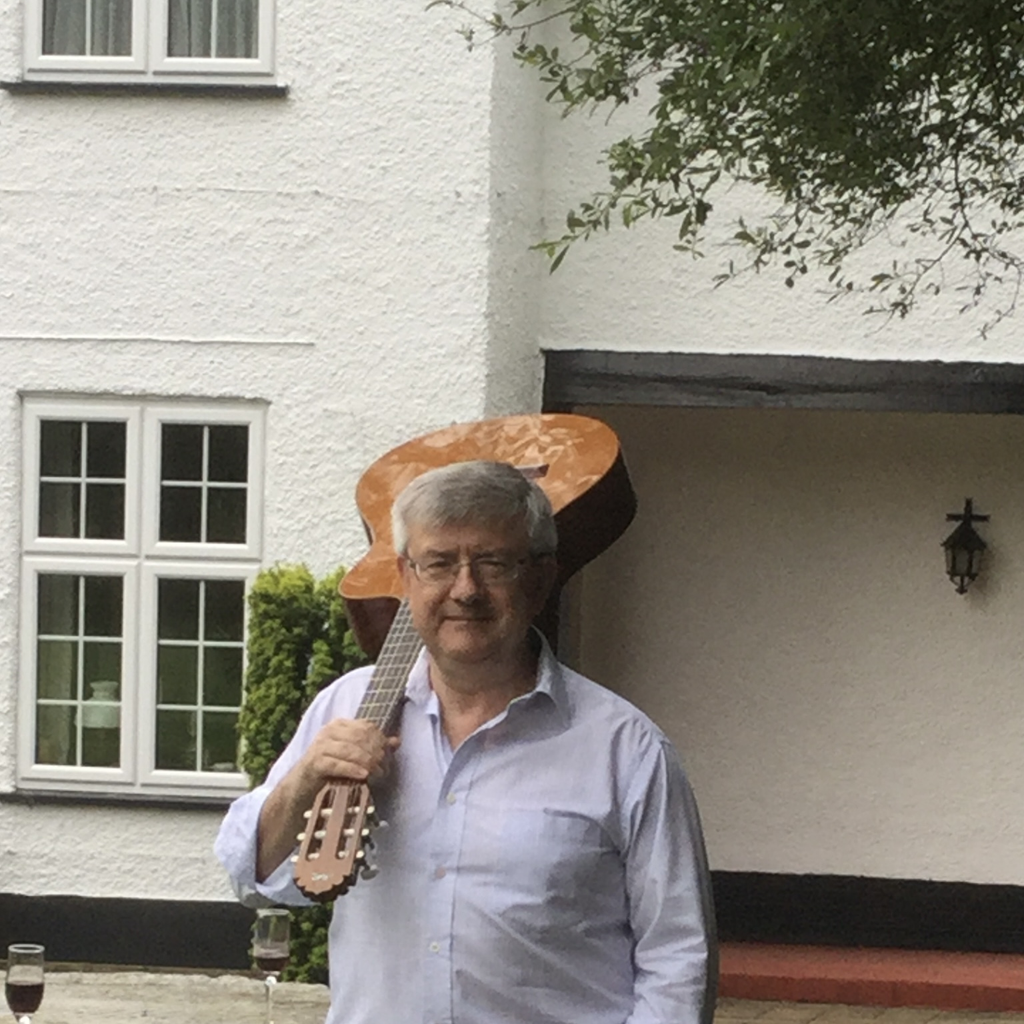
First of all, tell us about yourself and how you got into music. How did your early classical guitar training begin, and what eventually led you to explore folk, blues, rock, and other styles?
As a teenager, I was a massive fan (and still am) of bands like Led Zeppelin and Deep Purple and wanted to play the guitar like Jimmy Page. My parents bought me a nylon string guitar and I went to folk guitar lessons at school to learn some basic chords and strumming. At one of the lessons, a fellow pupil (an excellent classical guitarist it turns out) played “Romanza” a famous piece from the classical canon and I was blown away.
So I took classical lessons for a couple of years which embedded my technique and influences me to this day. Over the decades since, I have explored other genres (including Jimmy Page style rock to complete the circle), mostly teaching myself, but with some courses and training sessions, mainly on electric guitar. I’ve ended up still focussed mainly on solo classical guitar stuff, but have been able to pick up from my other explorations to improve my composition skills and also play other types of music. Sorry, a long answer, but it’s a complicated story.
“Surrey Bells” creates the image of church bells ringing across a rural Surrey valley on a bright winter morning. Where did that particular image come from, and what made you want to turn it into a piece of music?
The musical experimentation always comes first, but in messing around with some DADGAD chord shapes and sounds, the link to church bells came pretty quickly and guided the rest of the composition. That doesn’t always happen: sometimes the link to an image or a mood comes much later in the process.
The composition is written entirely in DADGAD tuning. What does this tuning give you as a guitarist and composer, and how did it help you create the atmosphere you wanted for “Surrey Bells”?
I’ve always enjoyed playing in DADGAD ever since I learned Black Mountainside from the first Zeppelin album. In this case all the drones and ringing tones from multiple root notes and perfect fifths, shot through with the questioning tone of a suspended fourth, provided the ideal sonic palette for bell like tones.
The piece features two guitars engaging in what feels like a call-and-response between distant sets of bells. How did you approach writing and arranging the two guitar parts so that they could communicate with each other?
I wrote the main part and recorded it. In parallel I had composed and scored a fairly complex second guitar part with counter melodies and harmonies which looked good on paper, but didn’t work out when I tried to play it with the first part. So I went back to the drawing board and by ear put together a second guitar theme that was more textural and ethereal and worked much better.

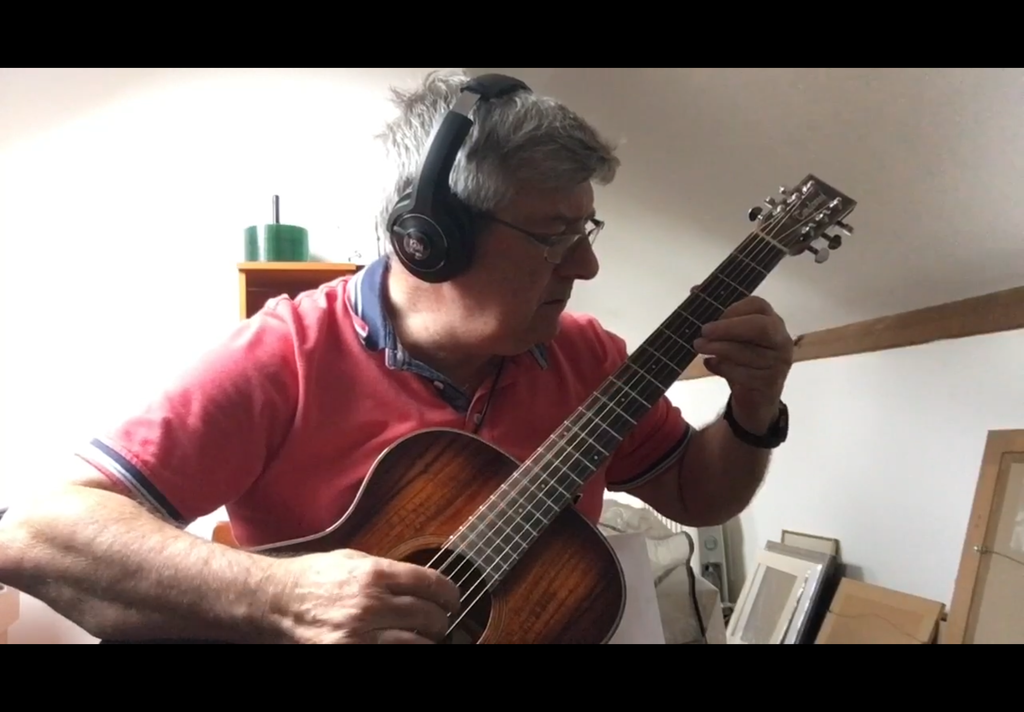
You recorded “Surrey Bells” at home using your Tanglewood steel string guitar and overdubbed parts. What is your approach to recording at home, and how important is the recording environment when you are trying to capture a particular sense of space?
Basically I work up in my loft. It’s quiet and relatively anechoic so that you get a nice clean, dry sound to start with on which you can then add reverb, echo etc (in my case, usually in quite modest amounts). I nearly always use a single mic for my acoustic work rather than a line feed. It adds authenticity and depth to the recording.
You also made one of the guitars sound distant and echoey to create the feeling of bells travelling across a valley. What techniques did you use to achieve that effect, and how much do you think about physical spaces when shaping the sound of your music?
This was a case when I did crank up the reverb and echo on the second part more than I normally would, precisely to create that sense of space which I had visualised – rather fancifully perhaps – as two sets bells ringing across a rural valley in Surrey on a bright winter’s morning.

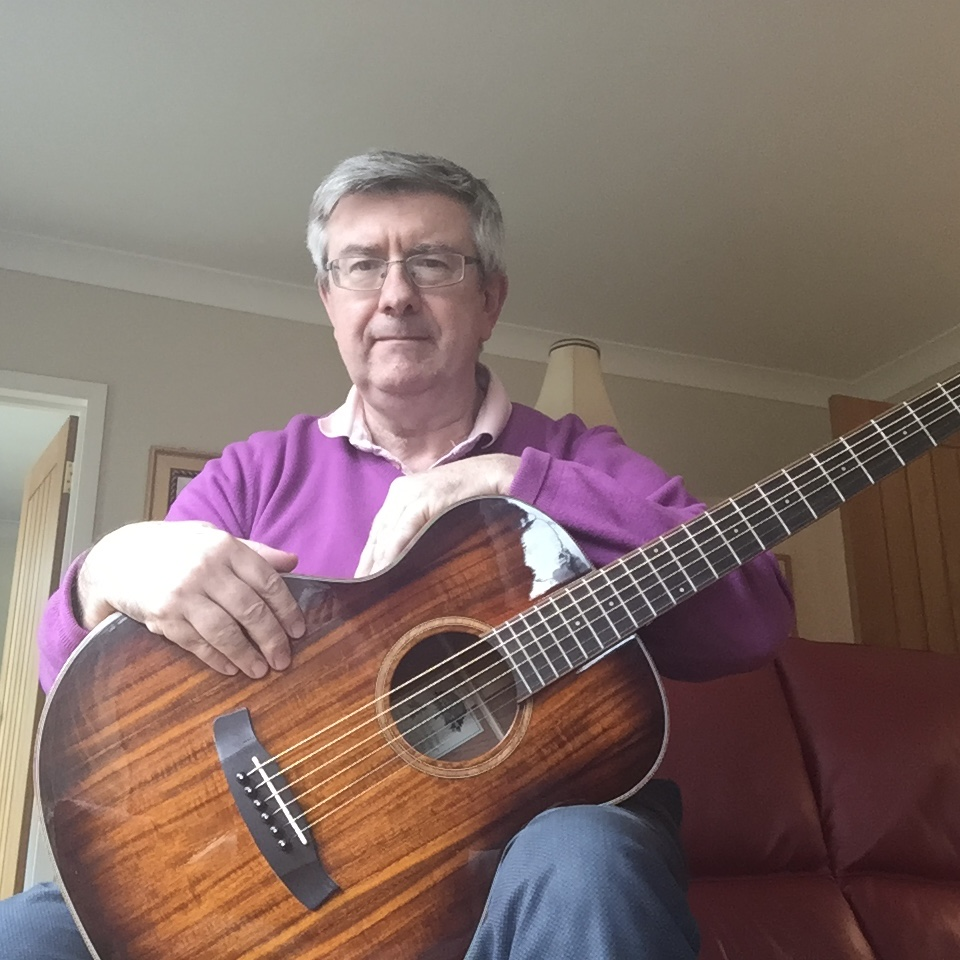
Your main instrument is a fifty-year-old handmade classical guitar, while you also play electric, acoustic, and slide guitar. What does each type of guitar bring out in your playing, and does the instrument you choose influence the way you compose?
That’s quite a difficult question. My old classical guitar is always to hand and that’s what I tend to go for when I am in a compositional mood – even if in the end the final product is played on a different guitar or set of guitars. In this particular case, however, because I was working on a DADGAD based project with two former guitar pupils, I had a guitar tuned to that also close to hand. So that spun off into two other pieces, this one and “Highland Mist”. I don’t do altered tunings on my nylon strung classical guitar: that is the route to a world of pain!
You specialise in original instrumental music featuring both solo and ensemble guitars. Without lyrics to guide the listener, how do you use melody, texture, dynamics, and tone to communicate a story or emotion?
The musical idea nearly always comes first. As I say, the mood and imagery tends to emerge from that, sometimes sooner, sometimes later. But it’s only what’s in my mind. Listeners may find completely different senses or images when they listen to it and that is entirely fine and valid as far as I am concerned. The key thing is that the listener enjoys it.
From a professional standpoint, what have your collaborations with musicians such as Mark Johnson and The Midnight River Crew taught you about working with other artists, and how does collaboration differ from creating music entirely on your own?
I love collaborating with Mark and other friends and fellow musicians. It encourages me to think about how several instruments and, most important of all, lead and backing vocals can be folded together in a cohesive whole. When I’m doing this sort of work, I have to think of myself as a producer, recording engineer multi instrumentalist rather than just a guitarist. I really enjoy stretching myself in that way.
After “Surrey Bells,” what musical landscapes would you like to explore next? Are there other places, sounds, memories, or images that you would like to turn into instrumental compositions?
Not sure really. As I say, it’s nearly always the musical idea that drives things. So I don’t really have an agenda for future work based on particular images and moods. As an example, I am currently working on a piece which is focused on trying to compose a waltz with quirks. It’s coming on quite well, but at the moment I’m seeing it as a musical challenge rather than a vehicle for conjuring up images. That I think will come later.
CONNECT
SPOTIFY | SOUNDCLOUD | YOUTUBE


