

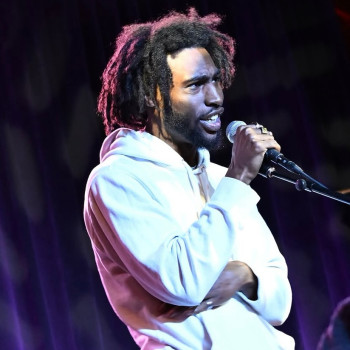
For Baby Booder, music has never been just about making songs. It has been a way to find belonging, deal with difficult experiences, and make sense of a life that has taken him through some challenging places. From writing poems and stories at seven to uploading music to SoundCloud at eleven, the Michigan artist has spent much of his life creating. But as he explains, he did not always see music as a career. It was simply something he loved, something that stayed with him through different stages of his life.
His journey has included incarceration, probation, personal struggles, and periods of uncertainty that could have easily taken him away from music. Instead, writing became something he held on to, even when the circumstances made it difficult. During his time in juvenile detention, he continued writing lyrics despite strict rules against keeping explicit material. He recalls hiding pages in his clothing, finding ways to hold on to his writing, and eventually collecting around 400 pages of lyrics and notes. The story says a lot about his commitment to creating. Even when the odds were against him, he found a way to keep going.
That determination is part of what makes Whatever You Wanna Call It such a personal project. Initially, Baby Booder considered putting the album aside. He was already releasing a lot of music and dealing with changes in his personal life, including the end of a relationship. But as he returned to the sessions during difficult periods, he began experimenting with beats, song structures, and melodies. New ideas came when he least expected them, gradually bringing the project together. Eventually, he realised the music had become something he could not leave unheard.
The album draws heavily from his experiences, but Baby Booder does not always spell out what every song means. He prefers to leave listeners room to find their own connections, although some records carry messages that require closer attention. On “Smacked,” for example, an upbeat sound sits beneath the pain of losing someone at a time when he already felt alone. He describes the contrast as similar to his own version of “Pumped Up Kicks,” where the music sounds lively but something much heavier sits underneath it. It is an example of how he uses sound to express feelings that are not always easy to explain directly.
Beyond his personal experiences, Baby Booder’s music also reflects his frustration with the world around him. The BASSHEAD series, including “BASSHEAD II,” combines heavy bass with lyrics that carry a deeper message about anger, society, and the things people often overlook. His work with community organisations, including Neutral Zone in Ann Arbor and the Washtenaw chapter of My Brother’s Keeper, has also influenced his outlook. These experiences taught him about planning, responsibility, brotherhood, and the importance of understanding the people and circumstances around him.
As an independent artist with more than 300 released compositions, Baby Booder has also had to learn how to run his own career. Through his company, Substance Controlled, he handles decisions that go beyond recording music, from managing budgets to setting deadlines and deciding when a project is ready for release. He sees independence as both a gift and a challenge, giving him creative freedom while requiring him to take responsibility for every part of the process.
Now, with Whatever You Wanna Call It, he is in a position to look back on experiences he once found difficult to discuss openly. He speaks candidly about the difference between living through pain and being able to process it, recognising that the space to reflect has changed what he is willing to express in his music.
In this interview with Spinex Music, Baby Booder discusses the experiences behind Whatever You Wanna Call It, the stories behind some of its songs, his time in juvenile detention, his work in the community, and what it means to take his music career seriously without waiting for a breakthrough to validate it. His message to younger artists is direct: stop thinking of yourself as someone who is merely trying to become an artist. If you have been making music, your journey has already begun.
You started writing poems and stories at seven, releasing music to SoundCloud at eleven and performing in plays and musicals. Looking back, when did you first realise that creativity was more than an interest and could actually become your path?
Honestly not even sure. I feel like it kind of just stuck with me to the point to where I didn’t even realize it could become a path, just something that gave me a sense of belonging I guess. I just love it. I got a lot of moments where I associated an event with affirmation to continue working with it though. I think about that trip to LA when I was a teen, the 156 days in juvenile, working with MBK for the first time.
Juvie definitely played a big role in it because you couldn’t write explicit pages or else you’d be hit with contraband. And even ask my baby sisters, I curse a LOT in my music and paint vivid pictures. So I had to hold them with me all throughout the facility in my shirt pocket. We’d do laundry though and I would get a shirt with no pocket and would have to hold them in my sock or in my waistband. I finally got a home visit and by then I had written about 400 pages of lyrics and random notes. I gave them to my brother, and went back feeling like a smuggler. I had to put them under my nuts before I left the facility too, cuz they do a pat down before you go. Man.
I also would hoard pencils. We had to use golf pencils, the small ones with no eraser. And when mine went dull, I’d have to wait for school the next day to sharpen it. So I started stealing them, which more than two pencils in your room was also contraband. I had like fifteen at one point and for sure got caught when they did a shakedown during school. Eventually I got a pen, which was double contraband really. All that shit, just to fuckin’ write.
You grew up around Southeast Michigan and recorded parts of Whatever You Wanna Call It in the same places that shaped you. How did returning to those environments influence the emotions and authenticity you brought into the album?
It felt good. This might be imagination or whatever but when I touch down to like the Nike Court, I say what’s up to the nature around me because I can almost hear them saying shit like “oh my goodness we haven’t seen you in so long, look at how big you’re getting” like all my relatives usually do. But it’s also just surreal. The Nike Court is always a spot that I believe holds a lot of my energy. I grew up at that park, fell off my bike, cried for momma, got pulled over and had to turn into the park’s parking lot, flat tire—it’s like the corner store seeing you go from Sour Patch Kids to Swisher Sweets.
Much of the album came from late-night freestyle sessions after arguments, difficult days or moments of emotional intensity. What happens creatively for you when you step into the booth carrying those emotions?
A lot of shit. I been through a lot, so I’m pretty strong. But I been through a lot, so I get very tired sometimes. Sometimes you lose the battle with your own mind and you just end up driving until the gas light comes on.
The good days though, man—things heated, break off—usually grab me a James and roll some earth in it, get the playing around just talking and ad-libbing and then next thing I know I’m putting together “Smacked” where ain’t no real goal to the track—just jamming out this trauma. “Smacked” is a good example too because I felt like I had got hit, like it just smacked me that she was gone now. Never coming back. It didn’t hurt that she was gone though it hurt that she left when I was at a low, and it felt like everyone was—but her!? HER!? Aw man, that lowkey hit me hard. The cymbals crashing mixed with that upbeat sound and I’m just damn near crying on the record. This song is my “Pumped Up Kicks”—the sound is upbeat, what’s underneath it is heavy.
Whatever You Wanna Call It was initially something you considered putting on the shelf, but the final assembly changed your perspective on the project. What made you realise that this album deserved to be heard?
life. That’s why I say that life don’t happen to us as artists, it happens for us. I was coming off the album with MBK and my P O I N T E era so I was already releasing a LOT of music. I’ll be real too, this music was more vulnerable and I also knew that me and my girl was coming toward our last days together. I didn’t want to overwhelm myself more than I already was. But then when our last day happened, that album kept me busy. I was back sleeping out of hotels and using uber to get to shows and shit. It gets really lonely, especially in the Harmony House. But I would just play around with the sessions and change the beat or the structure, make the hook go first, all that.
Then I started a new job and shit. It was one day where the song “RIP” was born, you just working zoned in and melodies start hitting you. Went home and made the beat and shit. Closed the session and went to work the next day and like two shifts later it came back to me vividly. I saw it: Donkey Kong swaying a barrel in Nintendo 64 graphics, a Tom and Jerry-like feel of Jerry giving Tom a good whack from a mallet as the intro crescendos into the hook. Life was too unpredictable and the music was too good, which was another reason that I was like “I need to put this on the shelf so I can lock in on life real quick cuz this shit special.”
But then I had to get stitches one night and I was back to just fucking around with those songs again to cope or whatever. It was when I played around with “Neon Rollie” and was like “this sound like that song that’s toward the end of the album. Must mean that the album is almost done”. And then I’m like “oh shit it sounds like one of those albums I love” so I knew I had to release it. I don’t even know, Music is a solid bitch. Without this album, ain’t no telling what this summer would’ve been like.
Your music often leaves room for listeners to interpret the songs in their own way. How important is that freedom of interpretation to you, and do you prefer listeners to find their own meaning rather than being told exactly what a song means?
It depends on the song. Some songs are just a ditty so I don’t care what you take. Like the song “Ditty”, it’s literally a ditty. Then songs like “Find A Way”, yeah I don’t even think most people are that in-tune with the music to where they’re wondering “who’s this about” and that’s lowkey one of the things I like about my career right now; nobody gives a shit about who I’m with and what I’m doing for the most part. But then you got songs like “Keep Goin’”—where you have to really listen and process it to understand its messages.
“BASSHEAD II” continues the story from “BASSHEAD” on your previous work, Book of De’Rw. What has changed between those two songs, and what does the new version say about where you are creatively today?
Honestly, The Big Mammu and the BASSHEAD series should’ve been integrated; they all have dope ass bass on purpose and I find myself confusing the two series. But anyways though—II was special because it spoke multiple things at the same time while reiterating its preceding energy. The first one introduced the weird flame inside where sometimes I just don’t want to fuck with people. I get so angry sometimes at how things are and the people who manage them and it’s like “dawg, Tupac warned us about this shit”.
But nobody really cares about what he had to say, everyone, especially my homies and OGs like that bass. Nose-itching, can’t even use the mirror because the bass shaking it. I feel like the second one solidified that—with all the sounds in it and the knocking it does I really hope you’re still able to get the message from the lyrics. Plus, the first one didn’t have any lyrics for the hook. The second one does; call that character development.
You have worked independently for years and have been involved in more than 300 released compositions. How has operating outside the traditional music industry shaped your confidence, discipline and approach to creating music?
It’s been a gift and a curse. Like when it just started, I don’t even know, I had just assumed it was more supportive. Or maybe I just thought that being independent was like being in the Union where everyone understands or whatever. Also I can do what I want, cuz like I can get real isolated sometimes and go hide and shit. I can’t do that like how I do it now if I gotta be dropping music. Like I said, nobody gives a shit. So I can go to the hood still and hoop with the kids and I’m just another OG in the hood to them.
Every so once in a while I get recognized. I was promoting a show one day and the person recognized my name when I gave her the flyer. Told me “I purposely hunt for local rappers to listen to at the gym”. Like, that’s cool that I’m on the radar but being categorized as a “local rapper” makes your heart flinch a bit. You know you have to walk with a certain delusion as an artist that you’re the shit and what—and still be humble though. So I’m out here as “Baby Booder who finna host this show and make it the greatest story on Earth” and you hear that. This career is funny sometimes.
It helps me understand the business-side too. I’m at the computer and I’m working as the CEO and I’m like “damn we gotta get this song out” so now I’m literally bossing my own self with deadlines and shit and telling myself that it has to be a certain way or else I won’t greenlight the budget. And shit like that, the money—it’s all a grind. But you don’t owe anyone a penny but yourself because you loan a few dollars to your company interest-free. Believe it or not, it’s actually helping me in my personal life and growing into a man. I don’t even think I have to explain that.
You founded Substance Controlled while also being involved with organisations such as Ann Arbor’s Neutral Zone and My Brother’s Keeper Washtenaw Chapter. How has your work within the community influenced the wisdom and life experiences that appear in your music?
It constantly grounds me. Humbles me. Cuz you know it wasn’t just the community, I was also incarcerated as a minor and an adult and was facing eight years! Eight! These organizations kept me grounded though, I learned more about connection and brotherhood with MBK than I learned anything related to the board or cohorts we did.
Neutral Zone taught me a lot about planning. Every event had to be planned months in advance with a team and there had to be rules and budgets and escape routes and shit. I was the head of governance so I saw a lot of shit. I also learned engineering there. I w
as an intern for a little bit organizing vinyl and CDs until I had to sub in for a session and did real good.
Also, I’ll say you have to be careful sometimes, trusting things or people just because you got respect or they got rank or whatever. And with my company, the name is literally my charge with the words reversed. So after all that, being in both sides and all that it gives me a certain discernment in a lot of moments where I need to decide if I’m Booder, Daijon, or inmate 152 or whatever my pin was.
You describe Whatever You Wanna Call It as a project that represents newfound freedom and artistic depth. What does artistic freedom mean to you now, and what are you able to express today that you may not have been ready to express earlier in your career?
Man, from the moment I turned 18—it was just life happening. Things were just happening. Then probation and shit now I’m in and out of jail and shit, then I get a girlfriend or some shit. Honestly, I always been scared to show that side of my life; like, I had to move into a rehab just so I wouldn’t be sent to jail because I was on house arrest and had no address. I had just attempted earlier that month which actually turned into ANOTHER charge. Like imagine you try to die and instead of getting help, you’re constantly reminded of it through fines and human rights restrictions.
Then I got in with the church and shit in Detroit. It became weird for me to tell my pastor I was a rapper. Honestly, so much was going on that I couldn’t sleep or just couldn’t think right. Now, all that turmoil is slowly dying down and I can actually feel it as it happens and processing it now is actually powerful. Back then I’d question it all and think about it to the point where it possesses my whole day! The music would be nothing but just dark and grumbly and not what I would want to release at all.
As you prepare to officially introduce Baby Booder to a wider audience with this debut album, what do you hope the young person listening to your music takes away from your story and the choices you have made along the way?
Stay away from them niggahz. I don’t know who they are for you, you know. Hopefully. And if you think you have an idea on who it is, then you know: stay away from them niggahz. That shit hard as fuck cuz some people will really disguise themselves as your best friend but the numbers don’t lie. Stay in yo lane too. You ain’t gotta do what they doing. Be a leader. And if nobody’s following, the right person just ain’t relate to your mind yet. And apply that to this music.
And lil homie, big homie, whoever you are—man, stay easy. Get it in your head ASAP that you have records to sell, you have a career! Man, for the longest I’m over here like “I’m living life until I ‘blow up’ then I’ll call it a career”. NO! Cuz what the fuck does “blow up” even mean? Had I told myself “I’m an artist” all along, I probably would’ve thought better in a lot of split decision moments. Like the ones that crippled me. Homie, you been an artist since that first bar. Your career started at that moment. You might be in school still or at work, man, do what you gotta do but don’t get trapped in that mindset of thinking you’re still “coming up”.
CONNECT
FACEBOOK | SPOTIFY | YOUTUBE | INSTAGRAM | TIKTOK
