


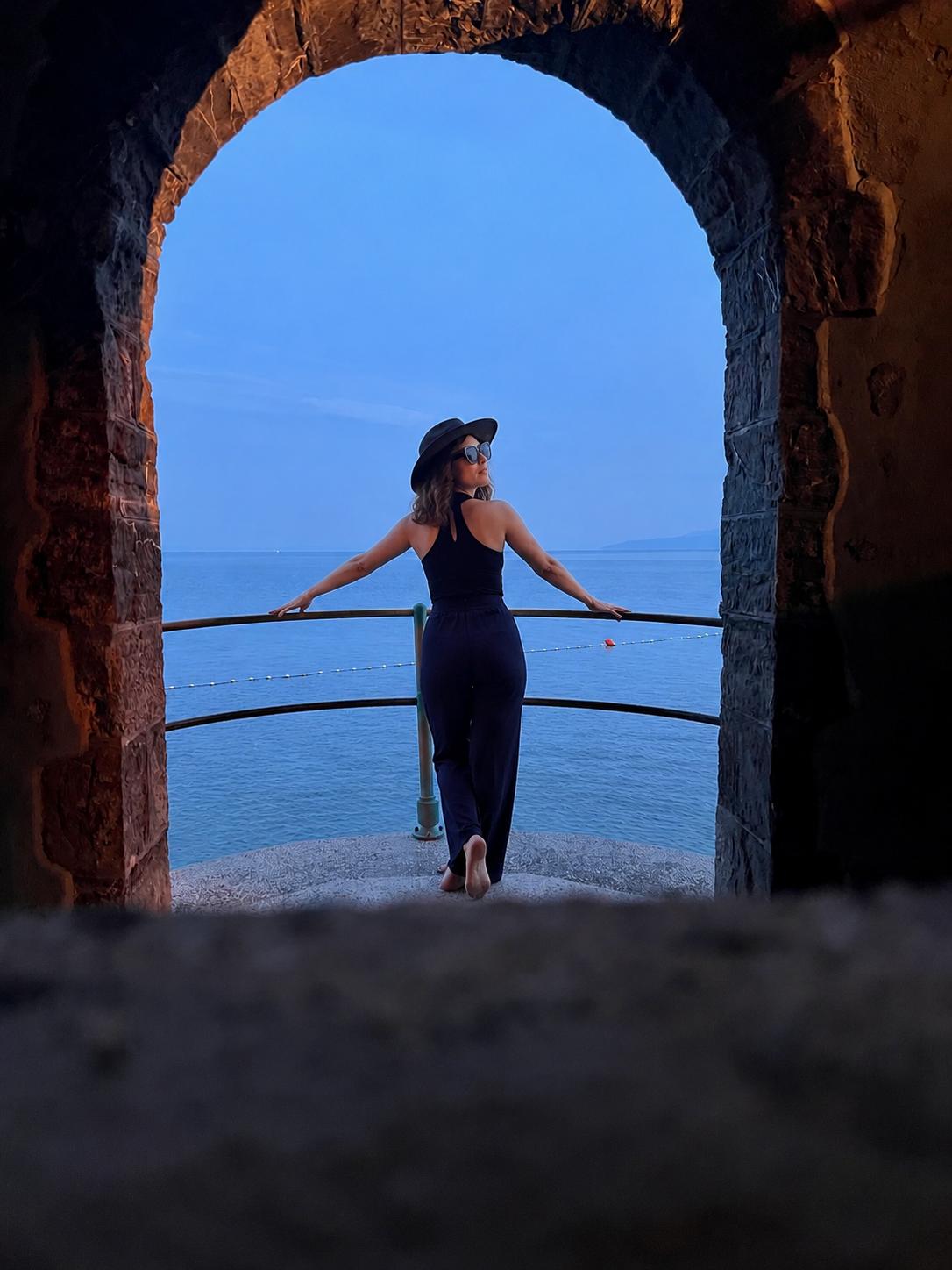
Some artists build their music by adding more. More instruments, more layers, more movement. Cathrin Poschin understands the power of doing the opposite. In her work, space is never empty. Silence is never simply the absence of sound. Every note, texture and breath of atmosphere is carefully placed to create a world that feels vast, cinematic and alive.
That approach sits at the heart of “Hidden Down,” a striking piece born from the wider universe of The Lights of the Lost Worlds. Built around the image of a traveler entering a seemingly abandoned parallel dimension, the composition explores the uneasy space between silence and consciousness, beauty and fear, desolation and the suggestion that something beneath the surface is still alive. With only a small collection of carefully chosen sounds, including piano, evolving arpeggios, atmospheric pads and other transformed textures, Poschin creates an environment that feels far larger than its instrumentation.
Her creative world exists somewhere between neoclassical composition and electronic experimentation, where familiar instruments can become rain, distant voices or something entirely unrecognisable. For Poschin, technology is not there to replace emotion but to expand its possibilities. Sound design becomes storytelling, while silence becomes an instrument capable of communicating what additional layers sometimes cannot.
In this interview with Spinex Music, Cathrin Poschin opens up about the hidden world behind “Hidden Down,” her fascination with lost dimensions and morally complex characters, and the careful precision behind creating cinematic tension. She also discusses the role of silence, the transformation of acoustic instruments through technology, and why she believes music should never be restricted by rigid boundaries between genres.
As her work continues to move toward new territory, including vocal performances and choir arrangements, Poschin remains driven by curiosity and the search for unexplored emotional worlds. “Hidden Down” is more than a composition about a lost place. It is an invitation to step inside it, listen closely and discover what may still be breathing beneath the silence.
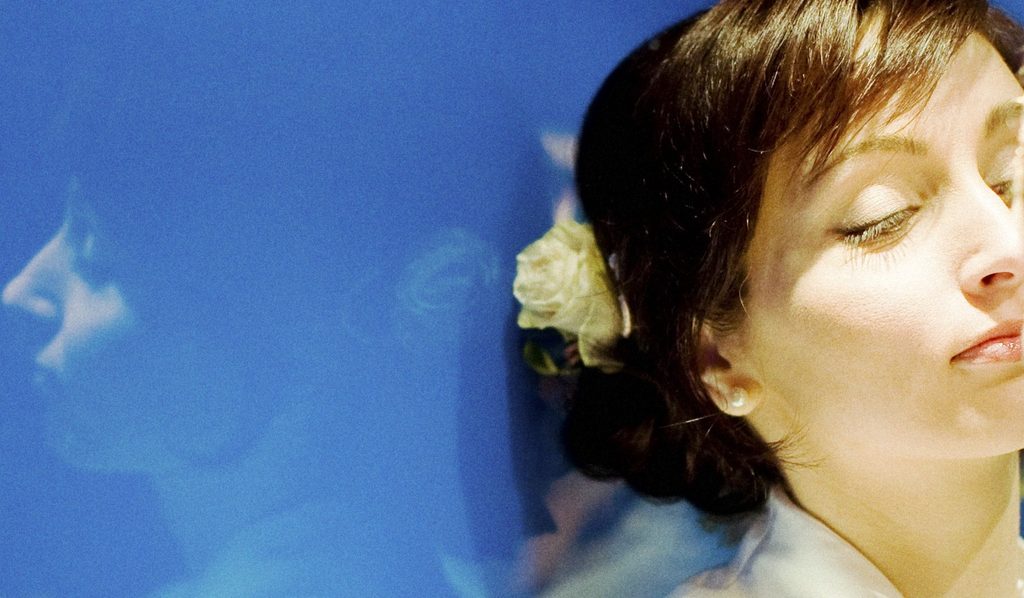
“Hidden Down” creates an enormous sense of space and tension despite being built from only four carefully selected instruments. What attracted you to such a restrained approach, and how did limiting the instrumentation actually expand the emotional possibilities of the piece?
On restrained instrumentation and creating space:
“Hidden Down” is a hidden world within The Lights of the Lost Worlds—quite literally. It shares a thematic and musical DNA with that larger piece; hints of it appear in the pre-climax and climax. What sounds like a magical bird arpeggio in the main track evolves into the tense, driving arpeggio in “Hidden Down.” The atmospheric pads construct an infinite horizon, wrapping the listener in a vibrating, tense acoustic cloud. Creating inner and outer unrest doesn’t require dozens of layers—it requires surgical precision with sound design, frequency carving, and physical space.
The track is built around the image of standing among the remnants of a lost world, hearing its silence and sensing that something unknown is still alive. Where did this particular image come from, and what were you hoping listeners would imagine or feel as they moved through the piece?
The imagery behind the lost world:
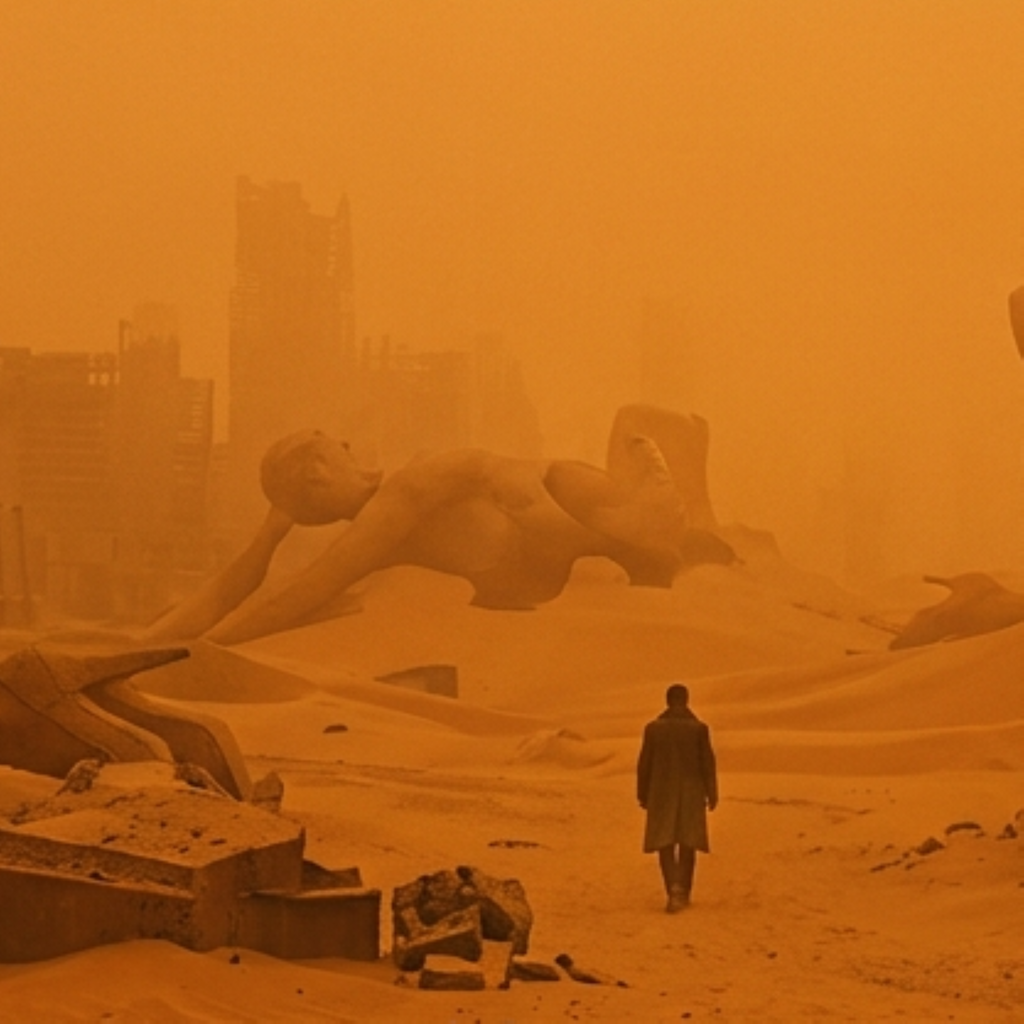
The image comes from the moment a traveler steps into a parallel dimension. At first glance, this fallen, grand world appears completely desolate and dead. But beneath the surface, it is profoundly alive, carrying both immense pain and past glory. I was deeply inspired by Sci-Fi narratives like Dark Matter and post-apocalyptic cinema. It’s about total immersion into an atmosphere until you reach a trance-like state of awe.
The irregular heartbeat at the beginning feels almost like the first sign of consciousness within an otherwise abandoned environment. What does that heartbeat represent to you, and how important was it to establish the protagonist’s internal state before introducing the wider sonic landscape?
The significance of the irregular heartbeat:
That heartbeat has a dual meaning: it represents the hidden pulse of the world itself, and the physical reaction of the traveler. For a moment, the traveler’s breath and heart freeze in shock—and then their pulse begins to beat in sync with the rhythm of this lost world. I’ve always been fascinated by Sci-Fi, secret dimensions, and mysteries, and that heartbeat grounds the surreal landscape in immediate human physiology.
Your use of the Parallel Earth Piano, grand piano, delayed arpeggios, pedal-modulated pads and flute-like effects creates a remarkably detailed environment without relying on a large arrangement. How do you decide which individual sounds deserve to remain, and what makes a sound emotionally necessary rather than simply aesthetically interesting?
Choosing sounds and working with the Parallel Earth Piano:
I love experimenting with instruments and plugins to find the exact sonic weight a scene demands. The Parallel Earth Piano is one of my absolute favorites because its timbre instantly evokes a cosmic, extraterrestrial atmosphere. It demands space and silence to shine. Every sound must earn its place; it becomes emotionally necessary when it creates a dialogue with the silence around it rather than just filling acoustic air.
Much of your work sits between neoclassical composition and electronic sound design. What draws you to that space between acoustic fragility and electronic transformation, and do you approach the two sides of your music differently when you are composing versus designing the final sound?
Bridging Neoclassical composition and electronic sound design:
Music has no rigid borders. Emotions, thoughts, acoustic fragility, and electronic transformations bleed into one another constantly—just like human feeling. There isn’t a single line where acoustic ends and electronic begins; they coexist and mutate. They mirror how our inner lives work: thousands of thoughts, feelings, and physical reactions firing simultaneously.
You have used techniques such as real-time EQ automation and tremolo to make piano sounds resemble natural phenomena, particularly in works such as “The Nature of Rain” and “Bring Me to the Rain.” What fascinates you about transforming familiar instruments into sounds that listeners may initially mistake for something occurring in the natural world?
Transforming instruments into natural phenomena:
As an artist, curiosity and experimentation drive everything. I am fascinated by how an acoustic instrument—a cello, violin, or brass section—can morph through articulation, frequency shifting, or real-time automation into something else entirely, like falling rain or human vocals. Transforming familiar timbres into organic phenomena feels like pure alchemy in the studio.
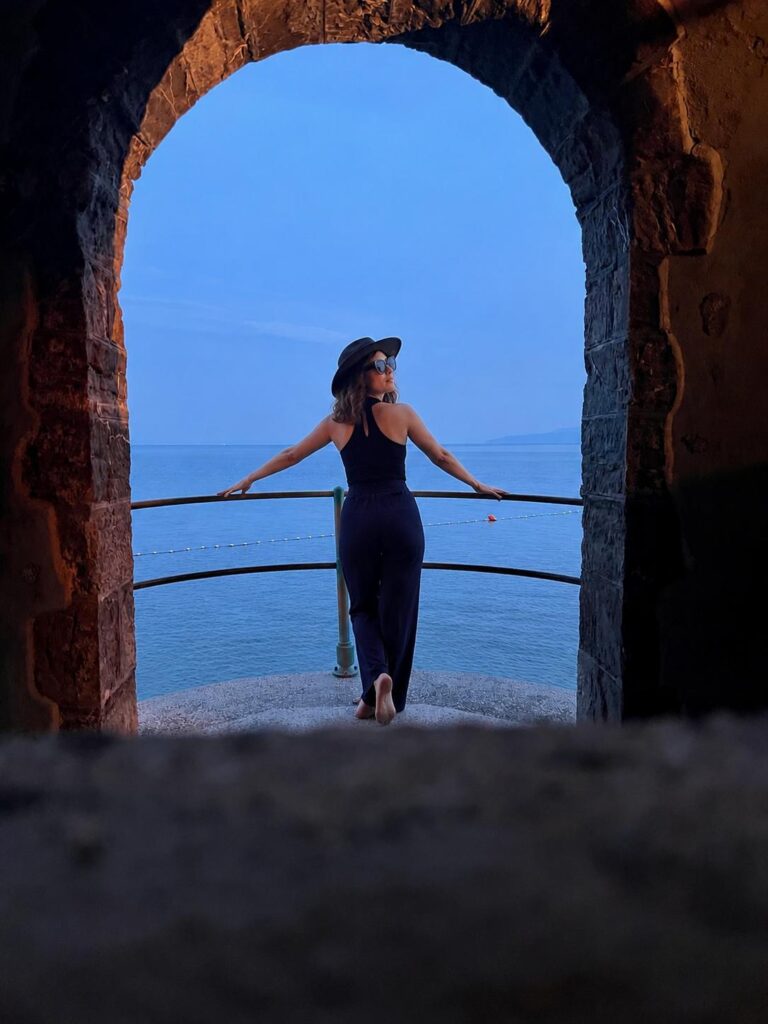
Your compositions leave significant space within the frequency spectrum rather than filling every moment with sound. How important is silence to your creative process, and what can silence communicate in a cinematic composition that additional instrumentation cannot?
The role of silence in cinematic scoring:
Silence is a crucial instrument in cinematic music. Every element needs room to breathe if it’s going to resonate deeply and spark emotional catharsis. Today, people are bombarded with constant noise and information overload, leaving almost no mental space to process anything. By intentionally sculpting silence, I give listeners a rare moment of stillness to actually hear and feel their own internal world.
Your music often feels as though it is telling a story without using traditional lyrics or dialogue. When composing a piece like “Hidden Down,” do you begin with a visual or narrative idea and translate it into sound, or does the music itself gradually reveal the story and imagery to you?
How story and composition shape each other:
It varies. Sometimes a piece begins the second my hands touch the piano keys, revealing its story organically. With “Hidden Down,” it grew out of a visual fantasy about lost worlds while working on The Lights of the Lost Worlds. It quickly became clear that this particular sonic space had its own distinct narrative—one of hidden fear, vulnerability, and quiet grandeur.
Your work has strong connections to film, drama and visual storytelling, and your catalogue can function as atmospheric material for editors and music supervisors. When you imagine your compositions accompanying a film or scene, what kinds of stories, characters or emotional moments do you feel your music is naturally drawn toward?
Characters and narratives that pull you in:
I am drawn to complex, dark, morally grey cinematic characters. Real human beings are multi-layered; we all carry loss, hidden pain, and conflicting sides. When scoring, I welcome the full spectrum of emotion—from quiet intimacy and deep love to overwhelming tension and fear. I don’t segregate those feelings; they are all part of the human story.
Looking beyond “Hidden Down,” what unexplored emotional territory or sonic world are you most interested in entering next? As a composer and sound designer, is there a particular sound, instrument, technology or cinematic idea you have yet to explore that could change the way you create?
Future horizons and upcoming projects:
I never limit my work to a single genre, instrument, or emotional palette. I’m currently expanding into live vocal performances and choir arrangements to uncover new dimensions of my sound. This autumn, I’m releasing a series of vocal experiments, including dark cinematic noir covers of classic hits, which take this hybrid sound into an exciting new territory.
Feel free to let me know if you need any additional details or high-resolution photos for the feature.
STAY IN TOUCH:
INSTAGRAM | SPOTIFY | TIKTOK | WEBSITE | YOUTUBE
